
About This Book
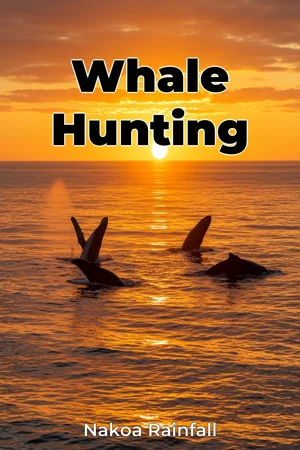
What price has been paid for the pursuit of whales in the vast Pacific Ocean? "Whale Hunting" delves into the complex history of whaling in the Pacific, examining its profound impact on indigenous communities, the ensuing environmental debates, and the global conservation efforts that have shaped our current understanding. This book is important because it unravels the intricate relationship between humanity and these magnificent creatures, a relationship fraught with exploitation, cultural disruption, and ecological consequence. The narrative unfolds against a backdrop of centuries of maritime exploration and economic expansion, tracing how whaling transformed from a subsistence practice for coastal communities to a large-scale industry driven by global demand for whale oil, baleen, and other products. Understanding this historical context is essential to grasp the scale of the ecological damage and the cultural impact on those who coexisted with whales for generations. The central argument of "Whale Hunting" is that the relentless pursuit of whales in the Pacific, while providing economic benefits to some, resulted in devastating consequences for both whale populations and the indigenous cultures that depended on them. Moreover, the book posits that the history of whaling serves as a cautionary tale, urging a more sustainable and ethical approach to our relationship with the natural world. The book begins by introducing the diverse whale species found in the Pacific and their ecological roles. It then explores the early whaling practices of indigenous communities, highlighting their sustainable methods and deep cultural connections to whales. The narrative shifts to the arrival of European and American whalers, detailing their methods, motivations, and the rapid depletion of whale stocks. Key chapters examine the impact of commercial whaling on specific indigenous groups, documenting the loss of traditional knowledge, the disruption of social structures, and the introduction of new diseases. The book further analyzes the rise of environmental awareness and the emergence of global conservation efforts, including the establishment of the International Whaling Commission (IWC) and the debates surrounding the moratorium on commercial whaling. Finally, the work explores the challenges and opportunities for whale conservation in the 21st century, including addressing the threats of climate change, pollution, and ship strikes. "Whale Hunting" draws upon a wide range of primary and secondary sources, including whaling logbooks, archival records, ethnographic studies, and scientific research. The interdisciplinary approach connects the fields of history, environmental science, anthropology, and marine biology, enhancing the book's argument by providing a holistic understanding of the complex issues involved. A unique perspective of this book is its emphasis on the voices and experiences of indigenous communities affected by whaling, offering a nuanced understanding of the cultural and social costs of this industry. Written in a clear and accessible style, "Whale Hunting" is targeted toward readers interested in history, environmental studies, marine biology, and indigenous cultures. It would appeal to students, researchers, policymakers, and anyone seeking a better understanding of the complex relationship between humans and whales. As a work of non-fiction, "Whale Hunting" adheres to the principles of accuracy, objectivity, and thorough research. It acknowledges the scope and limitations of its coverage, recognizing that the history of whaling is vast and multifaceted. The information presented in this book can be applied to contemporary conservation efforts, informing policies and practices aimed at protecting whale populations and preserving the cultural heritage of indigenous communities. "Whale Hunting" addresses the ongoing debates surrounding whaling, including the arguments for and against commercial whaling, the role of scientific research in informing policy decisions, and the importance of respecting cultural diversity in conservation efforts.
What price has been paid for the pursuit of whales in the vast Pacific Ocean? "Whale Hunting" delves into the complex history of whaling in the Pacific, examining its profound impact on indigenous communities, the ensuing environmental debates, and the global conservation efforts that have shaped our current understanding. This book is important because it unravels the intricate relationship between humanity and these magnificent creatures, a relationship fraught with exploitation, cultural disruption, and ecological consequence. The narrative unfolds against a backdrop of centuries of maritime exploration and economic expansion, tracing how whaling transformed from a subsistence practice for coastal communities to a large-scale industry driven by global demand for whale oil, baleen, and other products. Understanding this historical context is essential to grasp the scale of the ecological damage and the cultural impact on those who coexisted with whales for generations. The central argument of "Whale Hunting" is that the relentless pursuit of whales in the Pacific, while providing economic benefits to some, resulted in devastating consequences for both whale populations and the indigenous cultures that depended on them. Moreover, the book posits that the history of whaling serves as a cautionary tale, urging a more sustainable and ethical approach to our relationship with the natural world. The book begins by introducing the diverse whale species found in the Pacific and their ecological roles. It then explores the early whaling practices of indigenous communities, highlighting their sustainable methods and deep cultural connections to whales. The narrative shifts to the arrival of European and American whalers, detailing their methods, motivations, and the rapid depletion of whale stocks. Key chapters examine the impact of commercial whaling on specific indigenous groups, documenting the loss of traditional knowledge, the disruption of social structures, and the introduction of new diseases. The book further analyzes the rise of environmental awareness and the emergence of global conservation efforts, including the establishment of the International Whaling Commission (IWC) and the debates surrounding the moratorium on commercial whaling. Finally, the work explores the challenges and opportunities for whale conservation in the 21st century, including addressing the threats of climate change, pollution, and ship strikes. "Whale Hunting" draws upon a wide range of primary and secondary sources, including whaling logbooks, archival records, ethnographic studies, and scientific research. The interdisciplinary approach connects the fields of history, environmental science, anthropology, and marine biology, enhancing the book's argument by providing a holistic understanding of the complex issues involved. A unique perspective of this book is its emphasis on the voices and experiences of indigenous communities affected by whaling, offering a nuanced understanding of the cultural and social costs of this industry. Written in a clear and accessible style, "Whale Hunting" is targeted toward readers interested in history, environmental studies, marine biology, and indigenous cultures. It would appeal to students, researchers, policymakers, and anyone seeking a better understanding of the complex relationship between humans and whales. As a work of non-fiction, "Whale Hunting" adheres to the principles of accuracy, objectivity, and thorough research. It acknowledges the scope and limitations of its coverage, recognizing that the history of whaling is vast and multifaceted. The information presented in this book can be applied to contemporary conservation efforts, informing policies and practices aimed at protecting whale populations and preserving the cultural heritage of indigenous communities. "Whale Hunting" addresses the ongoing debates surrounding whaling, including the arguments for and against commercial whaling, the role of scientific research in informing policy decisions, and the importance of respecting cultural diversity in conservation efforts.
"Whale Hunting" explores the extensive history of whaling in the Pacific Ocean, examining its effects on whale populations, indigenous communities, and global conservation efforts. The book reveals how the pursuit of whales evolved from sustainable practices by indigenous groups to a large-scale industry driven by the demand for whale oil and baleen. This transition led to significant ecological damage and cultural disruption, impacting communities that had coexisted with whales for generations. The book traces the arrival of European and American whalers and their impact on whale stocks and indigenous cultures. It also investigates the rise of environmental awareness and the formation of the International Whaling Commission (IWC). The book uniquely emphasizes the voices and experiences of indigenous communities affected by whaling, providing a nuanced understanding of the social and cultural costs. It progresses chronologically, beginning with the ecological roles of whales, moving through early whaling practices, commercial exploitation, the emergence of conservation, and finally, addressing modern challenges like climate change.
Book Details
ISBN
9788235261304
Publisher
Publifye AS
Your Licenses
You don't own any licenses for this book
Purchase a license below to unlock this book and download the EPUB.
Purchase License
Select a tier to unlock this book
Need bulk licensing?
Contact us for enterprise agreements.