
About This Book
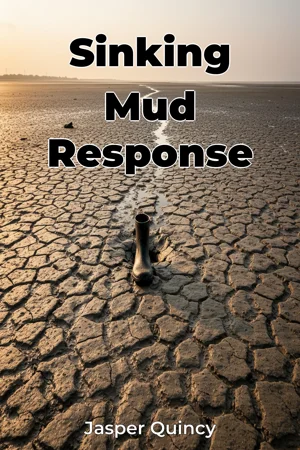
Have you ever considered the silent, insidious danger lurking beneath seemingly solid ground? 'Sinking Mud Response' delves into the science and survival strategies associated with quicksand and mud zones, environments where an understanding of fluid dynamics and rescue techniques can be the difference between life and death. This book addresses the critical need for practical knowledge in navigating and escaping these treacherous terrains, benefiting both professionals working in such environments and outdoor enthusiasts who may encounter them. We explore two key areas: the scientific principles governing the behavior of quicksand and mud, and the practical methods for self-rescue and assisted extraction. Understanding the geological formations and fluid dynamics that create these hazards is paramount. We address the misconception that one is "sucked" under; rather, the challenge lies in overcoming the high friction and density of the fluid-like soil to achieve mobility. Secondly, the book examines the tools and techniques necessary for effective rescue, emphasizing controlled movements, leverage principles, and the proper use of extraction lines. These topics are important because encounters with quicksand or deep mud, though rare, can rapidly escalate into life-threatening situations without informed response. The context for this study is rooted in earth sciences geography, combining elements of soil mechanics, hydrology, and practical survival skills. No advanced scientific background is required; we present core concepts in an accessible manner. Our central argument is that preparedness, based on scientific understanding and practiced techniques, significantly increases the likelihood of survival in a quicksand or mud-related emergency. The book is structured to first introduce the formation and characteristics of quicksand and mud zones, explaining the processes by which seemingly solid ground can transform into a dense, viscous trap. We then methodically develop rescue strategies, moving from individual self-extraction methods to team-based rescue operations. A concluding section explores real-world applications, from geological surveys to adventure tourism, and the practical implications of implementing the strategies described. The evidence presented is drawn from a multidisciplinary array of sources: geological surveys, case studies of actual incidents, and experimental data from controlled simulations of quicksand and mud environments. This includes analysis of soil composition, density measurements, and kinematic studies of human movement within these materials. 'Sinking Mud Response' connects to several fields including geology, civil engineering, and emergency response. A civil engineer might find the soil mechanics aspects relevant to construction in unstable ground. Emergency responders can apply the rescue methodologies directly to their training protocols. Even the field of adventure tourism can benefit by incorporating these concepts for better risk assessment. A unique aspect of this book is its focus on a step-by-step methodology for both self-rescue and assisted extraction. This is achieved through detailed illustrations, case studies, and clear instructions that emphasize practical application. The book adopts a tone that is both informative and engaging, making complex scientific concepts accessible to a broad audience while maintaining a sense of urgency and practicality. The target audience includes geologists, surveyors, search and rescue teams, outdoor enthusiasts, and anyone working or recreating in environments prone to quicksand or mud hazards. It is valuable due to its comprehensive approach, combining scientific explanation with actionable rescue strategies, and providing a resource where information is not readily available. As a non-fiction work within the Earth Sciences Geography and Adventure genres, 'Sinking Mud Response' prioritizes factual accuracy, practical guidance, and real-world relevance. The scope of the book is limited to terrestrial quicksand and mud environments, excluding similar hazards found in deep-sea or industrial settings. A further limitation lies in the variability of quicksand and mud compositions; while the presented strategies offer a general framework, site-specific adaptations may be necessary. The information can be directly applied on geological surveys, search and rescue operations, and to better inform risk assessments for outdoor recreational activities. In areas known for mudslides the insight can be valuable in disaster planning. While the physics of quicksand and mud are generally well understood, debates continue regarding the effectiveness of certain rescue techniques. We address these controversies by presenting different approaches, weighing their pros and cons based on available evidence, and encouraging readers to adapt strategies to their specific circumstances.
Have you ever considered the silent, insidious danger lurking beneath seemingly solid ground? 'Sinking Mud Response' delves into the science and survival strategies associated with quicksand and mud zones, environments where an understanding of fluid dynamics and rescue techniques can be the difference between life and death. This book addresses the critical need for practical knowledge in navigating and escaping these treacherous terrains, benefiting both professionals working in such environments and outdoor enthusiasts who may encounter them. We explore two key areas: the scientific principles governing the behavior of quicksand and mud, and the practical methods for self-rescue and assisted extraction. Understanding the geological formations and fluid dynamics that create these hazards is paramount. We address the misconception that one is "sucked" under; rather, the challenge lies in overcoming the high friction and density of the fluid-like soil to achieve mobility. Secondly, the book examines the tools and techniques necessary for effective rescue, emphasizing controlled movements, leverage principles, and the proper use of extraction lines. These topics are important because encounters with quicksand or deep mud, though rare, can rapidly escalate into life-threatening situations without informed response. The context for this study is rooted in earth sciences geography, combining elements of soil mechanics, hydrology, and practical survival skills. No advanced scientific background is required; we present core concepts in an accessible manner. Our central argument is that preparedness, based on scientific understanding and practiced techniques, significantly increases the likelihood of survival in a quicksand or mud-related emergency. The book is structured to first introduce the formation and characteristics of quicksand and mud zones, explaining the processes by which seemingly solid ground can transform into a dense, viscous trap. We then methodically develop rescue strategies, moving from individual self-extraction methods to team-based rescue operations. A concluding section explores real-world applications, from geological surveys to adventure tourism, and the practical implications of implementing the strategies described. The evidence presented is drawn from a multidisciplinary array of sources: geological surveys, case studies of actual incidents, and experimental data from controlled simulations of quicksand and mud environments. This includes analysis of soil composition, density measurements, and kinematic studies of human movement within these materials. 'Sinking Mud Response' connects to several fields including geology, civil engineering, and emergency response. A civil engineer might find the soil mechanics aspects relevant to construction in unstable ground. Emergency responders can apply the rescue methodologies directly to their training protocols. Even the field of adventure tourism can benefit by incorporating these concepts for better risk assessment. A unique aspect of this book is its focus on a step-by-step methodology for both self-rescue and assisted extraction. This is achieved through detailed illustrations, case studies, and clear instructions that emphasize practical application. The book adopts a tone that is both informative and engaging, making complex scientific concepts accessible to a broad audience while maintaining a sense of urgency and practicality. The target audience includes geologists, surveyors, search and rescue teams, outdoor enthusiasts, and anyone working or recreating in environments prone to quicksand or mud hazards. It is valuable due to its comprehensive approach, combining scientific explanation with actionable rescue strategies, and providing a resource where information is not readily available. As a non-fiction work within the Earth Sciences Geography and Adventure genres, 'Sinking Mud Response' prioritizes factual accuracy, practical guidance, and real-world relevance. The scope of the book is limited to terrestrial quicksand and mud environments, excluding similar hazards found in deep-sea or industrial settings. A further limitation lies in the variability of quicksand and mud compositions; while the presented strategies offer a general framework, site-specific adaptations may be necessary. The information can be directly applied on geological surveys, search and rescue operations, and to better inform risk assessments for outdoor recreational activities. In areas known for mudslides the insight can be valuable in disaster planning. While the physics of quicksand and mud are generally well understood, debates continue regarding the effectiveness of certain rescue techniques. We address these controversies by presenting different approaches, weighing their pros and cons based on available evidence, and encouraging readers to adapt strategies to their specific circumstances.
"Sinking Mud Response" explores the science and survival techniques vital for navigating quicksand and mud zones. This book addresses the often-overlooked dangers of these environments, emphasizing that the risk isn't being "sucked" under, but rather the challenge of overcoming the soil's density. Readers will discover practical methods for self-rescue and assisted extraction, crucial for both professionals and outdoor enthusiasts. This book uniquely combines earth sciences geography with actionable rescue strategies. It begins by detailing the formation and characteristics of quicksand and mud, explaining how seemingly solid ground can become a viscous trap. From there, the book progresses methodically, covering self-extraction methods before moving on to team-based rescue operations. Through geological surveys, case studies, and experimental data, "Sinking Mud Response" offers a comprehensive approach to understanding and responding to these hazards. The book highlights the importance of preparedness, blending scientific insights with practical guidance to enhance survival likelihood in mud-related emergencies.
Book Details
ISBN
9788235261298
Publisher
Publifye AS
Your Licenses
You don't own any licenses for this book
Purchase a license below to unlock this book and download the EPUB.
Purchase License
Select a tier to unlock this book
Need bulk licensing?
Contact us for enterprise agreements.