
About This Book
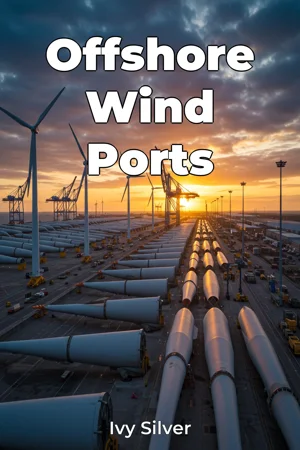
Can ports keep pace with the rapidly expanding offshore wind industry? "Offshore Wind Ports" examines the pivotal role ports play in facilitating the development and deployment of offshore wind farms, a critical component of the global transition to renewable energy. This book addresses the urgent need for ports to adapt and innovate to handle the unique logistical challenges presented by the massive size and weight of offshore wind turbine components. Two key topics explored are port infrastructure development and technological advancements. Infrastructure development involves not just expanding quayside space and increasing load-bearing capacity but also dredging deeper channels and constructing specialized storage areas. Technological advancements encompass the innovative engineering solutions required for transporting, lifting, and assembling these colossal structures, often in challenging marine environments. These topics are relevant because the success of offshore wind projects hinges on efficient and reliable port operations. Delays or inadequacies in port facilities can significantly increase project costs and timelines, hindering the widespread adoption of this renewable energy source. The book offers necessary background on the evolution of port infrastructure and the growth of the offshore wind sector. It traces the historical development of ports from simple trading posts to complex logistics hubs, highlighting the increasing demands placed upon them by ever-larger ships and cargo. Understanding this evolution provides context for the current challenges facing ports as they strive to accommodate the unprecedented scale of offshore wind components. The central argument of "Offshore Wind Ports" asserts that strategic investment in port infrastructure and the adoption of cutting-edge technologies are essential for unlocking the full potential of offshore wind energy. This argument is crucial because without adequate port facilities, the ambitious goals for offshore wind deployment cannot be realized, thereby jeopardizing efforts to combat climate change and transition to a sustainable energy future. The book unfolds in a structured manner. First, it introduces the fundamental concepts of offshore wind technology and the logistics involved in deploying wind farms. Second, it delves into the specifics of port infrastructure requirements, including quay design, heavy-lift equipment, and storage solutions. Third, it examines the technological innovations driving efficiency and safety in offshore wind port operations, such as advanced monitoring systems and automated handling equipment. Fourth, it culminates with a discussion of best practices, case studies of successful port adaptations, and a projection of future trends in offshore wind port development. The practical implications of this analysis are significant for port authorities, wind farm developers, and policymakers seeking to optimize the offshore wind supply chain. Evidence and research presented within "Offshore Wind Ports" include detailed case studies of ports that have successfully adapted to handle offshore wind turbine shipments, analyzing their investments, operational strategies, and resulting economic benefits. Unique data sources, such as port traffic statistics, engineering specifications for heavy-lift equipment, and interviews with port operators and wind farm developers, will provide valuable insights. Interdisciplinary connections are forged with fields such as civil engineering, supply chain management, and renewable energy policy. Civil engineering principles underpin the design and construction of port infrastructure, while supply chain management expertise is crucial for optimizing the flow of components from manufacturing facilities to offshore installation sites. Renewable energy policy shapes the regulatory landscape and incentivizes investment in offshore wind projects, influencing the demand for specialized port facilities. This book adopts a fact-based, analytical tone, presenting information in a clear and accessible manner. It is targeted toward port authorities, wind farm developers, engineers, policymakers, and students interested in renewable energy and maritime logistics. "Offshore Wind Ports" aims to serve as a valuable resource for professionals seeking to understand and navigate the complexities of this rapidly evolving industry. The scope of the book encompasses ports in North America, Europe, and Asia, providing a global perspective on the challenges and opportunities associated with offshore wind port development. However, it focuses primarily on the logistical aspects of port operations, with a lesser emphasis on the environmental impacts of port construction and operation. Addressing the ongoing debate surrounding the balance between offshore wind development and potential disruption to marine ecosystems, the book highlights the importance of sustainable port practices that minimize environmental impact. By offering an in-depth exploration of port infrastructure and technological advancements, "Offshore Wind Ports" provides a comprehensive guide for stakeholders seeking to capitalize on the burgeoning offshore wind industry, ensuring that ports are equipped to meet the demands of this vital renewable energy sector.
Can ports keep pace with the rapidly expanding offshore wind industry? "Offshore Wind Ports" examines the pivotal role ports play in facilitating the development and deployment of offshore wind farms, a critical component of the global transition to renewable energy. This book addresses the urgent need for ports to adapt and innovate to handle the unique logistical challenges presented by the massive size and weight of offshore wind turbine components. Two key topics explored are port infrastructure development and technological advancements. Infrastructure development involves not just expanding quayside space and increasing load-bearing capacity but also dredging deeper channels and constructing specialized storage areas. Technological advancements encompass the innovative engineering solutions required for transporting, lifting, and assembling these colossal structures, often in challenging marine environments. These topics are relevant because the success of offshore wind projects hinges on efficient and reliable port operations. Delays or inadequacies in port facilities can significantly increase project costs and timelines, hindering the widespread adoption of this renewable energy source. The book offers necessary background on the evolution of port infrastructure and the growth of the offshore wind sector. It traces the historical development of ports from simple trading posts to complex logistics hubs, highlighting the increasing demands placed upon them by ever-larger ships and cargo. Understanding this evolution provides context for the current challenges facing ports as they strive to accommodate the unprecedented scale of offshore wind components. The central argument of "Offshore Wind Ports" asserts that strategic investment in port infrastructure and the adoption of cutting-edge technologies are essential for unlocking the full potential of offshore wind energy. This argument is crucial because without adequate port facilities, the ambitious goals for offshore wind deployment cannot be realized, thereby jeopardizing efforts to combat climate change and transition to a sustainable energy future. The book unfolds in a structured manner. First, it introduces the fundamental concepts of offshore wind technology and the logistics involved in deploying wind farms. Second, it delves into the specifics of port infrastructure requirements, including quay design, heavy-lift equipment, and storage solutions. Third, it examines the technological innovations driving efficiency and safety in offshore wind port operations, such as advanced monitoring systems and automated handling equipment. Fourth, it culminates with a discussion of best practices, case studies of successful port adaptations, and a projection of future trends in offshore wind port development. The practical implications of this analysis are significant for port authorities, wind farm developers, and policymakers seeking to optimize the offshore wind supply chain. Evidence and research presented within "Offshore Wind Ports" include detailed case studies of ports that have successfully adapted to handle offshore wind turbine shipments, analyzing their investments, operational strategies, and resulting economic benefits. Unique data sources, such as port traffic statistics, engineering specifications for heavy-lift equipment, and interviews with port operators and wind farm developers, will provide valuable insights. Interdisciplinary connections are forged with fields such as civil engineering, supply chain management, and renewable energy policy. Civil engineering principles underpin the design and construction of port infrastructure, while supply chain management expertise is crucial for optimizing the flow of components from manufacturing facilities to offshore installation sites. Renewable energy policy shapes the regulatory landscape and incentivizes investment in offshore wind projects, influencing the demand for specialized port facilities. This book adopts a fact-based, analytical tone, presenting information in a clear and accessible manner. It is targeted toward port authorities, wind farm developers, engineers, policymakers, and students interested in renewable energy and maritime logistics. "Offshore Wind Ports" aims to serve as a valuable resource for professionals seeking to understand and navigate the complexities of this rapidly evolving industry. The scope of the book encompasses ports in North America, Europe, and Asia, providing a global perspective on the challenges and opportunities associated with offshore wind port development. However, it focuses primarily on the logistical aspects of port operations, with a lesser emphasis on the environmental impacts of port construction and operation. Addressing the ongoing debate surrounding the balance between offshore wind development and potential disruption to marine ecosystems, the book highlights the importance of sustainable port practices that minimize environmental impact. By offering an in-depth exploration of port infrastructure and technological advancements, "Offshore Wind Ports" provides a comprehensive guide for stakeholders seeking to capitalize on the burgeoning offshore wind industry, ensuring that ports are equipped to meet the demands of this vital renewable energy sector.
"Offshore Wind Ports" explores the critical role ports play in the burgeoning offshore wind energy sector. As wind farm development accelerates, ports must adapt to handle massive turbine components. The book highlights how strategic investments are essential to upgrade port infrastructure, including expanding quayside space and increasing load-bearing capacity. Readers will gain insights into how technological advancements, such as advanced monitoring systems, are optimizing port operations. The book traces the evolution of port infrastructure, revealing the increasing demands placed upon them. It then delves into port infrastructure requirements, including quay design and heavy-lift equipment. Through case studies and data, "Offshore Wind Ports" provides a global perspective on best practices and future trends, offering a comprehensive guide for stakeholders seeking to navigate the complexities of this vital renewable energy sector.
Book Details
ISBN
9788235261274
Publisher
Publifye AS
Your Licenses
You don't own any licenses for this book
Purchase a license below to unlock this book and download the EPUB.
Purchase License
Select a tier to unlock this book
Need bulk licensing?
Contact us for enterprise agreements.