
About This Book
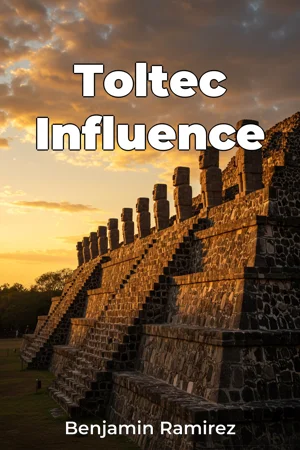
How did one civilization’s architectural and religious innovations shape the destiny of an entire region centuries later? "Toltec Influence" delves into the pervasive impact of the Toltec civilization on Mesoamerica, particularly its lasting effects on the architectural landscape and religious practices of subsequent cultures, most notably the Aztecs. The book explores the intricate web of cultural transmission, adaptation, and reinterpretation that defined the post-Toltec world, offering a comprehensive analysis of the Toltecs' enduring legacy. This book addresses two primary topics: the specific architectural innovations pioneered by the Toltecs, such as their distinctive use of Atlantean figures, serpent columns, and chacmool sculptures, and the integration of Toltec religious beliefs and deities, including Quetzalcoatl, into the broader Mesoamerican pantheon. Understanding these elements is crucial because it illuminates how a relatively short-lived civilization left an indelible mark on the ideological and physical structures of later societies. To fully appreciate the Toltec influence, readers must grasp the fundamental historical context of Mesoamerica, specifically the period between the decline of Teotihuacan and the rise of the Aztec Empire. This era saw the flourishing of various regional powers, with the Toltecs of Tula emerging as a dominant force. Their societal structure, religious beliefs, and artistic styles were disseminated throughout the region through trade, conquest, and cultural exchange. The central argument of "Toltec Influence" is that the Toltecs established a cultural template that later civilizations, especially the Aztecs, consciously emulated and adapted to legitimize their own power and status. By appropriating Toltec symbols, architectural styles, and religious narratives, the Aztecs sought to connect themselves to a prestigious past, thereby reinforcing their political and spiritual authority. The book is structured to provide a systematic exploration of this argument. It begins by introducing the Toltec civilization, its rise to prominence, and its eventual decline. Subsequent chapters examine specific aspects of Toltec architecture, detailing the construction techniques, symbolic meanings, and regional variations of their building styles. Further chapters explore the Toltec religious system, focusing on key deities, rituals, and cosmological beliefs. The book then transitions to an analysis of the Aztec appropriation of Toltec elements, comparing and contrasting the architectural and religious practices of both cultures. The final chapters synthesize the evidence, offering a nuanced interpretation of the Toltec legacy and its implications for understanding Mesoamerican history. Support for these arguments comes from a variety of sources, including archaeological evidence from sites such as Tula and Tenochtitlan, ethnohistorical accounts from early Spanish chroniclers, and iconographic analysis of Mesoamerican art. The book integrates these diverse sources to provide a balanced and comprehensive assessment of the Toltec influence. "Toltec Influence" features interdisciplinary connections spanning archaeology, art history, religious studies, and anthropology. By drawing on insights from these fields, the book offers a holistic understanding of the complex cultural dynamics that shaped Mesoamerica. For example, archaeological findings provide concrete evidence of architectural similarities between Toltec and Aztec sites, while art historical analysis reveals the symbolic meanings embedded in their respective artistic traditions. This book differs from existing scholarship by offering a focused, in-depth analysis of the specific mechanisms through which Toltec influence was transmitted and transformed. Rather than simply cataloging similarities between the two cultures, it examines the conscious strategies employed by the Aztecs to align themselves with the Toltec heritage. Written in a clear and accessible style, "Toltec Influence" is aimed at students, scholars, and general readers interested in Mesoamerican history and culture. It would be valuable to readers wanting to understand the complex relationship between past and present in the context of ancient civilizations. The scope of the book is limited to the architectural and religious influence of the Toltecs on later Mesoamerican civilizations, particularly the Aztecs. While it acknowledges the broader cultural impact of the Toltecs, it focuses primarily on these two key areas. The information presented in "Toltec Influence" has practical applications for archaeologists, art historians, and anyone interested in cultural heritage. By understanding the dynamics of cultural transmission and adaptation, we can gain insights into the processes that shape our own world. The book engages with ongoing debates about the nature and extent of Toltec influence in Mesoamerica, acknowledging the complexities and ambiguities inherent in interpreting the archaeological and historical record. By presenting a balanced and nuanced perspective, "Toltec Influence" aims to contribute to a deeper understanding of this fascinating and culturally rich region.
How did one civilization’s architectural and religious innovations shape the destiny of an entire region centuries later? "Toltec Influence" delves into the pervasive impact of the Toltec civilization on Mesoamerica, particularly its lasting effects on the architectural landscape and religious practices of subsequent cultures, most notably the Aztecs. The book explores the intricate web of cultural transmission, adaptation, and reinterpretation that defined the post-Toltec world, offering a comprehensive analysis of the Toltecs' enduring legacy. This book addresses two primary topics: the specific architectural innovations pioneered by the Toltecs, such as their distinctive use of Atlantean figures, serpent columns, and chacmool sculptures, and the integration of Toltec religious beliefs and deities, including Quetzalcoatl, into the broader Mesoamerican pantheon. Understanding these elements is crucial because it illuminates how a relatively short-lived civilization left an indelible mark on the ideological and physical structures of later societies. To fully appreciate the Toltec influence, readers must grasp the fundamental historical context of Mesoamerica, specifically the period between the decline of Teotihuacan and the rise of the Aztec Empire. This era saw the flourishing of various regional powers, with the Toltecs of Tula emerging as a dominant force. Their societal structure, religious beliefs, and artistic styles were disseminated throughout the region through trade, conquest, and cultural exchange. The central argument of "Toltec Influence" is that the Toltecs established a cultural template that later civilizations, especially the Aztecs, consciously emulated and adapted to legitimize their own power and status. By appropriating Toltec symbols, architectural styles, and religious narratives, the Aztecs sought to connect themselves to a prestigious past, thereby reinforcing their political and spiritual authority. The book is structured to provide a systematic exploration of this argument. It begins by introducing the Toltec civilization, its rise to prominence, and its eventual decline. Subsequent chapters examine specific aspects of Toltec architecture, detailing the construction techniques, symbolic meanings, and regional variations of their building styles. Further chapters explore the Toltec religious system, focusing on key deities, rituals, and cosmological beliefs. The book then transitions to an analysis of the Aztec appropriation of Toltec elements, comparing and contrasting the architectural and religious practices of both cultures. The final chapters synthesize the evidence, offering a nuanced interpretation of the Toltec legacy and its implications for understanding Mesoamerican history. Support for these arguments comes from a variety of sources, including archaeological evidence from sites such as Tula and Tenochtitlan, ethnohistorical accounts from early Spanish chroniclers, and iconographic analysis of Mesoamerican art. The book integrates these diverse sources to provide a balanced and comprehensive assessment of the Toltec influence. "Toltec Influence" features interdisciplinary connections spanning archaeology, art history, religious studies, and anthropology. By drawing on insights from these fields, the book offers a holistic understanding of the complex cultural dynamics that shaped Mesoamerica. For example, archaeological findings provide concrete evidence of architectural similarities between Toltec and Aztec sites, while art historical analysis reveals the symbolic meanings embedded in their respective artistic traditions. This book differs from existing scholarship by offering a focused, in-depth analysis of the specific mechanisms through which Toltec influence was transmitted and transformed. Rather than simply cataloging similarities between the two cultures, it examines the conscious strategies employed by the Aztecs to align themselves with the Toltec heritage. Written in a clear and accessible style, "Toltec Influence" is aimed at students, scholars, and general readers interested in Mesoamerican history and culture. It would be valuable to readers wanting to understand the complex relationship between past and present in the context of ancient civilizations. The scope of the book is limited to the architectural and religious influence of the Toltecs on later Mesoamerican civilizations, particularly the Aztecs. While it acknowledges the broader cultural impact of the Toltecs, it focuses primarily on these two key areas. The information presented in "Toltec Influence" has practical applications for archaeologists, art historians, and anyone interested in cultural heritage. By understanding the dynamics of cultural transmission and adaptation, we can gain insights into the processes that shape our own world. The book engages with ongoing debates about the nature and extent of Toltec influence in Mesoamerica, acknowledging the complexities and ambiguities inherent in interpreting the archaeological and historical record. By presenting a balanced and nuanced perspective, "Toltec Influence" aims to contribute to a deeper understanding of this fascinating and culturally rich region.
"Toltec Influence" explores the profound and lasting impact of the Toltec civilization on Mesoamerica, particularly on the Aztecs. It examines how the Toltecs, despite their relatively short reign, laid a cultural foundation that later societies deliberately emulated. The book highlights architectural innovations like Atlantean figures and serpent columns, alongside the integration of deities like Quetzalcoatl into the broader Mesoamerican religious landscape. Understanding the Toltec civilization provides insight into the ideological and physical structures adopted by successor cultures. The book meticulously dissects the Toltec's rise and decline, then transitions to the architectural techniques, symbolic meanings, and regional variations in their building styles. Subsequent chapters explore the Toltec religious system, focusing on key deities, rituals, and cosmological beliefs. By contrasting Toltec and Aztec practices, the book reveals how the Aztecs strategically appropriated Toltec elements to legitimize their rule and connect themselves to a prestigious past, reinforcing their political and spiritual authority. Through archaeological evidence, historical accounts, and art analysis, "Toltec Influence" offers a comprehensive look at Mesoamerican history. It stands out by focusing on how Toltec influence was transmitted and transformed, rather than simply cataloging similarities between cultures. This exploration offers value to students, scholars, and anyone interested in understanding the complex relationship between past and present in ancient civilizations.
Book Details
ISBN
9788235261229
Publisher
Publifye AS
Your Licenses
You don't own any licenses for this book
Purchase a license below to unlock this book and download the EPUB.
Purchase License
Select a tier to unlock this book
Need bulk licensing?
Contact us for enterprise agreements.