
About This Book
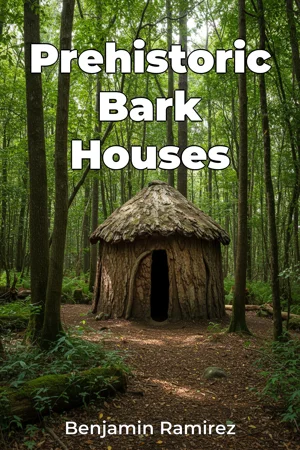
What if the blueprints for sustainable, adaptable housing were not modern innovations, but echoes of ancient ingenuity? 'Prehistoric Bark Houses' delves into the remarkable architecture of bark-covered dwellings crafted by indigenous groups across diverse climates, revealing their enduring significance as shelters, insulators, and portable habitats. This exploration transcends simple historical documentation, illuminating the profound understanding these communities possessed regarding resource management, environmental adaptation, and structural engineering. This book examines three central themes: the architectural diversity of bark houses, the environmental intelligence embedded in their design, and the cultural context of their construction and use. Understanding these aspects is crucial for appreciating the sophistication of indigenous building practices and their relevance to contemporary discussions on sustainable architecture and cultural preservation. The book provides an essential contribution to architectural history by documenting buildings often overlooked in mainstream architectural discourse. 'Prehistoric Bark Houses' provides a comprehensive analysis of this overlooked architectural form. It argues that bark houses represent a sophisticated, sustainable, and culturally significant building tradition that deserves recognition and further study. This perspective challenges conventional notions of architectural progress, highlighting the value of indigenous knowledge systems and their potential to inform contemporary building practices. The book unfolds systematically. First, it introduces the fundamental principles of bark house construction, exploring the range of designs and materials employed by different indigenous groups. Subsequent sections delve into specific case studies from various geographic regions, analyzing the structural adaptations that allowed bark houses to thrive in diverse environments, including temperate forests, coastal regions, and even more arid landscapes. The final chapters synthesize these findings to demonstrate the broader implications of bark house architecture for understanding human-environment relationships and inform sustainable building initiatives. The book relies on a multidisciplinary approach, drawing upon archaeological evidence, ethnographic accounts, and architectural analysis. It presents detailed descriptions of bark house construction techniques, supported by illustrations and diagrams. It utilizes original field notes, historical photographs, and analyses of surviving structures to provide a nuanced understanding of bark house architecture. This study integrates knowledge from various fields, including anthropology, archaeology, forestry, and sustainable design. By connecting architectural practices with cultural traditions and environmental factors, the book offers a more holistic understanding of bark houses. It introduces a novel perspective on architectural history, emphasizing the importance of indigenous knowledge and sustainable practices. The tone is authoritative yet accessible, aiming to engage both academic and general readers interested in architecture, history, and indigenous cultures. 'Prehistoric Bark Houses' is intended for architects, historians, anthropologists, environmentalists, and anyone seeking inspiration from innovative and sustainable building practices. It offers valuable insights for those interested in vernacular architecture, indigenous technologies, and the history of human adaptation to the environment. The book focuses on bark houses found in North America, Europe, and Asia, acknowledging that bark was used worldwide but concentrates on regions with substantial archaeological or ethnographic documentation. While the book acknowledges the evolution of bark house architecture into modern times, the primary focus remains on prehistoric and early historic examples. The information presented in this book can be applied to contemporary architectural design by informing the development of sustainable and culturally sensitive building practices. The principles of natural material sourcing, passive heating and cooling, and adaptability to local conditions can be integrated into modern architecture. The book acknowledges the ongoing debates surrounding land rights, cultural appropriation, and the interpretation of indigenous history. It seeks to present a balanced and respectful portrayal of bark house architecture, acknowledging the diverse perspectives and cultural sensitivities involved.
What if the blueprints for sustainable, adaptable housing were not modern innovations, but echoes of ancient ingenuity? 'Prehistoric Bark Houses' delves into the remarkable architecture of bark-covered dwellings crafted by indigenous groups across diverse climates, revealing their enduring significance as shelters, insulators, and portable habitats. This exploration transcends simple historical documentation, illuminating the profound understanding these communities possessed regarding resource management, environmental adaptation, and structural engineering. This book examines three central themes: the architectural diversity of bark houses, the environmental intelligence embedded in their design, and the cultural context of their construction and use. Understanding these aspects is crucial for appreciating the sophistication of indigenous building practices and their relevance to contemporary discussions on sustainable architecture and cultural preservation. The book provides an essential contribution to architectural history by documenting buildings often overlooked in mainstream architectural discourse. 'Prehistoric Bark Houses' provides a comprehensive analysis of this overlooked architectural form. It argues that bark houses represent a sophisticated, sustainable, and culturally significant building tradition that deserves recognition and further study. This perspective challenges conventional notions of architectural progress, highlighting the value of indigenous knowledge systems and their potential to inform contemporary building practices. The book unfolds systematically. First, it introduces the fundamental principles of bark house construction, exploring the range of designs and materials employed by different indigenous groups. Subsequent sections delve into specific case studies from various geographic regions, analyzing the structural adaptations that allowed bark houses to thrive in diverse environments, including temperate forests, coastal regions, and even more arid landscapes. The final chapters synthesize these findings to demonstrate the broader implications of bark house architecture for understanding human-environment relationships and inform sustainable building initiatives. The book relies on a multidisciplinary approach, drawing upon archaeological evidence, ethnographic accounts, and architectural analysis. It presents detailed descriptions of bark house construction techniques, supported by illustrations and diagrams. It utilizes original field notes, historical photographs, and analyses of surviving structures to provide a nuanced understanding of bark house architecture. This study integrates knowledge from various fields, including anthropology, archaeology, forestry, and sustainable design. By connecting architectural practices with cultural traditions and environmental factors, the book offers a more holistic understanding of bark houses. It introduces a novel perspective on architectural history, emphasizing the importance of indigenous knowledge and sustainable practices. The tone is authoritative yet accessible, aiming to engage both academic and general readers interested in architecture, history, and indigenous cultures. 'Prehistoric Bark Houses' is intended for architects, historians, anthropologists, environmentalists, and anyone seeking inspiration from innovative and sustainable building practices. It offers valuable insights for those interested in vernacular architecture, indigenous technologies, and the history of human adaptation to the environment. The book focuses on bark houses found in North America, Europe, and Asia, acknowledging that bark was used worldwide but concentrates on regions with substantial archaeological or ethnographic documentation. While the book acknowledges the evolution of bark house architecture into modern times, the primary focus remains on prehistoric and early historic examples. The information presented in this book can be applied to contemporary architectural design by informing the development of sustainable and culturally sensitive building practices. The principles of natural material sourcing, passive heating and cooling, and adaptability to local conditions can be integrated into modern architecture. The book acknowledges the ongoing debates surrounding land rights, cultural appropriation, and the interpretation of indigenous history. It seeks to present a balanced and respectful portrayal of bark house architecture, acknowledging the diverse perspectives and cultural sensitivities involved.
"Prehistoric Bark Houses" explores the ingenious architecture of bark dwellings crafted by indigenous communities worldwide. These structures, far from being primitive, showcase a deep understanding of resource management and environmental adaptation. For example, bark's use as an insulator demonstrates ancient knowledge of thermal regulation, predating modern insulation techniques. These dwellings also functioned as portable habitats, adaptable to various climates and needs, displaying an impressive mastery of sustainable housing. The book examines the diverse designs and materials employed in bark house construction across different geographic regions, from temperate forests to coastal areas. It reveals how indigenous building practices adapted to specific environments, offering valuable insights into human-environment relationships. Through archaeological evidence, ethnographic accounts, and architectural analysis, the book demonstrates how these bark houses represent a sophisticated building tradition worthy of recognition. By integrating knowledge from anthropology, archaeology, and sustainable design, "Prehistoric Bark Houses" challenges conventional notions of architectural progress. The book unfolds by first introducing fundamental construction principles, then delving into case studies. Finally, it synthesizes findings to highlight the broader implications of bark house architecture for sustainable building, making a compelling case for the relevance of indigenous knowledge in contemporary architectural discourse and cultural preservation.
Book Details
ISBN
9788235261137
Publisher
Publifye AS
Your Licenses
You don't own any licenses for this book
Purchase a license below to unlock this book and download the EPUB.
Purchase License
Select a tier to unlock this book
Need bulk licensing?
Contact us for enterprise agreements.