
About This Book
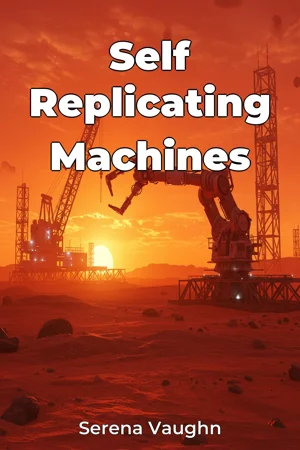
Imagine a future where resource scarcity is a relic of the past, and space exploration is no longer bound by the limitations of terrestrial manufacturing. This book, "Self Replicating Machines," explores the potential of machines capable of autonomously creating copies of themselves, a concept that holds profound implications for both industry and space travel. We will delve into the core principles governing self-replication, spanning from theoretical models like the Von Neumann universal constructor to the practical challenges of engineering such systems. The significance of this topic lies in its potential to revolutionize resource utilization and open up new frontiers in space exploration. Self-replicating machines offer a pathway to exponential growth in production capacity, bypassing the constraints of traditional manufacturing and logistics. Understanding self-replication requires a foundation in several scientific and engineering disciplines, including robotics, materials science, computer science, and control theory. The book will provide this background, introducing concepts such as automated assembly, feedback control systems, and the challenges of creating robust and adaptable machinery. The central argument of "Self Replicating Machines" is that while significant technological hurdles remain, the development of self-replicating machines is not only theoretically possible but also increasingly within our reach. Overcoming these engineering challenges could lead to a paradigm shift in how we approach manufacturing, resource extraction, and space colonization. The book will first introduce the history of self-replication concepts, tracing their origins from mathematical thought experiments to contemporary research. We will then dissect the essential components of a self-replicating system, analyzing the requirements for resource acquisition, processing, and assembly. Key chapters will focus on specific engineering challenges, such as designing robust and reliable robotic systems, developing advanced materials capable of withstanding harsh environments, and creating control algorithms that can manage the complexity of self-replication. The book will culminate with a discussion of the ethical and societal implications of self-replicating technology. Supporting our arguments will be data drawn from various sources, including academic research papers, patent filings, and engineering reports. We will analyze case studies of existing automated systems to identify both their limitations and their potential for adaptation into self-replicating platforms. This book connects to diverse fields, including economics, environmental science, and space policy. Considering the economic impact, self-replicating machines could undermine established industries while simultaneously creating new opportunities. From an environmental perspective, they offer the prospect of closed-loop manufacturing systems that minimize waste and pollution. Regarding space policy, self-replicating machines could enable the construction of infrastructure on other planets using locally sourced materials, making space colonization more feasible. Our approach is characterized by a rigorous, technically grounded analysis of self-replicating machines, combined with a forward-looking perspective on their potential impact. The writing style is intended to be clear and accessible, making complex technical concepts understandable to a broad audience. The target audience includes engineers, scientists, researchers, policymakers, and anyone interested in the future of technology and its impact on society and space exploration. This book will be valuable to them because it provides a comprehensive overview of the field, highlighting both the challenges and the opportunities that self-replicating machines present. As a work of non-fiction in the science and technology genres, it focuses on presenting factual information and evidence-based arguments, avoiding speculation. The scope of the book is broad, covering the technical, economic, and societal dimensions of self-replicating machines, but it deliberately avoids science-fiction scenarios, maintaining a grounded and realistic perspective. The real-world applications discussed range from automated factories on Earth to resource extraction on asteroids and the establishment of self-sustaining colonies on the Moon or Mars. These applications highlight the transformative potential of self-replicating machines. The development of self-replicating technology is not without its controversies. The book will address concerns about uncontrolled replication and the potential for misuse, outlining existing safeguards and proposing future regulatory frameworks to mitigate these risks.
Imagine a future where resource scarcity is a relic of the past, and space exploration is no longer bound by the limitations of terrestrial manufacturing. This book, "Self Replicating Machines," explores the potential of machines capable of autonomously creating copies of themselves, a concept that holds profound implications for both industry and space travel. We will delve into the core principles governing self-replication, spanning from theoretical models like the Von Neumann universal constructor to the practical challenges of engineering such systems. The significance of this topic lies in its potential to revolutionize resource utilization and open up new frontiers in space exploration. Self-replicating machines offer a pathway to exponential growth in production capacity, bypassing the constraints of traditional manufacturing and logistics. Understanding self-replication requires a foundation in several scientific and engineering disciplines, including robotics, materials science, computer science, and control theory. The book will provide this background, introducing concepts such as automated assembly, feedback control systems, and the challenges of creating robust and adaptable machinery. The central argument of "Self Replicating Machines" is that while significant technological hurdles remain, the development of self-replicating machines is not only theoretically possible but also increasingly within our reach. Overcoming these engineering challenges could lead to a paradigm shift in how we approach manufacturing, resource extraction, and space colonization. The book will first introduce the history of self-replication concepts, tracing their origins from mathematical thought experiments to contemporary research. We will then dissect the essential components of a self-replicating system, analyzing the requirements for resource acquisition, processing, and assembly. Key chapters will focus on specific engineering challenges, such as designing robust and reliable robotic systems, developing advanced materials capable of withstanding harsh environments, and creating control algorithms that can manage the complexity of self-replication. The book will culminate with a discussion of the ethical and societal implications of self-replicating technology. Supporting our arguments will be data drawn from various sources, including academic research papers, patent filings, and engineering reports. We will analyze case studies of existing automated systems to identify both their limitations and their potential for adaptation into self-replicating platforms. This book connects to diverse fields, including economics, environmental science, and space policy. Considering the economic impact, self-replicating machines could undermine established industries while simultaneously creating new opportunities. From an environmental perspective, they offer the prospect of closed-loop manufacturing systems that minimize waste and pollution. Regarding space policy, self-replicating machines could enable the construction of infrastructure on other planets using locally sourced materials, making space colonization more feasible. Our approach is characterized by a rigorous, technically grounded analysis of self-replicating machines, combined with a forward-looking perspective on their potential impact. The writing style is intended to be clear and accessible, making complex technical concepts understandable to a broad audience. The target audience includes engineers, scientists, researchers, policymakers, and anyone interested in the future of technology and its impact on society and space exploration. This book will be valuable to them because it provides a comprehensive overview of the field, highlighting both the challenges and the opportunities that self-replicating machines present. As a work of non-fiction in the science and technology genres, it focuses on presenting factual information and evidence-based arguments, avoiding speculation. The scope of the book is broad, covering the technical, economic, and societal dimensions of self-replicating machines, but it deliberately avoids science-fiction scenarios, maintaining a grounded and realistic perspective. The real-world applications discussed range from automated factories on Earth to resource extraction on asteroids and the establishment of self-sustaining colonies on the Moon or Mars. These applications highlight the transformative potential of self-replicating machines. The development of self-replicating technology is not without its controversies. The book will address concerns about uncontrolled replication and the potential for misuse, outlining existing safeguards and proposing future regulatory frameworks to mitigate these risks.
"Self Replicating Machines" explores the fascinating concept of machines that can autonomously replicate themselves. This technology has the potential to revolutionize industries and make space exploration far more efficient. Imagine, for instance, asteroid mining conducted by self-replicating robots, exponentially increasing resource availability. The book delves into the core principles behind these machines, from theoretical models like the Von Neumann constructor to the engineering challenges of building them. The book examines the scientific and engineering foundations required to understand self-replication, spanning robotics, materials science, and computer science. It argues that despite the hurdles, developing these machines is increasingly within reach and could lead to a paradigm shift in manufacturing, resource extraction, and space colonization. "Self Replicating Machines" begins by tracing the history of self-replication concepts, then dissects the essential components of a self-replicating system. Each chapter focuses on specific engineering challenges, such as designing robust robotic systems and developing advanced materials. The book provides a rigorous analysis, drawing on academic research, patent filings, and engineering reports, while also considering the ethical and societal implications of this transformative technology.
Book Details
ISBN
9788235261113
Publisher
Publifye AS
Your Licenses
You don't own any licenses for this book
Purchase a license below to unlock this book and download the EPUB.
Purchase License
Select a tier to unlock this book
Need bulk licensing?
Contact us for enterprise agreements.