
About This Book
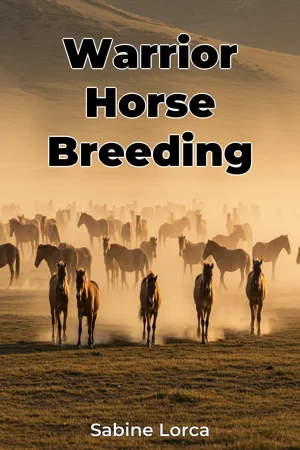
What if the key to military dominance in centuries past wasn't solely superior weaponry or strategy, but also the deliberate, scientific manipulation of horse breeds by indigenous cultures? This book, "Warrior Horse Breeding," delves into the largely unacknowledged history of how various indigenous societies selectively bred horses for specific traits – speed, endurance, and temperament – to achieve military advantages and transform transportation capabilities. We will explore how careful breeding practices allowed some cultures to develop horses uniquely suited for warfare and long-distance travel, shaping their political and economic power. This book examines three central themes: the biological science behind selective breeding for desired equine traits, the historical impact of these breeding practices on warfare and transportation, and the specific methodologies employed by indigenous cultures. The intersection of these topics reveals a sophisticated understanding of animal husbandry far exceeding previously recognized levels. Readers require a general knowledge of historical military campaigns and basic biological concepts related to genetics and animal breeding to fully grasp the book's arguments. The central argument of "Warrior Horse Breeding" is that indigenous cultures were not merely passive recipients of horses but active agents in their evolution, strategically crafting equine breeds to meet their specific needs. This proactive role significantly influenced their military success, trade networks, and overall societal development, challenging conventional narratives that often overlook indigenous scientific contributions. The book is structured to methodically build this argument. It begins by introducing the fundamentals of equine genetics and explaining how specific traits like speed, stamina, and docility could be enhanced through selective breeding. Then, it proceeds to specific case studies, focusing on distinct indigenous cultures known for their equestrian prowess. We will analyze the breeding practices of groups such as the Comanches of North America, the Bedouin tribes of the Arabian Peninsula, and the Mongols of Central Asia, detailing how they developed and maintained specialized horse breeds for raiding, trade, and warfare. The book will then explore the military advantages conferred by these selectively bred horses, examining battlefield tactics and logistical capabilities. Finally, it will discuss the lasting implications, addressing how modern horse breeds have inherited characteristics from these early breeding programs and reflecting on the broader impact of indigenous knowledge on animal science. The evidence presented in this book draws from a range of sources, including archaeological findings (horse remains, tack, and related artifacts), historical accounts from both indigenous and colonial sources, and genetic studies of modern horse breeds. Comparisons will be made between breeds, linking specific genetic markers to traits selected for by indigenous breeders. This book also connects to broader fields of study, including anthropology (examining the cultural significance of horses), environmental science (exploring the impact of horse breeding on landscapes), and political science (analyzing how equestrian dominance affected power dynamics). "Warrior Horse Breeding" offers a unique perspective by placing indigenous knowledge at the center of the narrative. Rather than viewing indigenous cultures as recipients of equestrian technology, it presents them as innovators who actively shaped the genetic makeup of horses to achieve strategic goals. Written in a factual, academic tone, "Warrior Horse Breeding" is intended for historians, biologists, military strategists, and anyone interested in the intersection of cultural history and animal science. This book fills a significant gap in the existing literature by highlighting the agency and ingenuity of indigenous peoples in shaping the very animals that played a crucial role in their survival and success. The scope of the book is focused on demonstrable examples of indigenous breeding programs and their direct impact on military and transportation capabilities and does not delve into veterinary or psychological aspects of horse management. The knowledge presented here can inform modern breeding programs by highlighting the value of traditional practices. It also offers insights into the history of human-animal interactions and the importance of recognizing indigenous contributions to scientific advancements. While there are ongoing debates about the extent to which specific indigenous groups consciously applied genetic principles, this book argues that their practical knowledge and selective breeding practices undeniably resulted in the development of specialized horse breeds suited for warfare and transportation.
What if the key to military dominance in centuries past wasn't solely superior weaponry or strategy, but also the deliberate, scientific manipulation of horse breeds by indigenous cultures? This book, "Warrior Horse Breeding," delves into the largely unacknowledged history of how various indigenous societies selectively bred horses for specific traits – speed, endurance, and temperament – to achieve military advantages and transform transportation capabilities. We will explore how careful breeding practices allowed some cultures to develop horses uniquely suited for warfare and long-distance travel, shaping their political and economic power. This book examines three central themes: the biological science behind selective breeding for desired equine traits, the historical impact of these breeding practices on warfare and transportation, and the specific methodologies employed by indigenous cultures. The intersection of these topics reveals a sophisticated understanding of animal husbandry far exceeding previously recognized levels. Readers require a general knowledge of historical military campaigns and basic biological concepts related to genetics and animal breeding to fully grasp the book's arguments. The central argument of "Warrior Horse Breeding" is that indigenous cultures were not merely passive recipients of horses but active agents in their evolution, strategically crafting equine breeds to meet their specific needs. This proactive role significantly influenced their military success, trade networks, and overall societal development, challenging conventional narratives that often overlook indigenous scientific contributions. The book is structured to methodically build this argument. It begins by introducing the fundamentals of equine genetics and explaining how specific traits like speed, stamina, and docility could be enhanced through selective breeding. Then, it proceeds to specific case studies, focusing on distinct indigenous cultures known for their equestrian prowess. We will analyze the breeding practices of groups such as the Comanches of North America, the Bedouin tribes of the Arabian Peninsula, and the Mongols of Central Asia, detailing how they developed and maintained specialized horse breeds for raiding, trade, and warfare. The book will then explore the military advantages conferred by these selectively bred horses, examining battlefield tactics and logistical capabilities. Finally, it will discuss the lasting implications, addressing how modern horse breeds have inherited characteristics from these early breeding programs and reflecting on the broader impact of indigenous knowledge on animal science. The evidence presented in this book draws from a range of sources, including archaeological findings (horse remains, tack, and related artifacts), historical accounts from both indigenous and colonial sources, and genetic studies of modern horse breeds. Comparisons will be made between breeds, linking specific genetic markers to traits selected for by indigenous breeders. This book also connects to broader fields of study, including anthropology (examining the cultural significance of horses), environmental science (exploring the impact of horse breeding on landscapes), and political science (analyzing how equestrian dominance affected power dynamics). "Warrior Horse Breeding" offers a unique perspective by placing indigenous knowledge at the center of the narrative. Rather than viewing indigenous cultures as recipients of equestrian technology, it presents them as innovators who actively shaped the genetic makeup of horses to achieve strategic goals. Written in a factual, academic tone, "Warrior Horse Breeding" is intended for historians, biologists, military strategists, and anyone interested in the intersection of cultural history and animal science. This book fills a significant gap in the existing literature by highlighting the agency and ingenuity of indigenous peoples in shaping the very animals that played a crucial role in their survival and success. The scope of the book is focused on demonstrable examples of indigenous breeding programs and their direct impact on military and transportation capabilities and does not delve into veterinary or psychological aspects of horse management. The knowledge presented here can inform modern breeding programs by highlighting the value of traditional practices. It also offers insights into the history of human-animal interactions and the importance of recognizing indigenous contributions to scientific advancements. While there are ongoing debates about the extent to which specific indigenous groups consciously applied genetic principles, this book argues that their practical knowledge and selective breeding practices undeniably resulted in the development of specialized horse breeds suited for warfare and transportation.
"Warrior Horse Breeding" explores the overlooked role of indigenous cultures in strategically breeding horses for military and logistical advantages. Challenging conventional narratives, the book argues that groups like the Comanches, Bedouin, and Mongols actively shaped equine genetics to enhance traits like speed and endurance, thereby impacting their political and economic power. For instance, selective breeding allowed some cultures to develop horses uniquely suited for warfare and long-distance travel, transforming their capabilities. The book systematically examines equine genetics, the historical impact of selective breeding on warfare and transportation, and specific methodologies employed by indigenous cultures. By analyzing archaeological findings, historical accounts, and genetic studies, the author demonstrates how specific traits were enhanced through selective breeding. Ultimately, "Warrior Horse Breeding" highlights the agency and ingenuity of indigenous peoples in shaping the animals that played a crucial role in their success, filling a gap in existing literature by placing indigenous knowledge at the center of the narrative. The book progresses by first introducing equine genetics, then moves to specific case studies of indigenous cultures and their breeding practices. It then explores the military advantages these horses conferred and concludes with the lasting implications on modern horse breeds and animal science. This approach allows for a comprehensive understanding of how indigenous knowledge shaped the evolution of horse breeds and influenced warfare and transportation throughout history.
Book Details
ISBN
9788235261106
Publisher
Publifye AS
Your Licenses
You don't own any licenses for this book
Purchase a license below to unlock this book and download the EPUB.
Purchase License
Select a tier to unlock this book
Need bulk licensing?
Contact us for enterprise agreements.