
About This Book
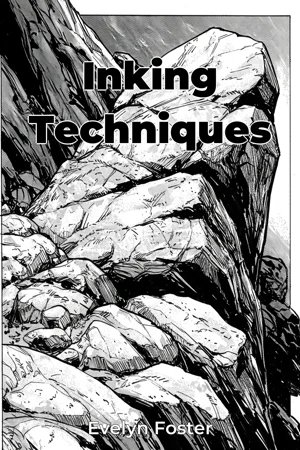
Have you ever wondered what transforms a simple pencil sketch into a dynamic and visually arresting comic book panel? The answer lies in the nuanced art of inking. "Inking Techniques" is dedicated to unveiling the core principles of this vital craft, focusing primarily on line weight, shading, and textures, essential for any aspiring or established comic book artist. This book addresses the critical role inking plays in defining form, creating depth, and establishing mood within comic book art. These techniques are not merely aesthetic choices; they are fundamental storytelling tools that guide the reader's eye and enhance the narrative impact of each panel. Without a solid understanding of these principles, the impact of even the most imaginative comic concept will be diminished. "Inking Techniques" offers a comprehensive exploration into the world of comic book inking, beginning with a detailed examination of line weight. Line weight dictates the perceived importance and spatial relationship of objects within the panel. The book then transitions into shading techniques, demonstrating how to use light and shadow to create volume, depth, and atmosphere. Finally, it delves into the effective application of textures, which add realism, tactile qualities, and visual interest to the artwork. The core argument presented in "Inking Techniques" is that proficient inking skills are indispensable for professional-quality comic book art. These skills are not innate talents but learned techniques honed through practice and a thorough understanding of artistic principles. Mastering these techniques allows artists to effectively communicate their vision and create visually compelling narratives. The book is structured to provide a logical progression from fundamental concepts to advanced techniques. It begins by introducing the basic tools and materials used in inking. Next, it develops the core concepts of line weight, shading, and textures through detailed examples and step-by-step demonstrations. The book then culminates in a series of case studies, analyzing the inking styles of prominent comic book artists and demonstrating how they employ these techniques to achieve specific artistic effects. Finally, the book offers practical exercises and projects designed to help readers apply what they have learned and develop their own unique inking style. The arguments presented are supported by visual examples from classic and contemporary comic books, alongside practical exercises designed to reinforce understanding. It also includes insights gleaned from interviews with professional comic book inkers, providing real-world perspectives on the craft. The art of inking presented in "Inking Techniques" holds strong connections to visual communication and graphic design, where line, tone, and texture are similarly leveraged to convey information and evoke emotion. Understanding these connections enhances the artist's ability to create impactful and engaging visuals. Furthermore, the book touches upon the psychology of perception, exploring how different inking styles can influence the reader's emotional response to the artwork. "Inking Techniques" takes a practical approach, emphasizing hands-on learning and skill development. It avoids abstract theoretical discussions and focuses on providing clear, concise explanations of inking techniques that can be immediately applied by the reader. The target audience for this book includes aspiring comic book artists, illustrators, and anyone interested in learning the fundamentals of inking. It will also be valuable to established artists looking to refine their skills or explore new inking styles. The book caters to readers with some basic drawing skills but assumes no prior knowledge of inking. As a guide in the 'Crafts & Hobbies, Art' genres, the book provides a practical, hands-on approach, offering clear instruction and projects suited to this field. While it covers a broad range of inking techniques, the book primarily focuses on traditional inking methods using pen and ink. It does not delve into digital inking to a great extent, though it acknowledges its growing importance in the industry. The information in "Inking Techniques" can be directly applied to various creative projects, including comic books, graphic novels, illustrations, and even fine art. Readers will be equipped with the skills and knowledge necessary to create professional-quality inked artwork. The book also addresses the continuing debate between traditional and digital inking, exploring the advantages and disadvantages of each approach. It encourages readers to experiment with both methods and develop a style that suits their individual preferences and artistic goals.
Have you ever wondered what transforms a simple pencil sketch into a dynamic and visually arresting comic book panel? The answer lies in the nuanced art of inking. "Inking Techniques" is dedicated to unveiling the core principles of this vital craft, focusing primarily on line weight, shading, and textures, essential for any aspiring or established comic book artist. This book addresses the critical role inking plays in defining form, creating depth, and establishing mood within comic book art. These techniques are not merely aesthetic choices; they are fundamental storytelling tools that guide the reader's eye and enhance the narrative impact of each panel. Without a solid understanding of these principles, the impact of even the most imaginative comic concept will be diminished. "Inking Techniques" offers a comprehensive exploration into the world of comic book inking, beginning with a detailed examination of line weight. Line weight dictates the perceived importance and spatial relationship of objects within the panel. The book then transitions into shading techniques, demonstrating how to use light and shadow to create volume, depth, and atmosphere. Finally, it delves into the effective application of textures, which add realism, tactile qualities, and visual interest to the artwork. The core argument presented in "Inking Techniques" is that proficient inking skills are indispensable for professional-quality comic book art. These skills are not innate talents but learned techniques honed through practice and a thorough understanding of artistic principles. Mastering these techniques allows artists to effectively communicate their vision and create visually compelling narratives. The book is structured to provide a logical progression from fundamental concepts to advanced techniques. It begins by introducing the basic tools and materials used in inking. Next, it develops the core concepts of line weight, shading, and textures through detailed examples and step-by-step demonstrations. The book then culminates in a series of case studies, analyzing the inking styles of prominent comic book artists and demonstrating how they employ these techniques to achieve specific artistic effects. Finally, the book offers practical exercises and projects designed to help readers apply what they have learned and develop their own unique inking style. The arguments presented are supported by visual examples from classic and contemporary comic books, alongside practical exercises designed to reinforce understanding. It also includes insights gleaned from interviews with professional comic book inkers, providing real-world perspectives on the craft. The art of inking presented in "Inking Techniques" holds strong connections to visual communication and graphic design, where line, tone, and texture are similarly leveraged to convey information and evoke emotion. Understanding these connections enhances the artist's ability to create impactful and engaging visuals. Furthermore, the book touches upon the psychology of perception, exploring how different inking styles can influence the reader's emotional response to the artwork. "Inking Techniques" takes a practical approach, emphasizing hands-on learning and skill development. It avoids abstract theoretical discussions and focuses on providing clear, concise explanations of inking techniques that can be immediately applied by the reader. The target audience for this book includes aspiring comic book artists, illustrators, and anyone interested in learning the fundamentals of inking. It will also be valuable to established artists looking to refine their skills or explore new inking styles. The book caters to readers with some basic drawing skills but assumes no prior knowledge of inking. As a guide in the 'Crafts & Hobbies, Art' genres, the book provides a practical, hands-on approach, offering clear instruction and projects suited to this field. While it covers a broad range of inking techniques, the book primarily focuses on traditional inking methods using pen and ink. It does not delve into digital inking to a great extent, though it acknowledges its growing importance in the industry. The information in "Inking Techniques" can be directly applied to various creative projects, including comic books, graphic novels, illustrations, and even fine art. Readers will be equipped with the skills and knowledge necessary to create professional-quality inked artwork. The book also addresses the continuing debate between traditional and digital inking, exploring the advantages and disadvantages of each approach. It encourages readers to experiment with both methods and develop a style that suits their individual preferences and artistic goals.
"Inking Techniques" explores the essential art of inking, a cornerstone of comic book art and illustration. This book reveals how inking defines forms, creates depth, and establishes a narrative's mood through techniques like varying line weight, which dictates an object's importance, and mastering shading to add volume and atmosphere. These skills transform simple sketches into visually compelling panels. The book uniquely progresses from fundamental concepts to advanced techniques, beginning with tools and materials before delving into line weight, shading, and textures. Case studies of prominent comic artists provide real-world examples, while practical exercises encourage readers to develop their inking style. It emphasizes a hands-on approach, making it accessible for aspiring comic artists and illustrators alike.
Book Details
ISBN
9788235261021
Publisher
Publifye AS
Your Licenses
You don't own any licenses for this book
Purchase a license below to unlock this book and download the EPUB.
Purchase License
Select a tier to unlock this book
Need bulk licensing?
Contact us for enterprise agreements.