
About This Book
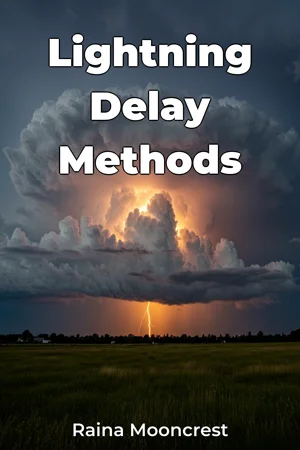
Can you truly outsmart lightning? This book, "Lightning Delay Methods," explores the science and strategies behind minimizing the risk of lightning exposure in outdoor environments. It delves into a range of techniques designed to provide critical time for individuals to reach safety during electrical storms. Understanding these methods is not merely academic; it’s potentially life-saving knowledge for anyone who spends time outdoors. The book focuses on three core concepts: ground spread of lightning current, minimizing exposure by leveraging elevation and non-metallic environments, and employing time buffering techniques based on storm proximity. The significance lies in reducing the risk of injury or death from lightning strikes, a hazard often underestimated. This knowledge is crucial for recreational enthusiasts, outdoor workers, and anyone living in or traveling through lightning-prone regions. Historically, understanding of lightning has evolved from myth and superstition to scientific observation and risk mitigation strategies. While complete prevention of lightning strikes is impossible, informed strategies significantly decrease the probability of injury. A basic understanding of atmospheric electricity, storm formation, and lightning behavior is beneficial but not required, as these concepts are reviewed in the introductory chapters. The central argument of "Lightning Delay Methods" is that proactive implementation of specific behavioral and environmental strategies can substantially increase the time available to seek shelter during a lightning event. This emphasizes personal responsibility and informed decision-making in potentially hazardous situations, shifting the focus from passive vulnerability to active risk management. The book is structured to provide a comprehensive understanding of lightning delay methods. Initially, it introduces fundamental concepts of lightning formation, ground current behavior, and environmental factors influencing strike probability. Subsequent chapters elaborate on specific delay methods: analyzing ground spread characteristics; the relative safety of low elevation and areas free from metallic objects; and detailing time buffering strategies based on observable storm characteristics like thunder audibility and cloud-to-ground flash rates. The book culminates in a practical guide for assessing lightning risk in various outdoor scenarios, offering actionable steps to minimize exposure. The arguments presented are supported by a combination of field observations, analysis of lightning strike data from national weather services, and experimental studies on ground current behavior. The book also includes case studies of incidents where appropriate delay methods were either effectively employed or tragically absent, illustrating the real-world consequences of informed or uninformed decisions. "Lightning Delay Methods" connects to various disciplines, including meteorology (understanding storm behavior), physics (electrical discharge principles), and geography (risk assessment based on location and terrain). It also touches upon occupational safety, particularly for professions involving outdoor work. These interdisciplinary connections provide a holistic understanding of lightning risk and mitigation. The book's unique perspective lies in its focus on proactive strategies individuals can employ to create a "delay" period, rather than solely relying on lightning detection systems or designated shelters. It emphasizes an individual's capacity to assess risk and make informed decisions based on readily available information and environmental cues. The writing style is fact-based, using clear and concise language accessible to a broad audience. Diagrams, charts, and photographs are used to illustrate complex concepts and real-world examples. The tone is informative and cautionary, emphasizing the importance of understanding and applying the presented methods. The target audience includes outdoor enthusiasts (hikers, campers, climbers), outdoor workers (construction, agriculture, forestry), safety professionals, and anyone seeking to enhance their understanding of lightning safety. The book provides valuable knowledge for those who live, work, or recreate in environments where lightning is a potential hazard. As a work within the 'Earth Sciences Geography, Nature' genre, "Lightning Delay Methods" adopts a clear, scientific approach, prioritizing empirical evidence and quantifiable strategies. It avoids sensationalism or anecdotal claims, focusing instead on actionable information. The scope of the book is specifically limited to methods individuals can use to *delay* lightning exposure, providing time to reach safety. It does not cover advanced lightning protection systems for buildings or large-scale infrastructure. The focus remains on personal strategies applicable in various outdoor settings. The principles and techniques described in "Lightning Delay Methods" have direct real-world applications. From choosing safer campsites to modifying behavior during a developing thunderstorm, the book equips readers with the knowledge needed to make informed decisions that can significantly reduce their risk of lightning injury. While the scientific understanding of lightning is generally well-established, some debate exists regarding the effectiveness of specific grounding techniques and the precise behavior of ground currents in varying soil conditions. The book addresses these debates by presenting the most current research and acknowledging areas where further investigation is needed.
Can you truly outsmart lightning? This book, "Lightning Delay Methods," explores the science and strategies behind minimizing the risk of lightning exposure in outdoor environments. It delves into a range of techniques designed to provide critical time for individuals to reach safety during electrical storms. Understanding these methods is not merely academic; it’s potentially life-saving knowledge for anyone who spends time outdoors. The book focuses on three core concepts: ground spread of lightning current, minimizing exposure by leveraging elevation and non-metallic environments, and employing time buffering techniques based on storm proximity. The significance lies in reducing the risk of injury or death from lightning strikes, a hazard often underestimated. This knowledge is crucial for recreational enthusiasts, outdoor workers, and anyone living in or traveling through lightning-prone regions. Historically, understanding of lightning has evolved from myth and superstition to scientific observation and risk mitigation strategies. While complete prevention of lightning strikes is impossible, informed strategies significantly decrease the probability of injury. A basic understanding of atmospheric electricity, storm formation, and lightning behavior is beneficial but not required, as these concepts are reviewed in the introductory chapters. The central argument of "Lightning Delay Methods" is that proactive implementation of specific behavioral and environmental strategies can substantially increase the time available to seek shelter during a lightning event. This emphasizes personal responsibility and informed decision-making in potentially hazardous situations, shifting the focus from passive vulnerability to active risk management. The book is structured to provide a comprehensive understanding of lightning delay methods. Initially, it introduces fundamental concepts of lightning formation, ground current behavior, and environmental factors influencing strike probability. Subsequent chapters elaborate on specific delay methods: analyzing ground spread characteristics; the relative safety of low elevation and areas free from metallic objects; and detailing time buffering strategies based on observable storm characteristics like thunder audibility and cloud-to-ground flash rates. The book culminates in a practical guide for assessing lightning risk in various outdoor scenarios, offering actionable steps to minimize exposure. The arguments presented are supported by a combination of field observations, analysis of lightning strike data from national weather services, and experimental studies on ground current behavior. The book also includes case studies of incidents where appropriate delay methods were either effectively employed or tragically absent, illustrating the real-world consequences of informed or uninformed decisions. "Lightning Delay Methods" connects to various disciplines, including meteorology (understanding storm behavior), physics (electrical discharge principles), and geography (risk assessment based on location and terrain). It also touches upon occupational safety, particularly for professions involving outdoor work. These interdisciplinary connections provide a holistic understanding of lightning risk and mitigation. The book's unique perspective lies in its focus on proactive strategies individuals can employ to create a "delay" period, rather than solely relying on lightning detection systems or designated shelters. It emphasizes an individual's capacity to assess risk and make informed decisions based on readily available information and environmental cues. The writing style is fact-based, using clear and concise language accessible to a broad audience. Diagrams, charts, and photographs are used to illustrate complex concepts and real-world examples. The tone is informative and cautionary, emphasizing the importance of understanding and applying the presented methods. The target audience includes outdoor enthusiasts (hikers, campers, climbers), outdoor workers (construction, agriculture, forestry), safety professionals, and anyone seeking to enhance their understanding of lightning safety. The book provides valuable knowledge for those who live, work, or recreate in environments where lightning is a potential hazard. As a work within the 'Earth Sciences Geography, Nature' genre, "Lightning Delay Methods" adopts a clear, scientific approach, prioritizing empirical evidence and quantifiable strategies. It avoids sensationalism or anecdotal claims, focusing instead on actionable information. The scope of the book is specifically limited to methods individuals can use to *delay* lightning exposure, providing time to reach safety. It does not cover advanced lightning protection systems for buildings or large-scale infrastructure. The focus remains on personal strategies applicable in various outdoor settings. The principles and techniques described in "Lightning Delay Methods" have direct real-world applications. From choosing safer campsites to modifying behavior during a developing thunderstorm, the book equips readers with the knowledge needed to make informed decisions that can significantly reduce their risk of lightning injury. While the scientific understanding of lightning is generally well-established, some debate exists regarding the effectiveness of specific grounding techniques and the precise behavior of ground currents in varying soil conditions. The book addresses these debates by presenting the most current research and acknowledging areas where further investigation is needed.
"Lightning Delay Methods" offers crucial strategies for minimizing lightning strike risks in outdoor settings, emphasizing the importance of understanding and implementing these techniques for personal safety. The book highlights how lightning ground current spreads and how minimizing exposure by understanding elevation and avoiding metallic environments can provide critical time to seek shelter. Did you know lightning can strike the same place twice? This book teaches how to use time buffering techniques based on storm proximity, giving you a chance to react. The book distinguishes itself by focusing on proactive delay methods rather than passive reliance on shelters, empowering individuals to manage risk actively. It begins with the fundamentals of lightning formation and ground current behavior, then progresses to specific delay methods, supported by field observations and case studies. This approach connects meteorology, physics, and geography, providing a holistic understanding of lightning risk, and it's invaluable for outdoor workers and recreational enthusiasts. Ultimately, this guide provides actionable steps to assess lightning risk in various scenarios, equipping readers with the knowledge to make informed decisions. By understanding atmospheric electricity and storm behavior, you can effectively employ strategies to reduce your lightning exposure.
Book Details
ISBN
9788235261007
Publisher
Publifye AS
Your Licenses
You don't own any licenses for this book
Purchase a license below to unlock this book and download the EPUB.
Purchase License
Select a tier to unlock this book
Need bulk licensing?
Contact us for enterprise agreements.