
About This Book
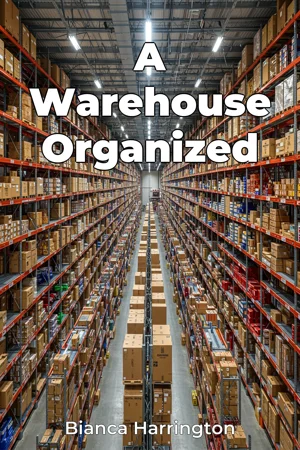
Can the layout of a warehouse truly impact a company's bottom line and employee well-being? This book, "A Warehouse Organized," answers that question with a resounding "yes," arguing that a well-organized warehouse is not merely a storage space, but a critical component of a thriving business. Exploring the intricate relationship between warehouse design, operational efficiency, and employee satisfaction, this book provides a comprehensive guide to optimizing warehouse environments. We delve into key areas such as space utilization, inventory management, and ergonomic design, demonstrating how each element contributes to overall success. The book's central argument is that warehouse organization directly influences both profitability and the well-being of warehouse workers. By reducing wasted space, streamlining workflows, and minimizing physical strain, companies can significantly improve efficiency, reduce operational costs, and foster a more positive and productive work environment. The IKEA model, known for its efficient warehouse design and strategic inventory placement, serves as a recurring case study throughout the book, illustrating best practices and potential pitfalls. "A Warehouse Organized" begins by establishing a historical context, tracing the evolution of warehouse management from rudimentary storage facilities to sophisticated logistical hubs. It introduces fundamental concepts like ABC analysis for inventory control, lean warehousing principles, and the importance of data-driven decision-making. From there, the book explores three major themes: optimizing space and layout, implementing efficient inventory management systems, and prioritizing worker safety and ergonomics. Chapters dedicated to each theme provide in-depth analysis, supported by real-world examples, case studies, and practical recommendations. Evidence presented throughout the book draws from a variety of sources, including industry reports, academic research, and firsthand accounts from warehouse managers and workers. Proprietary data from warehouse performance analyses are also included, offering unique insights into the impact of organizational strategies. The book also explores the interdisciplinary nature of warehouse organization, connecting it to fields such as supply chain management, operations research, and human resources. By examining the logistical, mathematical, and human aspects of warehousing, the book provides a holistic perspective that transcends traditional approaches. What sets this book apart is its emphasis on the human element. While many resources focus solely on efficiency metrics, "A Warehouse Organized" highlights the critical role of worker well-being in achieving sustained success. It presents practical strategies for creating a safer, more comfortable, and more empowering work environment, arguing that happy and healthy employees are more productive and less likely to experience injuries or burnout. Written in a clear and accessible style, the book targets a broad audience, including warehouse managers, operations directors, supply chain professionals, and business students. It avoids technical jargon and presents complex concepts in a straightforward manner, ensuring that the information is readily applicable to real-world scenarios. The scope of the book is intentionally limited to internal warehouse organization, excluding topics such as transportation logistics and external distribution networks. This focused approach allows for a more in-depth exploration of the factors that directly impact warehouse efficiency and worker well-being. The practical applications of the information found within "A Warehouse Organized" are numerous. Readers will learn how to conduct a comprehensive warehouse audit, identify areas for improvement, and implement effective organizational strategies. The book provides step-by-step guidance on topics such as designing optimal storage layouts, implementing warehouse management systems (WMS), and training employees on proper ergonomic techniques. While the benefits of warehouse organization are widely recognized, debates persist regarding the optimal balance between efficiency and worker well-being. This book addresses these debates head-on, presenting a balanced perspective that considers both the economic and social implications of different organizational strategies. "A Warehouse Organized" offers tangible solutions and insights for businesses seeking to transform their warehouses from cost centers into strategic assets that drive both profitability and employee satisfaction.
Can the layout of a warehouse truly impact a company's bottom line and employee well-being? This book, "A Warehouse Organized," answers that question with a resounding "yes," arguing that a well-organized warehouse is not merely a storage space, but a critical component of a thriving business. Exploring the intricate relationship between warehouse design, operational efficiency, and employee satisfaction, this book provides a comprehensive guide to optimizing warehouse environments. We delve into key areas such as space utilization, inventory management, and ergonomic design, demonstrating how each element contributes to overall success. The book's central argument is that warehouse organization directly influences both profitability and the well-being of warehouse workers. By reducing wasted space, streamlining workflows, and minimizing physical strain, companies can significantly improve efficiency, reduce operational costs, and foster a more positive and productive work environment. The IKEA model, known for its efficient warehouse design and strategic inventory placement, serves as a recurring case study throughout the book, illustrating best practices and potential pitfalls. "A Warehouse Organized" begins by establishing a historical context, tracing the evolution of warehouse management from rudimentary storage facilities to sophisticated logistical hubs. It introduces fundamental concepts like ABC analysis for inventory control, lean warehousing principles, and the importance of data-driven decision-making. From there, the book explores three major themes: optimizing space and layout, implementing efficient inventory management systems, and prioritizing worker safety and ergonomics. Chapters dedicated to each theme provide in-depth analysis, supported by real-world examples, case studies, and practical recommendations. Evidence presented throughout the book draws from a variety of sources, including industry reports, academic research, and firsthand accounts from warehouse managers and workers. Proprietary data from warehouse performance analyses are also included, offering unique insights into the impact of organizational strategies. The book also explores the interdisciplinary nature of warehouse organization, connecting it to fields such as supply chain management, operations research, and human resources. By examining the logistical, mathematical, and human aspects of warehousing, the book provides a holistic perspective that transcends traditional approaches. What sets this book apart is its emphasis on the human element. While many resources focus solely on efficiency metrics, "A Warehouse Organized" highlights the critical role of worker well-being in achieving sustained success. It presents practical strategies for creating a safer, more comfortable, and more empowering work environment, arguing that happy and healthy employees are more productive and less likely to experience injuries or burnout. Written in a clear and accessible style, the book targets a broad audience, including warehouse managers, operations directors, supply chain professionals, and business students. It avoids technical jargon and presents complex concepts in a straightforward manner, ensuring that the information is readily applicable to real-world scenarios. The scope of the book is intentionally limited to internal warehouse organization, excluding topics such as transportation logistics and external distribution networks. This focused approach allows for a more in-depth exploration of the factors that directly impact warehouse efficiency and worker well-being. The practical applications of the information found within "A Warehouse Organized" are numerous. Readers will learn how to conduct a comprehensive warehouse audit, identify areas for improvement, and implement effective organizational strategies. The book provides step-by-step guidance on topics such as designing optimal storage layouts, implementing warehouse management systems (WMS), and training employees on proper ergonomic techniques. While the benefits of warehouse organization are widely recognized, debates persist regarding the optimal balance between efficiency and worker well-being. This book addresses these debates head-on, presenting a balanced perspective that considers both the economic and social implications of different organizational strategies. "A Warehouse Organized" offers tangible solutions and insights for businesses seeking to transform their warehouses from cost centers into strategic assets that drive both profitability and employee satisfaction.
"A Warehouse Organized" argues that warehouse organization is crucial for business success, impacting both profitability and employee well-being. Learn how optimizing space utilization and inventory management can reduce operational costs. The book explores the evolution of warehouse management and introduces key concepts like ABC analysis and lean warehousing. The book emphasizes the human element, highlighting that worker well-being directly impacts productivity. Real-world examples and case studies, including the IKEA model, illustrate best practices. It progresses by exploring optimizing space and layout, implementing efficient inventory systems, and prioritizing worker safety and ergonomics. This book provides a comprehensive guide for transforming warehouses into strategic assets. It avoids technical jargon, making complex concepts accessible to a broad audience. It offers practical applications like conducting warehouse audits and implementing effective organizational strategies, focusing on internal warehouse organization.
Book Details
ISBN
9788235260765
Publisher
Publifye AS
Your Licenses
You don't own any licenses for this book
Purchase a license below to unlock this book and download the EPUB.
Purchase License
Select a tier to unlock this book
Need bulk licensing?
Contact us for enterprise agreements.