
About This Book
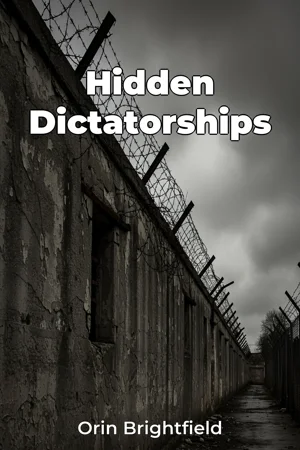
How do dictatorships thrive in the shadows, evading international scrutiny and maintaining power through unconventional means? "Hidden Dictatorships" delves into the mechanics of authoritarian rule in lesser-known regimes, examining their control tactics, propaganda methods, and profound impact on society. Understanding these subtle forms of oppression is vital in a world where overt displays of tyranny are often condemned, yet covert authoritarianism persists. This book focuses on three key areas: the evolution of control mechanisms beyond traditional military force, the adaptation of propaganda in the digital age, and the long-term societal consequences of these 'hidden' dictatorships. Understanding these points is crucial because it sheds light on the vulnerabilities within seemingly stable societies and the insidious nature of modern authoritarianism. Building upon established political science theories and historical analysis, "Hidden Dictatorships" argues that the survival of these regimes hinges on their ability to adapt and innovate in the face of global scrutiny. Their methods are often characterized by subtle manipulation, economic coercion, and the strategic deployment of technology to suppress dissent. This argument is important because it challenges conventional understandings of dictatorship, highlighting the evolving strategies employed by authoritarian leaders in the 21st century. The book is structured in three parts. First, it introduces the concept of 'hidden' dictatorships, distinguishing them from more visible forms of authoritarian rule and outlining the theoretical framework for analysis. Second, it examines specific case studies, focusing on countries where authoritarian practices are less overtly discussed but nonetheless deeply entrenched. These chapters investigate topics such as economic manipulation, digital surveillance, and the co-opting of civil society. Third, the book analyzes the long-term societal impacts of these regimes, including the erosion of democratic institutions, the suppression of independent thought, and the creation of a culture of fear. The conclusion synthesizes the findings and proposes strategies for promoting democracy and human rights in these contexts. The analysis is based on a diverse range of evidence, including primary source materials such as government documents and reports from human rights organizations, as well as secondary scholarship from political scientists, historians, and sociologists. The book also draws upon data from international organizations such as the United Nations and the World Bank to assess the economic and social conditions in the countries under study. "Hidden Dictatorships" connects to fields such as international relations, human rights law, and media studies. The study of these regimes can aid in crafting more effective foreign policy strategies, reinforcing the protection of human rights, and understanding the impact of media in politically repressive environments. What sets this book apart is its comparative approach, examining the common threads that connect seemingly disparate regimes and highlighting the innovative strategies they employ to maintain power. The book adopts an accessible tone, making complex political concepts understandable to a broad audience. The target audience includes students and scholars of political science, history, and international relations, as well as policymakers, journalists, and anyone interested in understanding the dynamics of authoritarianism in the modern world. This book offers a valuable resource for those seeking to understand the challenges to democracy and human rights in an era of increasing global interconnectedness. As a work of political history, it adheres to the genre's emphasis on accuracy, objectivity, and rigorous analysis. The scope of the book is limited to a select number of case studies, chosen to represent a range of geographical regions and political systems. The insights presented in "Hidden Dictatorships" have practical applications for policymakers and activists working to promote democracy and human rights. By understanding the strategies employed by these regimes, they can develop more effective strategies for countering authoritarianism and supporting civil society. The book addresses ongoing debates about the nature of democracy and authoritarianism, examining the ways in which these concepts are defined and contested in different political contexts.
How do dictatorships thrive in the shadows, evading international scrutiny and maintaining power through unconventional means? "Hidden Dictatorships" delves into the mechanics of authoritarian rule in lesser-known regimes, examining their control tactics, propaganda methods, and profound impact on society. Understanding these subtle forms of oppression is vital in a world where overt displays of tyranny are often condemned, yet covert authoritarianism persists. This book focuses on three key areas: the evolution of control mechanisms beyond traditional military force, the adaptation of propaganda in the digital age, and the long-term societal consequences of these 'hidden' dictatorships. Understanding these points is crucial because it sheds light on the vulnerabilities within seemingly stable societies and the insidious nature of modern authoritarianism. Building upon established political science theories and historical analysis, "Hidden Dictatorships" argues that the survival of these regimes hinges on their ability to adapt and innovate in the face of global scrutiny. Their methods are often characterized by subtle manipulation, economic coercion, and the strategic deployment of technology to suppress dissent. This argument is important because it challenges conventional understandings of dictatorship, highlighting the evolving strategies employed by authoritarian leaders in the 21st century. The book is structured in three parts. First, it introduces the concept of 'hidden' dictatorships, distinguishing them from more visible forms of authoritarian rule and outlining the theoretical framework for analysis. Second, it examines specific case studies, focusing on countries where authoritarian practices are less overtly discussed but nonetheless deeply entrenched. These chapters investigate topics such as economic manipulation, digital surveillance, and the co-opting of civil society. Third, the book analyzes the long-term societal impacts of these regimes, including the erosion of democratic institutions, the suppression of independent thought, and the creation of a culture of fear. The conclusion synthesizes the findings and proposes strategies for promoting democracy and human rights in these contexts. The analysis is based on a diverse range of evidence, including primary source materials such as government documents and reports from human rights organizations, as well as secondary scholarship from political scientists, historians, and sociologists. The book also draws upon data from international organizations such as the United Nations and the World Bank to assess the economic and social conditions in the countries under study. "Hidden Dictatorships" connects to fields such as international relations, human rights law, and media studies. The study of these regimes can aid in crafting more effective foreign policy strategies, reinforcing the protection of human rights, and understanding the impact of media in politically repressive environments. What sets this book apart is its comparative approach, examining the common threads that connect seemingly disparate regimes and highlighting the innovative strategies they employ to maintain power. The book adopts an accessible tone, making complex political concepts understandable to a broad audience. The target audience includes students and scholars of political science, history, and international relations, as well as policymakers, journalists, and anyone interested in understanding the dynamics of authoritarianism in the modern world. This book offers a valuable resource for those seeking to understand the challenges to democracy and human rights in an era of increasing global interconnectedness. As a work of political history, it adheres to the genre's emphasis on accuracy, objectivity, and rigorous analysis. The scope of the book is limited to a select number of case studies, chosen to represent a range of geographical regions and political systems. The insights presented in "Hidden Dictatorships" have practical applications for policymakers and activists working to promote democracy and human rights. By understanding the strategies employed by these regimes, they can develop more effective strategies for countering authoritarianism and supporting civil society. The book addresses ongoing debates about the nature of democracy and authoritarianism, examining the ways in which these concepts are defined and contested in different political contexts.
"Hidden Dictatorships" explores the subtle mechanisms through which authoritarian regimes maintain power, often evading international attention. It delves into how these lesser-known dictatorships utilize sophisticated control tactics and propaganda, especially in the digital age. The book examines these regimes' impact on society, highlighting how they differ from more overt forms of tyranny. Understanding these hidden forms of oppression is crucial, as they often undermine seemingly stable societies through insidious means such as economic coercion. The book is structured to first introduce the concept of "hidden" dictatorships, differentiating them from more visible authoritarian rule. It then examines specific case studies, illustrating how these regimes operate through methods like digital surveillance and the manipulation of civil society. Finally, it analyzes the long-term societal impacts, including the erosion of democratic institutions and the suppression of independent thought. The book argues that these regimes survive by adapting and innovating their tactics to circumvent global scrutiny, challenging traditional understandings of dictatorship. By focusing on covert authoritarianism and dictatorship tactics, this book offers a unique comparative approach, examining common threads across seemingly disparate regimes. The insights presented have practical applications for policymakers and activists working to promote democracy and human rights, offering strategies to counter authoritarianism and support civil society. It is a valuable resource for anyone interested in political history, world history, and the dynamics of authoritarianism in the modern world.
Book Details
ISBN
9788235260536
Publisher
Publifye AS
Your Licenses
You don't own any licenses for this book
Purchase a license below to unlock this book and download the EPUB.
Purchase License
Select a tier to unlock this book
Need bulk licensing?
Contact us for enterprise agreements.