
About This Book
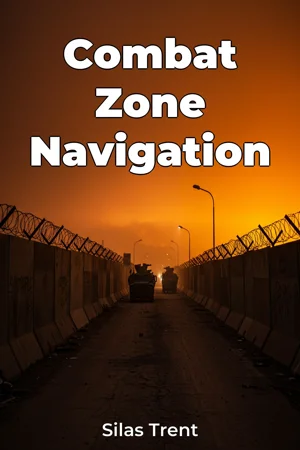
How do individuals, both operatives and journalists, navigate the treacherous landscape of active combat zones, where survival hinges on split-second decisions and a deep understanding of constantly evolving dynamics? "Combat Zone Navigation" delves into this critical subject, dissecting the strategies, techniques, and knowledge required to operate effectively and safely amidst the chaos of war. This book explores the challenges posed by real-world constraints such as heavily guarded checkpoints, fluid and contested border regions, and the complex web of local alliances that shape the environment. The central argument of "Combat Zone Navigation" emphasizes the crucial interplay between situational awareness, risk assessment, and adaptability in determining success and survival in conflict zones. It asserts that effective navigation is not merely about physical movement, but a holistic process involving intelligence gathering, relationship building, and a profound understanding of the human terrain. This argument carries significance for military personnel, intelligence operatives, journalists, humanitarian workers, and anyone operating in high-risk environments. This book is structured to provide a comprehensive understanding of combat zone navigation. The first section introduces the core concepts, including threat assessment, route planning, communication protocols, and basic survival skills. The subsequent sections build upon these fundamentals, examining specific aspects of navigation such as negotiating checkpoints, operating in urban environments, and traversing contested territories. A dedicated chapter explores the ethical considerations and legal frameworks relevant to both operatives and journalists working in war zones, highlighting the importance of adhering to international laws and humanitarian principles. The culmination of the argument emphasizes the need for continuous learning and adaptation, as combat zones are inherently dynamic environments. Practical applications and considerations regarding technological tools for navigation and communication are also explored. The book draws upon a range of evidence, including firsthand accounts from military veterans and journalists, case studies of successful and unsuccessful navigation strategies, and analysis of military doctrine and intelligence reports. It incorporates geospatial data and mapping techniques to illustrate the challenges of operating in complex terrain. Furthermore, the work uses open-source reporting and declassified documents to provide a balanced and objective perspective, and addresses the limitations of relying on incomplete information within active conflict scenarios. "Combat Zone Navigation" connects to several other fields, most notably political science through the analysis of geopolitical factors influencing conflict zones; anthropology via the understanding of local cultures and social dynamics; and technology, specifically communication and surveillance technologies used in modern warfare. These interdisciplinary connections enrich the book's argument by providing a broader context for understanding the challenges of combat zone navigation. The book offers a unique perspective by integrating the experiences and insights of both military operatives and journalists, two groups that often operate in the same environments but with different objectives and constraints. This comparative approach highlights the common challenges they face, as well as the distinct strategies they employ. Written in a clear and accessible style, "Combat Zone Navigation" is intended for a broad audience, including students of military history, journalism, and international relations; military personnel and law enforcement officers; security professionals; and anyone interested in understanding the complexities of operating in conflict zones. The book's value lies in its practical guidance, its comprehensive coverage of relevant topics, and its balanced perspective on the challenges and risks involved. The scope of "Combat Zone Navigation" encompasses a wide range of modern conflicts, with examples drawn from various regions and historical periods. However, it acknowledges the limitations of generalizing across all conflict zones, as each environment presents unique challenges and requires tailored approaches. The information presented in this book can be applied practically by readers seeking to improve their situational awareness, risk assessment skills, and ability to navigate complex and dangerous environments. Whether planning a trip to a politically unstable region or preparing for deployment to a combat zone, the principles outlined in "Combat Zone Navigation" can enhance safety and effectiveness. Finally, this book delves into the controversies surrounding the rules of engagement, media bias, and the ethics of intelligence gathering in conflict zones, fostering critical thinking and promoting a deeper understanding of the complex ethical dilemmas faced by those operating in these environments.
How do individuals, both operatives and journalists, navigate the treacherous landscape of active combat zones, where survival hinges on split-second decisions and a deep understanding of constantly evolving dynamics? "Combat Zone Navigation" delves into this critical subject, dissecting the strategies, techniques, and knowledge required to operate effectively and safely amidst the chaos of war. This book explores the challenges posed by real-world constraints such as heavily guarded checkpoints, fluid and contested border regions, and the complex web of local alliances that shape the environment. The central argument of "Combat Zone Navigation" emphasizes the crucial interplay between situational awareness, risk assessment, and adaptability in determining success and survival in conflict zones. It asserts that effective navigation is not merely about physical movement, but a holistic process involving intelligence gathering, relationship building, and a profound understanding of the human terrain. This argument carries significance for military personnel, intelligence operatives, journalists, humanitarian workers, and anyone operating in high-risk environments. This book is structured to provide a comprehensive understanding of combat zone navigation. The first section introduces the core concepts, including threat assessment, route planning, communication protocols, and basic survival skills. The subsequent sections build upon these fundamentals, examining specific aspects of navigation such as negotiating checkpoints, operating in urban environments, and traversing contested territories. A dedicated chapter explores the ethical considerations and legal frameworks relevant to both operatives and journalists working in war zones, highlighting the importance of adhering to international laws and humanitarian principles. The culmination of the argument emphasizes the need for continuous learning and adaptation, as combat zones are inherently dynamic environments. Practical applications and considerations regarding technological tools for navigation and communication are also explored. The book draws upon a range of evidence, including firsthand accounts from military veterans and journalists, case studies of successful and unsuccessful navigation strategies, and analysis of military doctrine and intelligence reports. It incorporates geospatial data and mapping techniques to illustrate the challenges of operating in complex terrain. Furthermore, the work uses open-source reporting and declassified documents to provide a balanced and objective perspective, and addresses the limitations of relying on incomplete information within active conflict scenarios. "Combat Zone Navigation" connects to several other fields, most notably political science through the analysis of geopolitical factors influencing conflict zones; anthropology via the understanding of local cultures and social dynamics; and technology, specifically communication and surveillance technologies used in modern warfare. These interdisciplinary connections enrich the book's argument by providing a broader context for understanding the challenges of combat zone navigation. The book offers a unique perspective by integrating the experiences and insights of both military operatives and journalists, two groups that often operate in the same environments but with different objectives and constraints. This comparative approach highlights the common challenges they face, as well as the distinct strategies they employ. Written in a clear and accessible style, "Combat Zone Navigation" is intended for a broad audience, including students of military history, journalism, and international relations; military personnel and law enforcement officers; security professionals; and anyone interested in understanding the complexities of operating in conflict zones. The book's value lies in its practical guidance, its comprehensive coverage of relevant topics, and its balanced perspective on the challenges and risks involved. The scope of "Combat Zone Navigation" encompasses a wide range of modern conflicts, with examples drawn from various regions and historical periods. However, it acknowledges the limitations of generalizing across all conflict zones, as each environment presents unique challenges and requires tailored approaches. The information presented in this book can be applied practically by readers seeking to improve their situational awareness, risk assessment skills, and ability to navigate complex and dangerous environments. Whether planning a trip to a politically unstable region or preparing for deployment to a combat zone, the principles outlined in "Combat Zone Navigation" can enhance safety and effectiveness. Finally, this book delves into the controversies surrounding the rules of engagement, media bias, and the ethics of intelligence gathering in conflict zones, fostering critical thinking and promoting a deeper understanding of the complex ethical dilemmas faced by those operating in these environments.
"Combat Zone Navigation" explores the high-stakes world of navigating conflict zones, essential knowledge for military personnel, journalists, and security professionals alike. It emphasizes that successful navigation extends beyond physical movement, requiring critical situational awareness, in-depth risk assessment, and adaptability amidst ever-changing conditions. The book dissects strategies for operating effectively in war zones, highlighting the necessity of intelligence gathering and understanding local dynamics. The book uniquely integrates the experiences of military operatives and journalists, contrasting their approaches while underscoring shared challenges. Chapters progress from core concepts like threat assessment and route planning to complex scenarios such as checkpoint negotiation and urban operations. Ethical considerations are also examined, emphasizing adherence to international laws. By drawing on firsthand accounts, case studies, and military doctrine, "Combat Zone Navigation" offers practical guidance for enhancing safety and effectiveness in dangerous environments. It also explores the use of technology in navigation and communication, acknowledging the limitations of incomplete information in active conflict scenarios.
Book Details
ISBN
9788235260376
Publisher
Publifye AS
Your Licenses
You don't own any licenses for this book
Purchase a license below to unlock this book and download the EPUB.
Purchase License
Select a tier to unlock this book
Need bulk licensing?
Contact us for enterprise agreements.