
About This Book
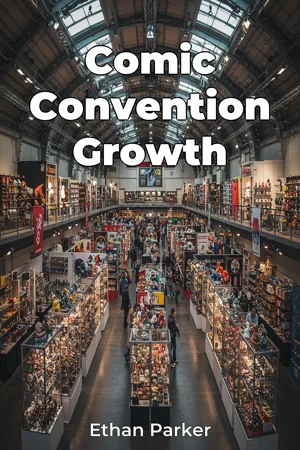
How did a subculture born from the pages of comic books transform into a global phenomenon, influencing not only Hollywood blockbusters and mass-produced merchandise but also broader societal trends? "Comic Convention Growth" charts this remarkable evolution, examining the historical trajectory and cultural impact of comic conventions, moving beyond simple fan gatherings to become significant drivers of entertainment and commerce. This book explores three primary areas: the historical development of comic conventions, their impact on the film and television industries, and their role in shaping modern consumer culture. Understanding these topics is vital for anyone seeking to grasp the dynamics of contemporary entertainment and the evolving relationship between creators, consumers, and corporations. Historically, comic conventions began as small, localized events for enthusiasts to trade and discuss their favorite comics. This book traces their growth, contextualizing it within broader social and technological shifts. Before the rise of digital media, these conventions provided a vital physical space for fans to connect, acting as a proto-internet for niche communities. The central argument of "Comic Convention Growth" is that these events, initially marginalized, have become a pivotal force in mainstream culture, demonstrating a profound shift in how entertainment is produced, marketed, and consumed. This transformation holds significant implications for understanding the power of fan communities and the democratization of cultural influence. The book’s structure unfolds as follows: First, the introduction establishes the foundational concepts and sets the stage for understanding the early days of comic conventions. The subsequent chapters delve into the growth of conventions, examining their expansion from niche meetings to large-scale events. Key points include the rise of celebrity appearances, the growing presence of major media companies, and the increasing commercialization of the convention experience. Later chapters analyze how conventions have become crucial marketing platforms for films and television shows, influencing casting decisions, plot developments, and overall audience engagement. The book culminates by exploring the long-term implications of this transformation, considering the evolving role of fans and the blurring lines between entertainment and commerce. The evidence presented relies on a diverse range of sources, including historical records, convention archives, industry reports, and interviews with key figures in the comic book and entertainment industries. Unique data is drawn from detailed attendance figures and economic impact studies, providing a quantitative analysis of convention growth. "Comic Convention Growth" connects to several interdisciplinary fields, including media studies, sociology, and economics. By examining the sociological dynamics of fan communities, the economic impact of conventions on local economies, and the influence of media conglomerates, it offers a multifaceted perspective on this cultural phenomenon. A unique aspect of this book is its focus on analyzing comic conventions as evolving ecosystems, demonstrating how they facilitate interactions between creators, fans, and corporations in ways that shape the broader entertainment landscape. It presents a novel framework for understanding the symbiotic relationships that drive the modern entertainment industry. Written in an accessible, analytical style, the book avoids academic jargon while maintaining a rigorous approach to research and analysis. This tone is intended to engage both academic scholars and casual readers interested in the history and impact of comic conventions. The target audience includes students and scholars in media studies, film studies, and popular culture, as well as industry professionals and avid fans seeking a comprehensive understanding of comic convention history and their influence on the entertainment industry. As a work of historical analysis and media studies, "Comic Convention Growth" adheres to the genre's expectations for factual accuracy, comprehensive research, and balanced analysis. The scope of the book encompasses the history and evolution of comic conventions primarily in North America, with some attention paid to significant international events. It does not delve into specific subgenres or fandoms within the broader comic book community. The insights in "Comic Convention Growth" can be applied practically by industry professionals seeking to optimize their marketing strategies, by event organizers aiming to enhance the convention experience, and by fans seeking a deeper understanding of the culture they participate in. Ongoing debates surrounding the commercialization of fandom, the representation of diverse voices in comics, and the ethical considerations of fan engagement are addressed throughout the book. "Comic Convention Growth" provides a detailed and insightful examination of a cultural phenomenon whose impact resonates far beyond the convention hall.
How did a subculture born from the pages of comic books transform into a global phenomenon, influencing not only Hollywood blockbusters and mass-produced merchandise but also broader societal trends? "Comic Convention Growth" charts this remarkable evolution, examining the historical trajectory and cultural impact of comic conventions, moving beyond simple fan gatherings to become significant drivers of entertainment and commerce. This book explores three primary areas: the historical development of comic conventions, their impact on the film and television industries, and their role in shaping modern consumer culture. Understanding these topics is vital for anyone seeking to grasp the dynamics of contemporary entertainment and the evolving relationship between creators, consumers, and corporations. Historically, comic conventions began as small, localized events for enthusiasts to trade and discuss their favorite comics. This book traces their growth, contextualizing it within broader social and technological shifts. Before the rise of digital media, these conventions provided a vital physical space for fans to connect, acting as a proto-internet for niche communities. The central argument of "Comic Convention Growth" is that these events, initially marginalized, have become a pivotal force in mainstream culture, demonstrating a profound shift in how entertainment is produced, marketed, and consumed. This transformation holds significant implications for understanding the power of fan communities and the democratization of cultural influence. The book’s structure unfolds as follows: First, the introduction establishes the foundational concepts and sets the stage for understanding the early days of comic conventions. The subsequent chapters delve into the growth of conventions, examining their expansion from niche meetings to large-scale events. Key points include the rise of celebrity appearances, the growing presence of major media companies, and the increasing commercialization of the convention experience. Later chapters analyze how conventions have become crucial marketing platforms for films and television shows, influencing casting decisions, plot developments, and overall audience engagement. The book culminates by exploring the long-term implications of this transformation, considering the evolving role of fans and the blurring lines between entertainment and commerce. The evidence presented relies on a diverse range of sources, including historical records, convention archives, industry reports, and interviews with key figures in the comic book and entertainment industries. Unique data is drawn from detailed attendance figures and economic impact studies, providing a quantitative analysis of convention growth. "Comic Convention Growth" connects to several interdisciplinary fields, including media studies, sociology, and economics. By examining the sociological dynamics of fan communities, the economic impact of conventions on local economies, and the influence of media conglomerates, it offers a multifaceted perspective on this cultural phenomenon. A unique aspect of this book is its focus on analyzing comic conventions as evolving ecosystems, demonstrating how they facilitate interactions between creators, fans, and corporations in ways that shape the broader entertainment landscape. It presents a novel framework for understanding the symbiotic relationships that drive the modern entertainment industry. Written in an accessible, analytical style, the book avoids academic jargon while maintaining a rigorous approach to research and analysis. This tone is intended to engage both academic scholars and casual readers interested in the history and impact of comic conventions. The target audience includes students and scholars in media studies, film studies, and popular culture, as well as industry professionals and avid fans seeking a comprehensive understanding of comic convention history and their influence on the entertainment industry. As a work of historical analysis and media studies, "Comic Convention Growth" adheres to the genre's expectations for factual accuracy, comprehensive research, and balanced analysis. The scope of the book encompasses the history and evolution of comic conventions primarily in North America, with some attention paid to significant international events. It does not delve into specific subgenres or fandoms within the broader comic book community. The insights in "Comic Convention Growth" can be applied practically by industry professionals seeking to optimize their marketing strategies, by event organizers aiming to enhance the convention experience, and by fans seeking a deeper understanding of the culture they participate in. Ongoing debates surrounding the commercialization of fandom, the representation of diverse voices in comics, and the ethical considerations of fan engagement are addressed throughout the book. "Comic Convention Growth" provides a detailed and insightful examination of a cultural phenomenon whose impact resonates far beyond the convention hall.
"Comic Convention Growth" explores the remarkable journey of comic conventions from niche gatherings to influential forces in the entertainment industry and popular culture. Tracing their historical development, the book highlights how these events have become crucial platforms for shaping the film and television industries. Before the digital age, comic cons acted as vital physical spaces for fans, akin to a proto-internet for niche communities, illustrating their early importance in fostering fan culture. The book delves into the expansion of comic conventions, examining the rise of celebrity appearances and the increased commercialization of the convention experience. It analyzes how these events have evolved into significant marketing platforms, influencing casting decisions and audience engagement. Ultimately, the book demonstrates the profound shift in how entertainment is produced, marketed, and consumed, emphasizing the growing power of fan communities and the commercialization of fandom.
Book Details
ISBN
9788235260086
Publisher
Publifye AS
Your Licenses
You don't own any licenses for this book
Purchase a license below to unlock this book and download the EPUB.
Purchase License
Select a tier to unlock this book
Need bulk licensing?
Contact us for enterprise agreements.