
About This Book
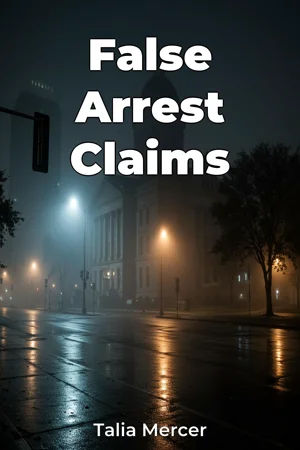
What recourse exists when law enforcement oversteps its boundaries, leading to wrongful detention? "False Arrest Claims" delves into the intricate landscape of legal remedies available to individuals subjected to unwarranted arrest, exploring the standards that officers must adhere to, and examining how courts navigate the complex intersection of civil and criminal law in these cases. This book is important, because it clarifies the rights of individuals and the responsibilities of law enforcement, promoting accountability and justice within the legal system. This exploration occurs against a backdrop of evolving legal precedents and increasing public scrutiny of police practices. Understanding the nuances of false arrest claims requires, at a basic level, familiarity with constitutional rights, specifically the Fourth Amendment's protection against unreasonable seizures, and a working knowledge of civil procedure. The central argument of "False Arrest Claims" is that a clear understanding of the legal thresholds for lawful arrest, coupled with rigorous judicial oversight, is essential for safeguarding individual liberties while ensuring public safety. This argument is crucial because it underscores the delicate balance between empowering law enforcement and protecting citizens from abuse of power. The book's structure unfolds logically, first introducing the foundational legal principles governing arrest, including probable cause and reasonable suspicion. It then develops these ideas through several key areas. One is an analysis of the various legal avenues available to those who believe they have been falsely arrested, such as Section 1983 claims and state tort actions. A second major point examines the qualified immunity doctrine, a significant hurdle in many false arrest cases, detailing how courts apply this doctrine and the exceptions that may apply. Finally, the narrative culminates in a discussion of best practices for law enforcement agencies to minimize the risk of false arrest, emphasizing training, policy development, and internal oversight mechanisms. Support for the arguments presented relies on a comprehensive review of case law, statutory provisions, and scholarly articles. The book also incorporates insights from law enforcement training manuals and internal affairs reports, offering a multifaceted perspective on the issue. "False Arrest Claims" also connects to several other fields, including criminal justice, constitutional law, and public policy. By examining the interplay between these areas, the book provides a more holistic understanding of the challenges and opportunities in addressing false arrest claims. This book offers a unique perspective by synthesizing legal theory with practical considerations. It moves beyond abstract legal analysis to provide concrete guidance for both legal professionals and law enforcement personnel. The tone adopted throughout is academic, yet accessible, aiming to bridge the gap between scholarly rigor and practical relevance. The writing style is direct and analytical, prioritizing clarity and precision. The primary target audience includes legal professionals specializing in civil rights litigation, law enforcement administrators and trainers, and students of criminal justice and constitutional law. This book would also be valuable to academics, policymakers, and anyone interested in understanding the legal framework surrounding arrest procedures. As a non-fiction work in the areas of Politics and Academia, it adheres to conventions of rigorous research, clear argumentation, and thorough documentation. The scope of the book is limited to false arrest claims specifically, excluding broader issues of police misconduct or excessive force, although these topics may be referenced where relevant. It focuses primarily on federal law and representative state laws, acknowledging variations across jurisdictions. The information presented has real-world applications for attorneys seeking to litigate false arrest cases, law enforcement agencies aiming to improve training and policies, and policymakers seeking to reform arrest procedures. Finally, "False Arrest Claims" addresses the ongoing debates surrounding police accountability and the appropriate balance between individual rights and public safety, offering reasoned analysis and constructive recommendations for reform.
What recourse exists when law enforcement oversteps its boundaries, leading to wrongful detention? "False Arrest Claims" delves into the intricate landscape of legal remedies available to individuals subjected to unwarranted arrest, exploring the standards that officers must adhere to, and examining how courts navigate the complex intersection of civil and criminal law in these cases. This book is important, because it clarifies the rights of individuals and the responsibilities of law enforcement, promoting accountability and justice within the legal system. This exploration occurs against a backdrop of evolving legal precedents and increasing public scrutiny of police practices. Understanding the nuances of false arrest claims requires, at a basic level, familiarity with constitutional rights, specifically the Fourth Amendment's protection against unreasonable seizures, and a working knowledge of civil procedure. The central argument of "False Arrest Claims" is that a clear understanding of the legal thresholds for lawful arrest, coupled with rigorous judicial oversight, is essential for safeguarding individual liberties while ensuring public safety. This argument is crucial because it underscores the delicate balance between empowering law enforcement and protecting citizens from abuse of power. The book's structure unfolds logically, first introducing the foundational legal principles governing arrest, including probable cause and reasonable suspicion. It then develops these ideas through several key areas. One is an analysis of the various legal avenues available to those who believe they have been falsely arrested, such as Section 1983 claims and state tort actions. A second major point examines the qualified immunity doctrine, a significant hurdle in many false arrest cases, detailing how courts apply this doctrine and the exceptions that may apply. Finally, the narrative culminates in a discussion of best practices for law enforcement agencies to minimize the risk of false arrest, emphasizing training, policy development, and internal oversight mechanisms. Support for the arguments presented relies on a comprehensive review of case law, statutory provisions, and scholarly articles. The book also incorporates insights from law enforcement training manuals and internal affairs reports, offering a multifaceted perspective on the issue. "False Arrest Claims" also connects to several other fields, including criminal justice, constitutional law, and public policy. By examining the interplay between these areas, the book provides a more holistic understanding of the challenges and opportunities in addressing false arrest claims. This book offers a unique perspective by synthesizing legal theory with practical considerations. It moves beyond abstract legal analysis to provide concrete guidance for both legal professionals and law enforcement personnel. The tone adopted throughout is academic, yet accessible, aiming to bridge the gap between scholarly rigor and practical relevance. The writing style is direct and analytical, prioritizing clarity and precision. The primary target audience includes legal professionals specializing in civil rights litigation, law enforcement administrators and trainers, and students of criminal justice and constitutional law. This book would also be valuable to academics, policymakers, and anyone interested in understanding the legal framework surrounding arrest procedures. As a non-fiction work in the areas of Politics and Academia, it adheres to conventions of rigorous research, clear argumentation, and thorough documentation. The scope of the book is limited to false arrest claims specifically, excluding broader issues of police misconduct or excessive force, although these topics may be referenced where relevant. It focuses primarily on federal law and representative state laws, acknowledging variations across jurisdictions. The information presented has real-world applications for attorneys seeking to litigate false arrest cases, law enforcement agencies aiming to improve training and policies, and policymakers seeking to reform arrest procedures. Finally, "False Arrest Claims" addresses the ongoing debates surrounding police accountability and the appropriate balance between individual rights and public safety, offering reasoned analysis and constructive recommendations for reform.
"False Arrest Claims" examines the legal avenues available to individuals who believe they have been wrongfully detained, focusing on the Fourth Amendment and its protection against unreasonable seizures. The book clarifies the responsibilities of law enforcement and the rights of individuals, promoting accountability within the legal system. Did you know that qualified immunity often presents a significant hurdle in false arrest cases, requiring a deep understanding of how courts apply this doctrine? The text argues that a firm grasp of legal thresholds for lawful arrest, combined with judicial oversight, is essential for protecting individual liberties while ensuring public safety. The book progresses logically, beginning with foundational legal principles like probable cause and reasonable suspicion. It then analyzes legal avenues for those falsely arrested, such as Section 1983 claims, and culminates in best practices for law enforcement to minimize false arrest risks through training and policy development. By synthesizing legal theory with practical considerations, the book offers unique guidance for legal professionals and law enforcement personnel alike, bridging the gap between academic rigor and real-world relevance in civil rights litigation and criminal justice.
Book Details
ISBN
9788235260024
Publisher
Publifye AS
Your Licenses
You don't own any licenses for this book
Purchase a license below to unlock this book and download the EPUB.
Purchase License
Select a tier to unlock this book
Need bulk licensing?
Contact us for enterprise agreements.