
About This Book
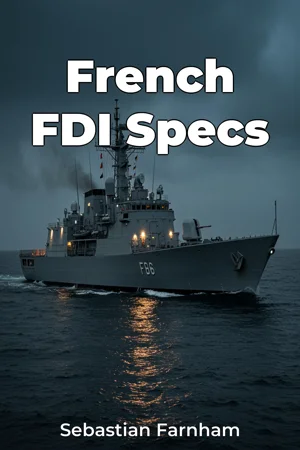
What if a smaller warship could deliver a disproportionately large strategic impact? "French FDI Specs" examines the FDI (Frégate de Défense et d'Intervention), a French-designed frigate, analyzing its specifications, strategic role, and potential as a contender for nations like Norway seeking to modernize their naval capabilities. This book delves into the confluence of military technology, geopolitics, and defense procurement, offering a detailed assessment suitable for policymakers, military strategists, and naval technology enthusiasts. This book addresses three key areas: the technical specifications and capabilities of the FDI frigate, its strategic implications in modern naval warfare, and a comparative analysis of its suitability for specific national requirements and contexts, using Norway as a case study. These are crucial because navies worldwide are grappling with evolving threats, budget constraints, and the need for versatile platforms. Understanding the FDI's place within this landscape is essential for informed decision-making. The context for this discussion lies in the post-Cold War shift towards asymmetric warfare, the rise of new maritime powers, and the increasing importance of protecting exclusive economic zones (EEZs). Readers should ideally possess a basic understanding of naval warfare concepts, contemporary geopolitical dynamics, and defense procurement processes. The central argument of this book is that the French FDI frigate represents a compelling balance of advanced technology, operational flexibility, and cost-effectiveness, making it a relevant option for nations seeking to enhance their maritime security without investing in larger, more expensive platforms. This argument challenges the traditional emphasis on size and displacement, advocating for a more nuanced approach to naval procurement that prioritizes mission adaptability and technological integration. The book is structured as follows: a) An introduction establishes the context of modern naval warfare, the challenges faced by smaller navies, and introduces the FDI frigate as a potential solution. b) Subsequent chapters detail the FDI's design specifications, sensor suite (radars, sonars, electronic warfare systems), weapon systems (missiles, guns, torpedoes), and propulsion system. A dedicated chapter analyzes the FDI's strategic role, examining its capabilities in anti-surface warfare (ASuW), anti-submarine warfare (ASW), anti-air warfare (AAW), and maritime security operations. This section incorporates tactical considerations and potential deployment scenarios. Another segment offers a comparative analysis of the FDI against comparable frigates from other countries, focusing on cost, performance, and operational suitability. Finally, a complete chapter examines the specific requirements of the Norwegian Navy and assesses the FDI's suitability, considering Norway's unique geographical challenges and security priorities. c) The book culminates with a discussion of the broader implications of the FDI's design philosophy for future naval development and procurement strategies. d) The final section examines the practical implications of adopting the FDI, including training requirements, maintenance considerations, and integration with existing naval assets. The book draws upon a range of sources, including technical specifications released by Naval Group (the FDI's manufacturer), open-source intelligence reports, defense industry publications, and academic analyses of naval strategy. It also incorporates publicly available information on the Norwegian Navy's requirements and procurement processes. The study connects to several interdisciplinary fields: political science (examining the geopolitical factors driving naval procurement decisions), economics (analyzing the cost-effectiveness of different naval platforms), and engineering (assessing the technological capabilities of the FDI). These connections enrich the analysis and provide a more comprehensive understanding of the subject matter. A unique aspect of this book is its focus on a specific warship and its detailed analysis of its capabilities and strategic implications. It moves beyond general discussions of naval warfare and provides a concrete case study for evaluating the merits of a modern frigate design. The overall tone of the book is analytical and objective, presenting information in a clear and concise manner. It avoids overly technical jargon while maintaining a high level of accuracy and detail. The primary target audience includes naval analysts, defense policymakers, military officers, and anyone interested in naval technology and strategy. The book offers valuable insights for those seeking to understand the capabilities of modern frigates and the factors that influence naval procurement decisions. As a work of military history, history military, and politics, the book adheres to principles of factual accuracy, objectivity, and balanced analysis. It presents a well-researched and evidence-based assessment of the FDI frigate, avoiding unsubstantiated claims or biased perspectives. The scope of the book is limited to the French FDI frigate and its potential applications. It does not attempt to provide a comprehensive overview of all modern frigates or naval warfare tactics. The information presented can be applied by defense analysts to evaluate the capabilities of different naval platforms, by policymakers to inform procurement decisions, and by military officers to develop operational plans. The book engages with ongoing debates about the optimal size and composition of modern navies, the role of technology in naval warfare, and the challenges of balancing cost and capability in defense procurement.
What if a smaller warship could deliver a disproportionately large strategic impact? "French FDI Specs" examines the FDI (Frégate de Défense et d'Intervention), a French-designed frigate, analyzing its specifications, strategic role, and potential as a contender for nations like Norway seeking to modernize their naval capabilities. This book delves into the confluence of military technology, geopolitics, and defense procurement, offering a detailed assessment suitable for policymakers, military strategists, and naval technology enthusiasts. This book addresses three key areas: the technical specifications and capabilities of the FDI frigate, its strategic implications in modern naval warfare, and a comparative analysis of its suitability for specific national requirements and contexts, using Norway as a case study. These are crucial because navies worldwide are grappling with evolving threats, budget constraints, and the need for versatile platforms. Understanding the FDI's place within this landscape is essential for informed decision-making. The context for this discussion lies in the post-Cold War shift towards asymmetric warfare, the rise of new maritime powers, and the increasing importance of protecting exclusive economic zones (EEZs). Readers should ideally possess a basic understanding of naval warfare concepts, contemporary geopolitical dynamics, and defense procurement processes. The central argument of this book is that the French FDI frigate represents a compelling balance of advanced technology, operational flexibility, and cost-effectiveness, making it a relevant option for nations seeking to enhance their maritime security without investing in larger, more expensive platforms. This argument challenges the traditional emphasis on size and displacement, advocating for a more nuanced approach to naval procurement that prioritizes mission adaptability and technological integration. The book is structured as follows: a) An introduction establishes the context of modern naval warfare, the challenges faced by smaller navies, and introduces the FDI frigate as a potential solution. b) Subsequent chapters detail the FDI's design specifications, sensor suite (radars, sonars, electronic warfare systems), weapon systems (missiles, guns, torpedoes), and propulsion system. A dedicated chapter analyzes the FDI's strategic role, examining its capabilities in anti-surface warfare (ASuW), anti-submarine warfare (ASW), anti-air warfare (AAW), and maritime security operations. This section incorporates tactical considerations and potential deployment scenarios. Another segment offers a comparative analysis of the FDI against comparable frigates from other countries, focusing on cost, performance, and operational suitability. Finally, a complete chapter examines the specific requirements of the Norwegian Navy and assesses the FDI's suitability, considering Norway's unique geographical challenges and security priorities. c) The book culminates with a discussion of the broader implications of the FDI's design philosophy for future naval development and procurement strategies. d) The final section examines the practical implications of adopting the FDI, including training requirements, maintenance considerations, and integration with existing naval assets. The book draws upon a range of sources, including technical specifications released by Naval Group (the FDI's manufacturer), open-source intelligence reports, defense industry publications, and academic analyses of naval strategy. It also incorporates publicly available information on the Norwegian Navy's requirements and procurement processes. The study connects to several interdisciplinary fields: political science (examining the geopolitical factors driving naval procurement decisions), economics (analyzing the cost-effectiveness of different naval platforms), and engineering (assessing the technological capabilities of the FDI). These connections enrich the analysis and provide a more comprehensive understanding of the subject matter. A unique aspect of this book is its focus on a specific warship and its detailed analysis of its capabilities and strategic implications. It moves beyond general discussions of naval warfare and provides a concrete case study for evaluating the merits of a modern frigate design. The overall tone of the book is analytical and objective, presenting information in a clear and concise manner. It avoids overly technical jargon while maintaining a high level of accuracy and detail. The primary target audience includes naval analysts, defense policymakers, military officers, and anyone interested in naval technology and strategy. The book offers valuable insights for those seeking to understand the capabilities of modern frigates and the factors that influence naval procurement decisions. As a work of military history, history military, and politics, the book adheres to principles of factual accuracy, objectivity, and balanced analysis. It presents a well-researched and evidence-based assessment of the FDI frigate, avoiding unsubstantiated claims or biased perspectives. The scope of the book is limited to the French FDI frigate and its potential applications. It does not attempt to provide a comprehensive overview of all modern frigates or naval warfare tactics. The information presented can be applied by defense analysts to evaluate the capabilities of different naval platforms, by policymakers to inform procurement decisions, and by military officers to develop operational plans. The book engages with ongoing debates about the optimal size and composition of modern navies, the role of technology in naval warfare, and the challenges of balancing cost and capability in defense procurement.
"French FDI Specs" offers a focused examination of the French FDI frigate, a warship designed to deliver significant strategic impact despite its relatively small size. The book delves into the frigate's technical specifications, exploring its advanced sensor suite and weapon systems, while also analyzing its broader strategic role in modern naval warfare. Nations facing evolving maritime threats and budget constraints will find this assessment particularly valuable for understanding how the FDI balances technological sophistication with cost-effectiveness. The book uniquely assesses the FDI's suitability for specific national contexts, using Norway as a detailed case study. Through this, it challenges the traditional emphasis on larger, more expensive naval platforms, advocating for a procurement approach that prioritizes mission adaptability. Furthermore, it highlights two intriguing aspects: the FDI's capabilities in both anti-submarine warfare (ASW) and anti-surface warfare (ASuW), demonstrating its versatility, and its potential to enhance maritime security for nations seeking to protect their exclusive economic zones. Structured to provide a comprehensive understanding, the book progresses from establishing the context of modern naval warfare and detailing the FDI's design, to analyzing its strategic role and comparing it with similar frigates. By drawing upon technical specifications, open-source intelligence, and academic analyses, it offers a balanced and informative perspective on this increasingly relevant naval platform.
Book Details
ISBN
9788235259899
Publisher
Publifye AS
Your Licenses
You don't own any licenses for this book
Purchase a license below to unlock this book and download the EPUB.
Purchase License
Select a tier to unlock this book
Need bulk licensing?
Contact us for enterprise agreements.