
About This Book
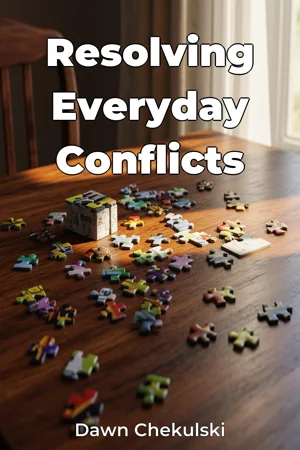
Are you navigating a minefield of daily disagreements, both at work and at home? "Resolving Everyday Conflicts" offers a comprehensive guide to understanding and effectively managing the disputes that inevitably arise in our personal and professional lives, drawing upon established communication theories to provide practical solutions. This book addresses the critical importance of conflict resolution skills in fostering healthier relationships, boosting workplace productivity, and enhancing overall well-being. We will explore key topics such as conflict styles, active listening, and mediation techniques. Understanding these principles can transform tense encounters into opportunities for growth and mutual understanding. These skills are essential because unresolved conflict can lead to strained relationships, decreased morale, and a breakdown in communication, impacting both personal happiness and professional success. This book argues that conflict, rather than being something to avoid, can be a catalyst for positive change when approached constructively. We delve into the dynamics of conflict, examining its root causes and various manifestations. The central message underscores that effective conflict resolution is not about winning or losing, but about finding mutually acceptable solutions that address the underlying needs and concerns of all parties involved. "Resolving Everyday Conflicts" is structured to provide a clear and progressive learning experience. First, we introduce the core concepts of conflict resolution, defining conflict types and exploring different communication models. Second, the book develops these ideas through explorations of topics such as emotional intelligence in conflict situations, the role of nonverbal communication, and specific strategies for managing difficult conversations. We will also delve into power dynamics and cultural differences that can influence conflict resolution approaches. Third, we examine practical applications, offering case studies and exercises to help readers apply the principles to real-world scenarios. The concluding section provides a framework for building a culture of constructive conflict resolution within organizations and families. The arguments presented are supported by a blend of academic research in communication, psychology, and organizational behavior; we incorporate case studies drawn from diverse professional settings, and real-life examples to illustrate the application of theoretical concepts. This book connects to other fields of study, including sociology, psychology, and management science. By exploring these connections, we provide a holistic view of conflict and its impact on various aspects of life. For example, sociological perspectives shed light on how societal norms and power structures influence conflict dynamics, while psychological insights help us understand the emotional and cognitive processes involved. Management science offers frameworks for organizational conflict resolution and team building. What sets this book apart is its emphasis on practical application and its integration of diverse communication theories into a cohesive framework. Rather than simply presenting abstract concepts, the book offers concrete tools and techniques that readers can immediately use to improve their conflict resolution skills. The tone is conversational and accessible, making complex theories understandable and relatable. "Resolving Everyday Conflicts" is designed for a broad audience, including managers, employees, educators, students, and anyone seeking to improve their interpersonal communication skills. Whether you're navigating workplace disputes, family disagreements, or community conflicts, this book provides valuable insights and strategies. As a self-help communication guide, this book emphasizes actionable advice and practical exercises, aligning with genre conventions. While conflict resolution is a broad field, this book focuses primarily on interpersonal and small group conflicts, recognizing that different approaches may be needed for large-scale or international disputes. The information presented can be applied immediately to improve personal and professional relationships. For example, learning active listening techniques can help readers better understand others' perspectives, while mastering assertive communication can enable them to express their needs and boundaries effectively. The ultimate goal is to empower readers to transform conflict from a destructive force into an opportunity for growth and connection. While various approaches to conflict resolution exist, this book advocates for a collaborative, problem-solving approach that prioritizes mutual understanding and finding mutually beneficial solutions.
Are you navigating a minefield of daily disagreements, both at work and at home? "Resolving Everyday Conflicts" offers a comprehensive guide to understanding and effectively managing the disputes that inevitably arise in our personal and professional lives, drawing upon established communication theories to provide practical solutions. This book addresses the critical importance of conflict resolution skills in fostering healthier relationships, boosting workplace productivity, and enhancing overall well-being. We will explore key topics such as conflict styles, active listening, and mediation techniques. Understanding these principles can transform tense encounters into opportunities for growth and mutual understanding. These skills are essential because unresolved conflict can lead to strained relationships, decreased morale, and a breakdown in communication, impacting both personal happiness and professional success. This book argues that conflict, rather than being something to avoid, can be a catalyst for positive change when approached constructively. We delve into the dynamics of conflict, examining its root causes and various manifestations. The central message underscores that effective conflict resolution is not about winning or losing, but about finding mutually acceptable solutions that address the underlying needs and concerns of all parties involved. "Resolving Everyday Conflicts" is structured to provide a clear and progressive learning experience. First, we introduce the core concepts of conflict resolution, defining conflict types and exploring different communication models. Second, the book develops these ideas through explorations of topics such as emotional intelligence in conflict situations, the role of nonverbal communication, and specific strategies for managing difficult conversations. We will also delve into power dynamics and cultural differences that can influence conflict resolution approaches. Third, we examine practical applications, offering case studies and exercises to help readers apply the principles to real-world scenarios. The concluding section provides a framework for building a culture of constructive conflict resolution within organizations and families. The arguments presented are supported by a blend of academic research in communication, psychology, and organizational behavior; we incorporate case studies drawn from diverse professional settings, and real-life examples to illustrate the application of theoretical concepts. This book connects to other fields of study, including sociology, psychology, and management science. By exploring these connections, we provide a holistic view of conflict and its impact on various aspects of life. For example, sociological perspectives shed light on how societal norms and power structures influence conflict dynamics, while psychological insights help us understand the emotional and cognitive processes involved. Management science offers frameworks for organizational conflict resolution and team building. What sets this book apart is its emphasis on practical application and its integration of diverse communication theories into a cohesive framework. Rather than simply presenting abstract concepts, the book offers concrete tools and techniques that readers can immediately use to improve their conflict resolution skills. The tone is conversational and accessible, making complex theories understandable and relatable. "Resolving Everyday Conflicts" is designed for a broad audience, including managers, employees, educators, students, and anyone seeking to improve their interpersonal communication skills. Whether you're navigating workplace disputes, family disagreements, or community conflicts, this book provides valuable insights and strategies. As a self-help communication guide, this book emphasizes actionable advice and practical exercises, aligning with genre conventions. While conflict resolution is a broad field, this book focuses primarily on interpersonal and small group conflicts, recognizing that different approaches may be needed for large-scale or international disputes. The information presented can be applied immediately to improve personal and professional relationships. For example, learning active listening techniques can help readers better understand others' perspectives, while mastering assertive communication can enable them to express their needs and boundaries effectively. The ultimate goal is to empower readers to transform conflict from a destructive force into an opportunity for growth and connection. While various approaches to conflict resolution exist, this book advocates for a collaborative, problem-solving approach that prioritizes mutual understanding and finding mutually beneficial solutions.
"Resolving Everyday Conflicts" delivers a practical guide to navigating disagreements in both professional and personal settings. By understanding conflict styles and mastering active listening skills, readers can transform tense situations into opportunities for growth. The book emphasizes that effective conflict resolution isn't about winning, but about finding solutions that meet everyone's needs. One intriguing fact is that unresolved conflict can significantly decrease morale and hinder effective communication, highlighting the importance of the communication skills taught. The book explores conflict dynamics, root causes, and manifestations, structured to provide a progressive learning experience. Beginning with core concepts and communication models, it advances into emotional intelligence and strategies for difficult conversations. Case studies and exercises help apply these principles to real-world scenarios. It uniquely integrates diverse communication theories into a cohesive, accessible framework, offering concrete tools for immediate use in dispute management and difficult conversations.
Book Details
ISBN
9788235259837
Publisher
Publifye AS
Your Licenses
You don't own any licenses for this book
Purchase a license below to unlock this book and download the EPUB.
Purchase License
Select a tier to unlock this book
Need bulk licensing?
Contact us for enterprise agreements.