
About This Book
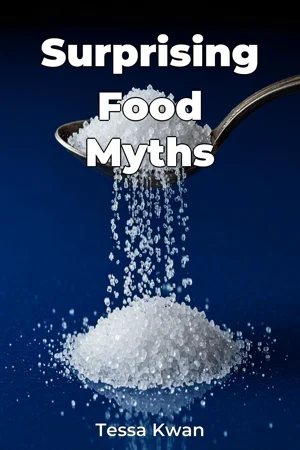
Did you know that the idea of waiting to swim after eating is more about crowded pools than cramps, or that the "five-second rule" has some basis in real surface science? We are surrounded by food-related beliefs, passed down through generations, often without a second thought. "Surprising Food Myths" dissects these widely held notions, exploring the science, history, and culture that underpin them. We delve into the most persistent myths, from nutritional misunderstandings to bizarre eating traditions, revealing their unexpected origins and the truths they often obscure. This book is crucial because food myths can impact our health, shape our cultural identities, and influence our daily decisions. Understanding the reality behind these myths allows us to make informed choices about what we eat and how we live. We will cover everything from the supposed evils of MSG to the benefits—or lack thereof—of activated charcoal. We'll begin by examining the historical and social context in which food myths arise, exploring how folklore, marketing, and even scientific misunderstandings contribute to their creation and persistence. Before modern science, observations and trial-and-error were the norm, creating a breeding ground for correlation to be mistaken for causation. Later, food marketing would latch onto these and other partial truths. The central argument of "Surprising Food Myths" is that many of our most cherished food beliefs are based on incomplete information, outdated science, or cultural biases, and are in some cases untrue. Unraveling these myths is essential for promoting healthier eating habits and a more nuanced understanding of food's role in our lives. The book is structured into three major sections. First, we introduce the key concepts of myth creation, propagation, and the psychology of belief. Second, we dismantle specific myths related to nutrition, food safety, and preparation techniques. Major points include detailed examinations of the "eat your greens" idea, if sugar really makes kids hyperactive, and whether organic food really is better. This section relies on meticulous research, drawing from scientific studies, historical records, and expert interviews. Finally, we discuss the implications of our findings, offering practical advice on how to critically evaluate food-related information and make more informed dietary choices. Evidence will be drawn from peer-reviewed scientific literature in the fields of nutrition, biology, and food science. We will also analyze historical texts, marketing materials, and anthropological studies to understand the cultural roots of these myths. Unique data sources include analyses of popular media coverage of food-related topics and surveys of public perceptions. This book connects to several fields, including history (exploring the origins of food traditions), psychology (understanding why people believe what they do about food), and marketing (analyzing how food myths are used to sell products). These connections enrich our exploration, providing a more complete picture of the forces that shape our food beliefs. Our approach is to present complex scientific information in an accessible and engaging style, avoiding technical jargon and focusing on clear, concise explanations, without dumbing down the science. We provide a balanced perspective, acknowledging the potential grain of truth in some myths while highlighting the scientific evidence that contradicts them. The target audience includes anyone interested in food, nutrition, and health. This book will appeal to readers who are curious about the science behind everyday beliefs and want to make more informed decisions about what they eat. It is valuable to health and wellness enthusiasts, home cooks, students in related fields, and anyone seeking a deeper understanding of food culture. As a fact-based book, we prioritize accuracy and rely on verifiable evidence. We address the topic with the objectivity and rigor expected of science writing. The scope of the book is broad, covering a wide range of food myths, but we focus specifically on myths with a strong scientific or historical basis. We do not delve into personal anecdotes or subjective experiences. The information in this book can be applied in everyday life to improve dietary choices, enhance cooking skills, and critically evaluate food-related information encountered in the media. By understanding the reality behind food myths, readers can make more informed decisions about what they eat and how they live. Some of the myths we address are subjects of ongoing debate in the scientific community. We acknowledge these controversies and present multiple perspectives, allowing readers to draw their own conclusions based on the available evidence. We also acknowledge that science is ever-evolving; evidence today might be updated tomorrow, and we encourage readers to stay informed.
Did you know that the idea of waiting to swim after eating is more about crowded pools than cramps, or that the "five-second rule" has some basis in real surface science? We are surrounded by food-related beliefs, passed down through generations, often without a second thought. "Surprising Food Myths" dissects these widely held notions, exploring the science, history, and culture that underpin them. We delve into the most persistent myths, from nutritional misunderstandings to bizarre eating traditions, revealing their unexpected origins and the truths they often obscure. This book is crucial because food myths can impact our health, shape our cultural identities, and influence our daily decisions. Understanding the reality behind these myths allows us to make informed choices about what we eat and how we live. We will cover everything from the supposed evils of MSG to the benefits—or lack thereof—of activated charcoal. We'll begin by examining the historical and social context in which food myths arise, exploring how folklore, marketing, and even scientific misunderstandings contribute to their creation and persistence. Before modern science, observations and trial-and-error were the norm, creating a breeding ground for correlation to be mistaken for causation. Later, food marketing would latch onto these and other partial truths. The central argument of "Surprising Food Myths" is that many of our most cherished food beliefs are based on incomplete information, outdated science, or cultural biases, and are in some cases untrue. Unraveling these myths is essential for promoting healthier eating habits and a more nuanced understanding of food's role in our lives. The book is structured into three major sections. First, we introduce the key concepts of myth creation, propagation, and the psychology of belief. Second, we dismantle specific myths related to nutrition, food safety, and preparation techniques. Major points include detailed examinations of the "eat your greens" idea, if sugar really makes kids hyperactive, and whether organic food really is better. This section relies on meticulous research, drawing from scientific studies, historical records, and expert interviews. Finally, we discuss the implications of our findings, offering practical advice on how to critically evaluate food-related information and make more informed dietary choices. Evidence will be drawn from peer-reviewed scientific literature in the fields of nutrition, biology, and food science. We will also analyze historical texts, marketing materials, and anthropological studies to understand the cultural roots of these myths. Unique data sources include analyses of popular media coverage of food-related topics and surveys of public perceptions. This book connects to several fields, including history (exploring the origins of food traditions), psychology (understanding why people believe what they do about food), and marketing (analyzing how food myths are used to sell products). These connections enrich our exploration, providing a more complete picture of the forces that shape our food beliefs. Our approach is to present complex scientific information in an accessible and engaging style, avoiding technical jargon and focusing on clear, concise explanations, without dumbing down the science. We provide a balanced perspective, acknowledging the potential grain of truth in some myths while highlighting the scientific evidence that contradicts them. The target audience includes anyone interested in food, nutrition, and health. This book will appeal to readers who are curious about the science behind everyday beliefs and want to make more informed decisions about what they eat. It is valuable to health and wellness enthusiasts, home cooks, students in related fields, and anyone seeking a deeper understanding of food culture. As a fact-based book, we prioritize accuracy and rely on verifiable evidence. We address the topic with the objectivity and rigor expected of science writing. The scope of the book is broad, covering a wide range of food myths, but we focus specifically on myths with a strong scientific or historical basis. We do not delve into personal anecdotes or subjective experiences. The information in this book can be applied in everyday life to improve dietary choices, enhance cooking skills, and critically evaluate food-related information encountered in the media. By understanding the reality behind food myths, readers can make more informed decisions about what they eat and how they live. Some of the myths we address are subjects of ongoing debate in the scientific community. We acknowledge these controversies and present multiple perspectives, allowing readers to draw their own conclusions based on the available evidence. We also acknowledge that science is ever-evolving; evidence today might be updated tomorrow, and we encourage readers to stay informed.
"Surprising Food Myths" tackles the pervasive food-related beliefs that shape our eating habits and cultural identities. It examines common myths, like whether sugar truly causes hyperactivity in children, and explores the surprising realities behind them, drawing from scientific literature, historical records, and expert interviews. The book reveals how folklore, marketing, and scientific misunderstandings contribute to the creation and persistence of these myths, often impacting our health and dietary choices. Did you know the "five-second rule" has some basis in surface science, or that the advice to wait before swimming after eating is more about pool crowding than cramps? The book begins by exploring the origins and psychology behind food myths, then dismantles specific myths related to nutrition, food safety, and cooking techniques. It emphasizes the importance of understanding the science behind our food beliefs to make informed decisions. By presenting complex information in an accessible style and avoiding technical jargon, "Surprising Food Myths" empowers readers to critically evaluate food-related information, unravel cultural biases, and adopt healthier eating habits. The book concludes with actionable advice on navigating dietary choices.
Book Details
ISBN
9788235259745
Publisher
Publifye AS
Your Licenses
You don't own any licenses for this book
Purchase a license below to unlock this book and download the EPUB.
Purchase License
Select a tier to unlock this book
Need bulk licensing?
Contact us for enterprise agreements.