
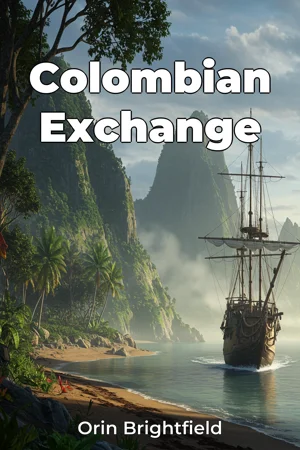
About This Book
Did the unification of the world begin with Christopher Columbus's voyages? This book, *Colombian Exchange*, explores the profound and lasting impacts of this pivotal moment in history, focusing on the unprecedented transfer of crops, animals, and diseases between the Old World (Europe, Asia, and Africa) and the New World (the Americas). This exchange reshaped global economies, transformed human diets, and irrevocably altered ecosystems on both sides of the Atlantic. The core argument of *Colombian Exchange* is that this period represents not merely an exchange, but a complex ecological and demographic revolution. The almost immediate and sustained interactions between previously isolated ecosystems resulted in both benefits and devastating consequences still felt today. Understanding the dynamics of this exchange is critical for comprehending modern global interconnectedness and the challenges of managing ecosystems and public health in an increasingly integrated world. This book unfolds in three major sections. The first section introduces the pre-Columbian world, highlighting the distinct agricultural practices, animal populations, and disease environments of both the Old and New Worlds. This section provides essential context for understanding the scale and significance of the subsequent exchange. It examines the staple crops of each region, such as maize and potatoes in the Americas, and wheat and rice in Eurasia and Africa, and also explores the disease landscapes, setting the stage for understanding the devastating impact of diseases like smallpox and measles on indigenous populations. The second section details the exchange itself, focusing on the movement of specific crops, animals, and pathogens. Chapters will be dedicated to the influence of New World crops, like potatoes and tomatoes, on European diets and agricultural practices, and conversely, the impact of Old World livestock, such as cattle and horses, on New World landscapes and indigenous cultures. A detailed analysis of the spread of diseases, including smallpox, measles, and influenza, and their demographic consequences in the Americas, will also be covered. The third section investigates the long-term consequences of the Colombian Exchange, examining its effects on global trade, population growth, and environmental change. It explores the rise of plantation economies in the Americas, fueled by crops like sugar and tobacco, and the resulting transatlantic slave trade. The effects on the environment, examining deforestation, soil erosion, and the introduction of invasive species, will also be discussed, including the impact of the introduction of the horse to the Americas and its role in altering indigenous cultures and hunting practices. The book's evidence is drawn from a wide range of sources, including historical accounts, archaeological data, botanical studies, and epidemiological research. It utilizes primary source materials, such as letters from explorers and early colonists, alongside contemporary scientific analysis to reconstruct the complex dynamics of the exchange. *Colombian Exchange* intersects with fields such as environmental science, economics, and public health. The book analyzes how the exchange contributed to the development of global trade networks, influenced population dynamics, and created new vulnerabilities to disease. The book adopts a balanced and nuanced approach, acknowledging both the positive and negative consequences of the Colombian Exchange. It aims to provide a comprehensive understanding of this transformative period in world history, free from Eurocentric biases. Written in a clear and accessible style, *Colombian Exchange* is aimed at students, researchers, and general readers interested in world history, environmental studies, and the history of science. It offers valuable insights into the interconnectedness of global systems and the long-lasting legacies of historical events. While the book provides a broad overview of the Colombian Exchange, it concentrates primarily on the ecological and demographic impacts, focusing less on political and social histories beyond their direct impact on the exchange. This is an intentional limitation designed to maintain focus on the book's core argument. The information presented in *Colombian Exchange* has practical applications for understanding modern challenges related to globalization, food security, and disease control. By studying the historical precedents of the Colombian Exchange, we can gain valuable insights into the complex dynamics of interconnected systems and the importance of responsible stewardship of resources and public health. The book also addresses ongoing debates about the long-term effects of the Columbian Exchange, including discussions about the extent of its impact on indigenous populations and the ethics of ecological transformation. By presenting multiple perspectives and critically evaluating the available evidence, *Colombian Exchange* encourages readers to engage with these complex issues and consider their own positions.
Did the unification of the world begin with Christopher Columbus's voyages? This book, *Colombian Exchange*, explores the profound and lasting impacts of this pivotal moment in history, focusing on the unprecedented transfer of crops, animals, and diseases between the Old World (Europe, Asia, and Africa) and the New World (the Americas). This exchange reshaped global economies, transformed human diets, and irrevocably altered ecosystems on both sides of the Atlantic. The core argument of *Colombian Exchange* is that this period represents not merely an exchange, but a complex ecological and demographic revolution. The almost immediate and sustained interactions between previously isolated ecosystems resulted in both benefits and devastating consequences still felt today. Understanding the dynamics of this exchange is critical for comprehending modern global interconnectedness and the challenges of managing ecosystems and public health in an increasingly integrated world. This book unfolds in three major sections. The first section introduces the pre-Columbian world, highlighting the distinct agricultural practices, animal populations, and disease environments of both the Old and New Worlds. This section provides essential context for understanding the scale and significance of the subsequent exchange. It examines the staple crops of each region, such as maize and potatoes in the Americas, and wheat and rice in Eurasia and Africa, and also explores the disease landscapes, setting the stage for understanding the devastating impact of diseases like smallpox and measles on indigenous populations. The second section details the exchange itself, focusing on the movement of specific crops, animals, and pathogens. Chapters will be dedicated to the influence of New World crops, like potatoes and tomatoes, on European diets and agricultural practices, and conversely, the impact of Old World livestock, such as cattle and horses, on New World landscapes and indigenous cultures. A detailed analysis of the spread of diseases, including smallpox, measles, and influenza, and their demographic consequences in the Americas, will also be covered. The third section investigates the long-term consequences of the Colombian Exchange, examining its effects on global trade, population growth, and environmental change. It explores the rise of plantation economies in the Americas, fueled by crops like sugar and tobacco, and the resulting transatlantic slave trade. The effects on the environment, examining deforestation, soil erosion, and the introduction of invasive species, will also be discussed, including the impact of the introduction of the horse to the Americas and its role in altering indigenous cultures and hunting practices. The book's evidence is drawn from a wide range of sources, including historical accounts, archaeological data, botanical studies, and epidemiological research. It utilizes primary source materials, such as letters from explorers and early colonists, alongside contemporary scientific analysis to reconstruct the complex dynamics of the exchange. *Colombian Exchange* intersects with fields such as environmental science, economics, and public health. The book analyzes how the exchange contributed to the development of global trade networks, influenced population dynamics, and created new vulnerabilities to disease. The book adopts a balanced and nuanced approach, acknowledging both the positive and negative consequences of the Colombian Exchange. It aims to provide a comprehensive understanding of this transformative period in world history, free from Eurocentric biases. Written in a clear and accessible style, *Colombian Exchange* is aimed at students, researchers, and general readers interested in world history, environmental studies, and the history of science. It offers valuable insights into the interconnectedness of global systems and the long-lasting legacies of historical events. While the book provides a broad overview of the Colombian Exchange, it concentrates primarily on the ecological and demographic impacts, focusing less on political and social histories beyond their direct impact on the exchange. This is an intentional limitation designed to maintain focus on the book's core argument. The information presented in *Colombian Exchange* has practical applications for understanding modern challenges related to globalization, food security, and disease control. By studying the historical precedents of the Colombian Exchange, we can gain valuable insights into the complex dynamics of interconnected systems and the importance of responsible stewardship of resources and public health. The book also addresses ongoing debates about the long-term effects of the Columbian Exchange, including discussions about the extent of its impact on indigenous populations and the ethics of ecological transformation. By presenting multiple perspectives and critically evaluating the available evidence, *Colombian Exchange* encourages readers to engage with these complex issues and consider their own positions.
*Colombian Exchange* explores the transformative period when the Old World and New World connected, leading to unprecedented exchanges of crops, animals, and diseases. This pivotal moment in world history reshaped global economies and ecosystems. For example, the transfer of New World crops like potatoes significantly altered European diets and agricultural practices, while Old World livestock transformed landscapes in the Americas. This book argues that this exchange was not merely a transfer but a complex ecological and demographic revolution. The book is structured into three parts, beginning with an introduction to the pre-Columbian world, highlighting the distinct characteristics of both the Old and New Worlds. It then details the specifics of the exchange itself, focusing on the movement of crops, animals, and pathogens, and their immediate impacts. Finally, it investigates the long-term consequences, such as the rise of plantation economies and the transatlantic slave trade. The spread of diseases like smallpox had a devastating impact on indigenous populations, illustrating the far-reaching consequences of global interconnectedness. This analysis provides readers with a nuanced understanding of a period that continues to shape our world.
Book Details
ISBN
9788235259738
Publisher
Publifye AS
Your Licenses
You don't own any licenses for this book
Purchase a license below to unlock this book and download the EPUB.
Purchase License
Select a tier to unlock this book
Need bulk licensing?
Contact us for enterprise agreements.