
About This Book
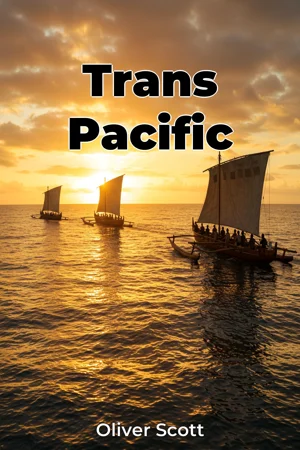
How did the vast Pacific Ocean, often perceived as a barrier, become a conduit for vibrant exchange between disparate civilizations? _Trans Pacific_ explores the intricate web of historical trade, migration, and exploration routes that connected Asia, the Americas, and Oceania, fundamentally reshaping the trajectory of world history. This book delves into the dynamic interplay of cultures, technologies, and commodities that traversed the Pacific, revealing a narrative far more complex and interconnected than previously understood. This book illuminates three core themes: the pre-Columbian exchanges across the Pacific, the impact of European maritime expansion on established networks, and the subsequent development of trans-Pacific trade routes. Understanding these themes is crucial as they challenge Eurocentric perspectives on globalization, spotlighting the agency and ingenuity of non-European actors in shaping global interactions. Examining pre-Columbian voyages requires understanding ancient navigation techniques, while the impact of European expansion necessitates knowledge of mercantilism and colonialism. _Trans Pacific_ argues that the Pacific Ocean was not a barrier, but rather a dynamic arena of exchange long before European contact, and that this pre-existing connectivity significantly influenced the patterns of later global trade and cultural diffusion. This argument is vital because it compels a re-evaluation of traditional narratives of globalization, acknowledging the contributions of Pacific societies. This book unfolds in a structured manner. First, it introduces the geographical and environmental factors that influenced trans-Pacific interactions, along with the pre-Columbian voyages that prove early contact. Second, it examines the transformations initiated by European exploration, focusing on the establishment of Manila as a pivotal trading hub and the resulting Silver Trade. Third, it analyzes the long-term consequences of these exchanges, including cultural blending, the spread of diseases, and the rise of new economic powers. The evidence presented in _Trans Pacific_ draws from diverse sources, including archaeological findings, indigenous oral histories, colonial records, and shipping manifests. The book utilizes interdisciplinary methodologies, combining historical analysis with insights from anthropology, archaeology, and oceanography to provide a comprehensive understanding of trans-Pacific interactions. _Trans Pacific_ connects to several other fields of study. It intersects with environmental history by considering the impact of maritime activities on marine ecosystems. It relates to anthropology through the study of cultural exchange and adaptation among different Pacific societies. Moreover, it contributes to the field of economics by analyzing the flow of commodities and capital across the Pacific. This book distinguishes itself through its emphasis on pre-Columbian interactions and its nuanced examination of the Pacific as an active agent in shaping global history. It moves beyond a Eurocentric framework to highlight the agency and contributions of Asian, American, and Oceanic societies. The writing style will be accessible and engaging, blending rigorous scholarship with compelling storytelling to captivate a diverse readership. The tone is informative, inquisitive, and respectful of the diverse cultures involved. The intended audience includes students and scholars of world history, Asian studies, and Pacific studies, as well as general readers interested in learning about non-European perspectives on globalization. Readers interested in travel and exploration will also find value in the book. This non-fiction work aligns with the conventions of academic history, presenting a well-researched, thoroughly cited analysis of its subject matter. The scope of the book encompasses the period from pre-Columbian times to the early 19th century, focusing primarily on maritime interactions within the Pacific basin. While terrestrial impacts of trans-Pacific exchange are acknowledged, the book's primary focus remains on oceanic routes and their associated cultural and economic exchanges. The insights presented in _Trans Pacific_ have significant real-world applications. By understanding the historical patterns of trans-Pacific exchange, policymakers and business leaders can make more informed decisions regarding international trade and cultural diplomacy in the region. While this book aims to provide a balanced perspective, it acknowledges ongoing debates regarding the extent and nature of pre-Columbian contact between the Americas and other continents. It delves into these controversies, presenting evidence-based arguments while acknowledging alternative interpretations.
How did the vast Pacific Ocean, often perceived as a barrier, become a conduit for vibrant exchange between disparate civilizations? _Trans Pacific_ explores the intricate web of historical trade, migration, and exploration routes that connected Asia, the Americas, and Oceania, fundamentally reshaping the trajectory of world history. This book delves into the dynamic interplay of cultures, technologies, and commodities that traversed the Pacific, revealing a narrative far more complex and interconnected than previously understood. This book illuminates three core themes: the pre-Columbian exchanges across the Pacific, the impact of European maritime expansion on established networks, and the subsequent development of trans-Pacific trade routes. Understanding these themes is crucial as they challenge Eurocentric perspectives on globalization, spotlighting the agency and ingenuity of non-European actors in shaping global interactions. Examining pre-Columbian voyages requires understanding ancient navigation techniques, while the impact of European expansion necessitates knowledge of mercantilism and colonialism. _Trans Pacific_ argues that the Pacific Ocean was not a barrier, but rather a dynamic arena of exchange long before European contact, and that this pre-existing connectivity significantly influenced the patterns of later global trade and cultural diffusion. This argument is vital because it compels a re-evaluation of traditional narratives of globalization, acknowledging the contributions of Pacific societies. This book unfolds in a structured manner. First, it introduces the geographical and environmental factors that influenced trans-Pacific interactions, along with the pre-Columbian voyages that prove early contact. Second, it examines the transformations initiated by European exploration, focusing on the establishment of Manila as a pivotal trading hub and the resulting Silver Trade. Third, it analyzes the long-term consequences of these exchanges, including cultural blending, the spread of diseases, and the rise of new economic powers. The evidence presented in _Trans Pacific_ draws from diverse sources, including archaeological findings, indigenous oral histories, colonial records, and shipping manifests. The book utilizes interdisciplinary methodologies, combining historical analysis with insights from anthropology, archaeology, and oceanography to provide a comprehensive understanding of trans-Pacific interactions. _Trans Pacific_ connects to several other fields of study. It intersects with environmental history by considering the impact of maritime activities on marine ecosystems. It relates to anthropology through the study of cultural exchange and adaptation among different Pacific societies. Moreover, it contributes to the field of economics by analyzing the flow of commodities and capital across the Pacific. This book distinguishes itself through its emphasis on pre-Columbian interactions and its nuanced examination of the Pacific as an active agent in shaping global history. It moves beyond a Eurocentric framework to highlight the agency and contributions of Asian, American, and Oceanic societies. The writing style will be accessible and engaging, blending rigorous scholarship with compelling storytelling to captivate a diverse readership. The tone is informative, inquisitive, and respectful of the diverse cultures involved. The intended audience includes students and scholars of world history, Asian studies, and Pacific studies, as well as general readers interested in learning about non-European perspectives on globalization. Readers interested in travel and exploration will also find value in the book. This non-fiction work aligns with the conventions of academic history, presenting a well-researched, thoroughly cited analysis of its subject matter. The scope of the book encompasses the period from pre-Columbian times to the early 19th century, focusing primarily on maritime interactions within the Pacific basin. While terrestrial impacts of trans-Pacific exchange are acknowledged, the book's primary focus remains on oceanic routes and their associated cultural and economic exchanges. The insights presented in _Trans Pacific_ have significant real-world applications. By understanding the historical patterns of trans-Pacific exchange, policymakers and business leaders can make more informed decisions regarding international trade and cultural diplomacy in the region. While this book aims to provide a balanced perspective, it acknowledges ongoing debates regarding the extent and nature of pre-Columbian contact between the Americas and other continents. It delves into these controversies, presenting evidence-based arguments while acknowledging alternative interpretations.
"Trans Pacific" offers a fresh perspective on world history by exploring the Pacific Ocean not as a barrier, but as a dynamic arena for exchange long before European contact. The book challenges Eurocentric views of globalization, revealing the ingenuity and agency of Asian, American, and Oceanic societies in shaping global interactions. It traces the intricate routes of trade, migration, and exploration that connected disparate civilizations, impacting the trajectory of world history. The book first introduces geographical factors and pre-Columbian voyages, highlighting early contact. Then, it examines the transformations brought about by European exploration, focusing on the pivotal role of Manila and the Silver Trade. Finally, it analyzes the long-term consequences of these exchanges, including cultural blending and the spread of diseases. By understanding the pre-existing connectivity across the Pacific, the book compels a re-evaluation of traditional narratives of globalization, acknowledging the contributions of Pacific societies. With an accessible writing style, "Trans Pacific" interweaves historical analysis with insights from anthropology, archaeology, and oceanography. By drawing from diverse sources, including archaeological findings, indigenous oral histories, and colonial records, the book provides a comprehensive understanding of trans-Pacific interactions, making it a valuable resource for students, scholars, and anyone interested in world history, travel, and exploration.
Book Details
ISBN
9788235259721
Publisher
Publifye AS
Your Licenses
You don't own any licenses for this book
Purchase a license below to unlock this book and download the EPUB.
Purchase License
Select a tier to unlock this book
Need bulk licensing?
Contact us for enterprise agreements.