
About This Book
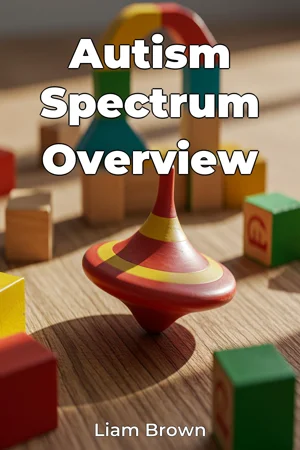
Are you seeking to understand autism spectrum disorders (ASD) and discover proven strategies for supporting individuals on the spectrum? "Autism Spectrum Overview" bridges the gap between complex research and practical application, offering a comprehensive guide for parents, educators, and anyone seeking to learn more about ASD. This book explores the core traits and challenges associated with ASD, examines diverse methods of support, and provides a balanced perspective on the spectrum's many facets, empowering readers to promote positive development for individuals with autism. This book addresses the significant role of early identification and intervention in maximizing outcomes for children with ASD. We delve into the diagnostic criteria, recognizing that identifying ASD can be a complex process, followed by an exploration of the diverse intervention strategies currently available. From Applied Behavior Analysis (ABA) to speech therapy, we evaluate the varying approaches, highlighting their suitability for different individuals and circumstances. Understanding the breadth of options enables informed decisions that best meet a child's unique needs. Furthermore, this guide examines the long-term implications of ASD, including educational, social, and vocational outcomes, emphasizing the importance of lifelong support and advocacy. Tracing the evolution of our understanding of ASD, we look into historical perspectives, landmark research, and shifting diagnostic criteria as an important foundation before moving forward. The central argument of "Autism Spectrum Overview" is that a nuanced understanding of ASD, combined with individualized support strategies, is paramount in facilitating positive development and enhancing quality of life for those on the spectrum. This argument is supported by evidence-based research and real-world examples, showcasing the impact of informed interventions. This book unfolds in a structured manner. Following an introductory chapter that defines ASD and its prevalence, we dissect the core characteristics, including social communication differences, repetitive behaviors, and sensory sensitivities. We proceed to detail the diagnostic process, differentiating ASD from other conditions and outlining the steps involved in assessment and diagnosis. The following section explores the various intervention strategies, including behavioral therapies, educational accommodations, and pharmacological interventions, providing a balanced overview of their effectiveness and potential side effects. The book culminates with a discussion of transition planning, lifelong support, and advocacy, emphasizing the importance of creating inclusive communities for individuals with ASD. The information presented in "Autism Spectrum Overview" draws upon a synthesis of peer-reviewed research, clinical guidelines, and expert opinions. We draw upon evidence-based practices, including randomized controlled trials, meta-analyses, and longitudinal studies, to support our arguments and recommendations. Relevant case studies and personal narratives illustrate the complexities and individual differences within the autism spectrum. This book connects to several interdisciplinary fields, including psychology, education, and neuroscience. Understanding the neurological basis of ASD informs the development of targeted interventions, while educational strategies are crucial for creating inclusive learning environments. By integrating perspectives from these fields, this book offers a holistic understanding of ASD. "Autism Spectrum Overview" adopts a balanced analytical approach, avoiding overly technical jargon and prioritizing clear, concise explanations. Complex concepts are simplified through relatable examples and illustrative case studies, making the information accessible to a broad audience. The tone is informative, empathetic, and optimistic, reflecting the belief that individuals with ASD can thrive with appropriate support. The intended readership includes parents of children with ASD, educators, therapists, healthcare professionals, and anyone seeking a deeper understanding of autism. This book is especially valuable for those who are new to the field or seeking a comprehensive resource that integrates research with practical guidance. As a resource in the 'Parenting' and 'Psychology' genres, this book will offer practical strategies along with a deep dive into psychological theories. While "Autism Spectrum Overview" aims to provide a comprehensive overview of ASD, it acknowledges the limitations of a single volume. The book focuses primarily on early intervention and developmental support, rather than delving into specific aspects of adult autism or advanced research topics. The insights provided here can be applied to various real-world settings. Parents can use the information to advocate for their children's needs, educators can implement inclusive classroom strategies, and therapists can tailor their interventions to meet individual client needs. This book engages with debates surrounding diagnostic criteria, intervention effectiveness, and ethical considerations in autism research. It provides a balanced perspective on these controversies, encouraging readers to critically evaluate the evidence and form their own informed opinions.
Are you seeking to understand autism spectrum disorders (ASD) and discover proven strategies for supporting individuals on the spectrum? "Autism Spectrum Overview" bridges the gap between complex research and practical application, offering a comprehensive guide for parents, educators, and anyone seeking to learn more about ASD. This book explores the core traits and challenges associated with ASD, examines diverse methods of support, and provides a balanced perspective on the spectrum's many facets, empowering readers to promote positive development for individuals with autism. This book addresses the significant role of early identification and intervention in maximizing outcomes for children with ASD. We delve into the diagnostic criteria, recognizing that identifying ASD can be a complex process, followed by an exploration of the diverse intervention strategies currently available. From Applied Behavior Analysis (ABA) to speech therapy, we evaluate the varying approaches, highlighting their suitability for different individuals and circumstances. Understanding the breadth of options enables informed decisions that best meet a child's unique needs. Furthermore, this guide examines the long-term implications of ASD, including educational, social, and vocational outcomes, emphasizing the importance of lifelong support and advocacy. Tracing the evolution of our understanding of ASD, we look into historical perspectives, landmark research, and shifting diagnostic criteria as an important foundation before moving forward. The central argument of "Autism Spectrum Overview" is that a nuanced understanding of ASD, combined with individualized support strategies, is paramount in facilitating positive development and enhancing quality of life for those on the spectrum. This argument is supported by evidence-based research and real-world examples, showcasing the impact of informed interventions. This book unfolds in a structured manner. Following an introductory chapter that defines ASD and its prevalence, we dissect the core characteristics, including social communication differences, repetitive behaviors, and sensory sensitivities. We proceed to detail the diagnostic process, differentiating ASD from other conditions and outlining the steps involved in assessment and diagnosis. The following section explores the various intervention strategies, including behavioral therapies, educational accommodations, and pharmacological interventions, providing a balanced overview of their effectiveness and potential side effects. The book culminates with a discussion of transition planning, lifelong support, and advocacy, emphasizing the importance of creating inclusive communities for individuals with ASD. The information presented in "Autism Spectrum Overview" draws upon a synthesis of peer-reviewed research, clinical guidelines, and expert opinions. We draw upon evidence-based practices, including randomized controlled trials, meta-analyses, and longitudinal studies, to support our arguments and recommendations. Relevant case studies and personal narratives illustrate the complexities and individual differences within the autism spectrum. This book connects to several interdisciplinary fields, including psychology, education, and neuroscience. Understanding the neurological basis of ASD informs the development of targeted interventions, while educational strategies are crucial for creating inclusive learning environments. By integrating perspectives from these fields, this book offers a holistic understanding of ASD. "Autism Spectrum Overview" adopts a balanced analytical approach, avoiding overly technical jargon and prioritizing clear, concise explanations. Complex concepts are simplified through relatable examples and illustrative case studies, making the information accessible to a broad audience. The tone is informative, empathetic, and optimistic, reflecting the belief that individuals with ASD can thrive with appropriate support. The intended readership includes parents of children with ASD, educators, therapists, healthcare professionals, and anyone seeking a deeper understanding of autism. This book is especially valuable for those who are new to the field or seeking a comprehensive resource that integrates research with practical guidance. As a resource in the 'Parenting' and 'Psychology' genres, this book will offer practical strategies along with a deep dive into psychological theories. While "Autism Spectrum Overview" aims to provide a comprehensive overview of ASD, it acknowledges the limitations of a single volume. The book focuses primarily on early intervention and developmental support, rather than delving into specific aspects of adult autism or advanced research topics. The insights provided here can be applied to various real-world settings. Parents can use the information to advocate for their children's needs, educators can implement inclusive classroom strategies, and therapists can tailor their interventions to meet individual client needs. This book engages with debates surrounding diagnostic criteria, intervention effectiveness, and ethical considerations in autism research. It provides a balanced perspective on these controversies, encouraging readers to critically evaluate the evidence and form their own informed opinions.
"Autism Spectrum Overview" offers a comprehensive introduction to Autism Spectrum Disorder (ASD), bridging the gap between research and practical application for parents, educators, and anyone interested in learning more. The book emphasizes early intervention as crucial for maximizing outcomes and explores various intervention strategies, from Applied Behavior Analysis (ABA) to speech therapy, highlighting their suitability for diverse needs. By understanding the breadth of options and the importance of lifelong support, readers can make informed decisions to promote positive development for individuals with autism, empowering them to thrive. The book traces the evolution of understanding ASD, examining historical perspectives and shifting diagnostic criteria. It dissects core characteristics like social communication differences, repetitive behaviors, and sensory sensitivities, while also detailing the diagnostic process and differentiating ASD from other conditions. The book culminates by addressing transition planning, lifelong support, and advocacy, emphasizing the importance of creating inclusive communities. This balanced approach, combined with relatable examples, makes complex concepts accessible to a broad audience.
Book Details
ISBN
9788235259714
Publisher
Publifye AS
Your Licenses
You don't own any licenses for this book
Purchase a license below to unlock this book and download the EPUB.
Purchase License
Select a tier to unlock this book
Need bulk licensing?
Contact us for enterprise agreements.