
About This Book
Have you ever wondered what separates a static, lifeless illustration from one that leaps off the page with energy and intent? "Dynamic Poses" unlocks the secrets to imbuing your characters with captivating movement and impactful presence. This book explores the fundamental principles of pose design, focusing on how artists can effectively communicate action, emotion, and narrative through the strategic use of gesture, anatomy, and composition. The two key concepts we delve into are gesture drawing and the manipulation of contrapposto. Gesture drawing, the art of capturing the essence of a pose in its simplest form, is crucial for understanding the flow of energy through the figure. Mastering this skill allows artists to quickly and effectively sketch dynamic poses that convey movement and intention. Contrapposto, the asymmetrical arrangement of the human figure in which the line of the arms and shoulders contrasts with, but balances, that of the hips and legs, is foundational for creating believable and engaging characters. It's a cornerstone of classical art, and understanding its principles allows artists to inject life and naturalism into their work. These topics are critically important because they equip artists with the tools to create figures that are not merely anatomically correct but also emotionally resonant and narratively compelling. This book argues that strong pose design is not simply about accurately depicting the human form; it is about employing artistic principles to communicate a story, evoke emotion, and capture the viewer's attention. The importance of this argument lies in its emphasis on the communicative power of art. By understanding how to manipulate pose and gesture, artists can elevate their work beyond technical skill and create truly impactful images. We begin by introducing the foundational principles of anatomy, proportion, and perspective, providing the reader with a base understanding. We then move into gesture drawing, exploring techniques for capturing the essence of movement and energy in simple lines. The book then progresses to an in-depth analysis of contrapposto, demonstrating its application through historical examples and contemporary artwork. Further chapters will cover advanced topics such as dynamic asymmetry, anticipation, and follow-through, showing how these principles can be used to create poses that convey a sense of weight, momentum, and impact. Finally, the book culminates in practical exercises and case studies, demonstrating how these techniques can be applied to a variety of subjects and styles. The arguments presented within are backed up by hundreds of illustrations, diagrams, and photographic references. We will analyze master artworks, dissecting the poses of iconic figures to reveal the underlying principles at play. We also incorporate contemporary examples from comics, animation, and illustration, showcasing how these principles are applied in modern contexts. "Dynamic Poses" connects to other disciplines such as anatomy, kinesiology, and visual storytelling. An understanding of anatomy is crucial for creating believable figures, while kinesiology provides insights into the mechanics of human movement. The principles of visual storytelling, such as framing, composition, and character design, are essential for creating poses that effectively communicate a narrative. These connections enhance the book's argument by demonstrating that pose design is not an isolated skill but rather an integral part of a broader artistic practice. This book offers a fresh perspective by combining classical principles with contemporary practices. It bridges the gap between traditional art education and the demands of modern visual communication. The tone throughout the book is practical and accessible. The focus is on providing clear explanations, actionable advice, and inspiring examples. The intended audience is broad, encompassing students, aspiring professionals, and seasoned artists. Whether you are a beginner seeking to improve your foundational skills or an experienced artist looking to refine your technique, this book offers valuable insights and practical guidance. As a design book, “Dynamic Poses” will emphasize visual learning through clear diagrams, illustrative examples, and step-by-step demonstrations. The scope of this book is limited to the creation of dynamic poses for illustrative purposes. While some of the principles discussed may be applicable to other fields such as sculpture or photography, the primary focus is on drawing and illustration. The information in this book can be applied to a wide range of real-world applications, from character design for video games and animation to illustration for books and magazines. By mastering the principles of dynamic pose design, artists can create more engaging, impactful, and memorable images.
Have you ever wondered what separates a static, lifeless illustration from one that leaps off the page with energy and intent? "Dynamic Poses" unlocks the secrets to imbuing your characters with captivating movement and impactful presence. This book explores the fundamental principles of pose design, focusing on how artists can effectively communicate action, emotion, and narrative through the strategic use of gesture, anatomy, and composition. The two key concepts we delve into are gesture drawing and the manipulation of contrapposto. Gesture drawing, the art of capturing the essence of a pose in its simplest form, is crucial for understanding the flow of energy through the figure. Mastering this skill allows artists to quickly and effectively sketch dynamic poses that convey movement and intention. Contrapposto, the asymmetrical arrangement of the human figure in which the line of the arms and shoulders contrasts with, but balances, that of the hips and legs, is foundational for creating believable and engaging characters. It's a cornerstone of classical art, and understanding its principles allows artists to inject life and naturalism into their work. These topics are critically important because they equip artists with the tools to create figures that are not merely anatomically correct but also emotionally resonant and narratively compelling. This book argues that strong pose design is not simply about accurately depicting the human form; it is about employing artistic principles to communicate a story, evoke emotion, and capture the viewer's attention. The importance of this argument lies in its emphasis on the communicative power of art. By understanding how to manipulate pose and gesture, artists can elevate their work beyond technical skill and create truly impactful images. We begin by introducing the foundational principles of anatomy, proportion, and perspective, providing the reader with a base understanding. We then move into gesture drawing, exploring techniques for capturing the essence of movement and energy in simple lines. The book then progresses to an in-depth analysis of contrapposto, demonstrating its application through historical examples and contemporary artwork. Further chapters will cover advanced topics such as dynamic asymmetry, anticipation, and follow-through, showing how these principles can be used to create poses that convey a sense of weight, momentum, and impact. Finally, the book culminates in practical exercises and case studies, demonstrating how these techniques can be applied to a variety of subjects and styles. The arguments presented within are backed up by hundreds of illustrations, diagrams, and photographic references. We will analyze master artworks, dissecting the poses of iconic figures to reveal the underlying principles at play. We also incorporate contemporary examples from comics, animation, and illustration, showcasing how these principles are applied in modern contexts. "Dynamic Poses" connects to other disciplines such as anatomy, kinesiology, and visual storytelling. An understanding of anatomy is crucial for creating believable figures, while kinesiology provides insights into the mechanics of human movement. The principles of visual storytelling, such as framing, composition, and character design, are essential for creating poses that effectively communicate a narrative. These connections enhance the book's argument by demonstrating that pose design is not an isolated skill but rather an integral part of a broader artistic practice. This book offers a fresh perspective by combining classical principles with contemporary practices. It bridges the gap between traditional art education and the demands of modern visual communication. The tone throughout the book is practical and accessible. The focus is on providing clear explanations, actionable advice, and inspiring examples. The intended audience is broad, encompassing students, aspiring professionals, and seasoned artists. Whether you are a beginner seeking to improve your foundational skills or an experienced artist looking to refine your technique, this book offers valuable insights and practical guidance. As a design book, “Dynamic Poses” will emphasize visual learning through clear diagrams, illustrative examples, and step-by-step demonstrations. The scope of this book is limited to the creation of dynamic poses for illustrative purposes. While some of the principles discussed may be applicable to other fields such as sculpture or photography, the primary focus is on drawing and illustration. The information in this book can be applied to a wide range of real-world applications, from character design for video games and animation to illustration for books and magazines. By mastering the principles of dynamic pose design, artists can create more engaging, impactful, and memorable images.
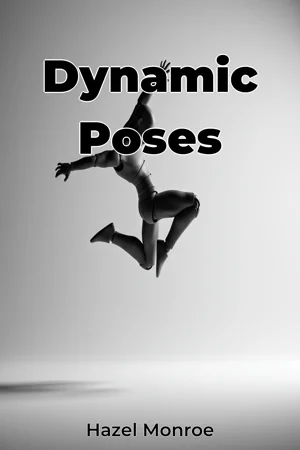
Unlock the secrets to creating captivating characters with "Dynamic Poses," a guide focused on imbuing illustrations with energy and movement. This book explores the art of pose design, emphasizing how gesture drawing captures the essence of motion, and how strategic use of contrapposto, the balance of asymmetry, brings figures to life. Strong pose design isn't just about anatomy; it's about visual storytelling and emotional impact. The book begins with foundational principles such as anatomy and perspective, then progresses to gesture drawing techniques for capturing movement. It delves into contrapposto, showcasing examples from classical and contemporary art, and explores advanced topics like dynamic asymmetry. Through illustrations, diagrams, and case studies, "Dynamic Poses" bridges classical techniques with modern visual communication, offering practical guidance for artists of all levels interested in art and design.
Book Details
ISBN
9788235259561
Publisher
Publifye AS
Your Licenses
You don't own any licenses for this book
Purchase a license below to unlock this book and download the EPUB.
Purchase License
Select a tier to unlock this book
Need bulk licensing?
Contact us for enterprise agreements.