
About This Book
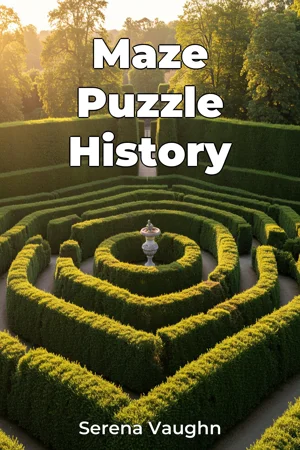
Have you ever paused to consider the intricate history hidden within the twists and turns of a maze? "Maze Puzzle History" delves into the captivating evolution of mazes, tracing their origins from ancient spiritual symbols to the complex, computer-generated challenges of today. This book explores how mazes reflect humanity's enduring fascination with problem-solving, spatial reasoning, and the quest for understanding. Our journey begins by examining the earliest labyrinths, often found in ancient cultures such as Minoan Crete and Egypt. These were not merely recreational puzzles but held deep symbolic significance, representing spiritual journeys, protection from evil, and the complexities of life itself. We will investigate the archaeological evidence and historical texts that shed light on these early mazes and their societal roles, revealing how they were interwoven with religious beliefs and cultural practices. Understanding this historical context is crucial for appreciating the transformative journey mazes have undergone. The book then transitions to the Renaissance and Baroque periods, where mazes emerged as elaborate garden features in European estates. These meticulously designed hedge mazes became symbols of wealth, power, and intellectual prowess. Analyzing the architectural designs and social functions of these mazes reveal them as spaces for both entertainment and social maneuvering, reflecting the changing values and aesthetic sensibilities of the time. Moving into the modern era, "Maze Puzzle History" explores the proliferation of mazes in popular culture, from printed puzzle books to video games and escape rooms. We analyze the psychological principles underlying their appeal, examining how they tap into our innate cognitive abilities and provide a sense of satisfaction upon completion. The rise of computer-generated mazes introduces complex algorithms and new dimensions of spatial reasoning, pushing the boundaries of problem-solving in both virtual and physical spaces. We will explore how computer science and mathematics have revolutionized maze design, creating challenges that were previously unimaginable. The central argument of this book is that the history of mazes provides a unique lens through which to understand the evolution of human intelligence, creativity, and our relationship with problem-solving. Mazes are not merely diversions but are reflections of our cognitive abilities and cultural priorities at different points in history. This argument is supported by a diverse range of sources, including archaeological findings, historical documents, architectural plans, and contemporary psychological studies. "Maze Puzzle History" connects to various fields, from art and architecture to psychology and computer science. The book considers how artistic expression has shaped maze design, how psychological principles influence our interaction with them, and how computational advancements have revolutionized their creation. By exploring these interdisciplinary connections, we gain a richer understanding of the multifaceted nature of mazes and their impact on society. This book is written in an accessible and engaging style, making it appealing to a broad audience, including puzzle enthusiasts, history buffs, educators, and anyone interested in the history of human ingenuity. While scope encompasses a wide historical range, the book intentionally focuses on Western traditions to maintain depth and coherence. The information presented in "Maze Puzzle History" has real-world applications, from informing the design of educational games to enhancing our understanding of spatial cognition. The book delves into the ongoing debates surrounding the use of mazes in therapeutic interventions, such as cognitive rehabilitation and stress reduction. By shining a light on the historical and scientific aspects of these debates, the book fosters a more informed discussion about the potential benefits and limitations of incorporating mazes into various aspects of our lives. "Maze Puzzle History" aims to be a well-rounded exploration of a topic that has intrigued and challenged people for millennia.
Have you ever paused to consider the intricate history hidden within the twists and turns of a maze? "Maze Puzzle History" delves into the captivating evolution of mazes, tracing their origins from ancient spiritual symbols to the complex, computer-generated challenges of today. This book explores how mazes reflect humanity's enduring fascination with problem-solving, spatial reasoning, and the quest for understanding. Our journey begins by examining the earliest labyrinths, often found in ancient cultures such as Minoan Crete and Egypt. These were not merely recreational puzzles but held deep symbolic significance, representing spiritual journeys, protection from evil, and the complexities of life itself. We will investigate the archaeological evidence and historical texts that shed light on these early mazes and their societal roles, revealing how they were interwoven with religious beliefs and cultural practices. Understanding this historical context is crucial for appreciating the transformative journey mazes have undergone. The book then transitions to the Renaissance and Baroque periods, where mazes emerged as elaborate garden features in European estates. These meticulously designed hedge mazes became symbols of wealth, power, and intellectual prowess. Analyzing the architectural designs and social functions of these mazes reveal them as spaces for both entertainment and social maneuvering, reflecting the changing values and aesthetic sensibilities of the time. Moving into the modern era, "Maze Puzzle History" explores the proliferation of mazes in popular culture, from printed puzzle books to video games and escape rooms. We analyze the psychological principles underlying their appeal, examining how they tap into our innate cognitive abilities and provide a sense of satisfaction upon completion. The rise of computer-generated mazes introduces complex algorithms and new dimensions of spatial reasoning, pushing the boundaries of problem-solving in both virtual and physical spaces. We will explore how computer science and mathematics have revolutionized maze design, creating challenges that were previously unimaginable. The central argument of this book is that the history of mazes provides a unique lens through which to understand the evolution of human intelligence, creativity, and our relationship with problem-solving. Mazes are not merely diversions but are reflections of our cognitive abilities and cultural priorities at different points in history. This argument is supported by a diverse range of sources, including archaeological findings, historical documents, architectural plans, and contemporary psychological studies. "Maze Puzzle History" connects to various fields, from art and architecture to psychology and computer science. The book considers how artistic expression has shaped maze design, how psychological principles influence our interaction with them, and how computational advancements have revolutionized their creation. By exploring these interdisciplinary connections, we gain a richer understanding of the multifaceted nature of mazes and their impact on society. This book is written in an accessible and engaging style, making it appealing to a broad audience, including puzzle enthusiasts, history buffs, educators, and anyone interested in the history of human ingenuity. While scope encompasses a wide historical range, the book intentionally focuses on Western traditions to maintain depth and coherence. The information presented in "Maze Puzzle History" has real-world applications, from informing the design of educational games to enhancing our understanding of spatial cognition. The book delves into the ongoing debates surrounding the use of mazes in therapeutic interventions, such as cognitive rehabilitation and stress reduction. By shining a light on the historical and scientific aspects of these debates, the book fosters a more informed discussion about the potential benefits and limitations of incorporating mazes into various aspects of our lives. "Maze Puzzle History" aims to be a well-rounded exploration of a topic that has intrigued and challenged people for millennia.
"Maze Puzzle History" explores the captivating journey of mazes from ancient times to the present day, revealing their surprising significance beyond mere entertainment. Originating as spiritual symbols in ancient cultures like Minoan Crete and Egypt, early labyrinths represented complex concepts such as life's journey and protection from evil. Unearthing archaeological evidence and historical texts, the book highlights how these mazes were deeply intertwined with religious beliefs and societal roles, demonstrating their cultural importance. The narrative progresses through the Renaissance and Baroque periods, spotlighting the emergence of elaborate garden mazes in European estates. These meticulously designed hedge mazes symbolized wealth, power, and intellectual prowess, reflecting the changing values and aesthetic sensibilities of the time. Moving into the modern era, the book delves into the psychological principles underlying the appeal of mazes, examining how they tap into our cognitive abilities and provide a sense of satisfaction. The rise of computer-generated mazes is also explored, showcasing how algorithms and computer science have revolutionized maze design, pushing the boundaries of problem-solving in virtual and physical spaces.
Book Details
ISBN
9788235259530
Publisher
Publifye AS
Your Licenses
You don't own any licenses for this book
Purchase a license below to unlock this book and download the EPUB.
Purchase License
Select a tier to unlock this book
Need bulk licensing?
Contact us for enterprise agreements.