
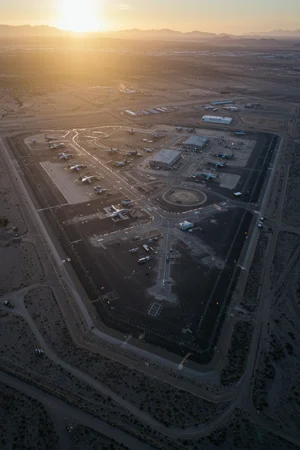
About This Book
What shapes global geopolitics more profoundly than the sprawling network of U.S. military bases strategically dotted across the globe? "Military Bases" delves into the multifaceted reality of these installations, examining their historical evolution, strategic importance, economic impact, and the complex controversies surrounding their existence. This book seeks to provide a balanced and thoroughly researched account of a crucial aspect of contemporary global power dynamics. The book isstructured around three core themes. First, it analyzes the historical context, tracing the expansion of U.S. military bases from the post-World War II era to the present day, exploring the shifting motivations behind their establishment and the changing geopolitical landscape that influenced their distribution. Second, the work scrutinizes the strategic rationale for maintaining these bases, focusing on their role in projecting power, ensuring regional stability (or instability), and responding to emerging threats, while also assessing criticisms regarding their effectiveness and necessity. Third, it provides an economic analysis of these bases, evaluating their impact on both the U.S. economy and the host nations, addressing issues such as job creation, infrastructure development, and potential negative consequences like environmental degradation and displacement of local populations. The central argument posits that the U.S. military base network, while ostensibly serving as a guarantor of global security and a facilitator of economic growth, also engenders complex socio-political consequences that often undermine its intended benefits. This argument is vital because it challenges conventional wisdom regarding the unquestioned utility of these bases and encourages a more nuanced understanding of their true impact. "Military Bases" unfolds in a logical progression. The introduction establishes the historical and theoretical foundations, followed by detailed case studies of bases in different regions, such as Europe, Asia, and the Middle East, exploring the specific local contexts and challenges. It culminates in a comprehensive analysis of the long-term implications of the U.S. military presence abroad, offering concrete policy recommendations for a more sustainable and equitable approach. This book relies on a combination of primary and secondary source materials, including declassified government documents, academic research, journalistic investigations, and firsthand accounts from individuals living near these bases. Quantitative data on base expenditures, troop deployments, and economic indicators provides further empirical support. The book also considers the influence of international relations, economics, and sociology in understanding military bases. The analysis of base agreements falls within international relations, while economic impact assessments connect to economics. The portrayal of local community relations is linked to sociology. "Military Bases" distinguishes itself through its holistic approach, integrating historical analysis, strategic assessment, economic evaluation, and socio-political considerations. It avoids simplistic narratives, acknowledging the complex trade-offs and unintended consequences of U.S. military bases. Written in a professional and accessible style, the book is intended for a broad audience, including students, policymakers, journalists, and anyone interested in international affairs, military strategy, or the impact of globalization. It provides valuable insights into a topic with far-reaching consequences. Within the genre of military history and political science, this book adheres to the convention of presenting factual information supported by evidence and rigorous analysis. While the book aims for a comprehensive overview, it acknowledges limitations in scope, deliberately focusing on U.S. military bases while recognizing the global network of other nations' installations also contribute to geopolitical dynamics. The information presented has real-world applications for policymakers seeking to refine U.S. foreign policy, for activists advocating for base closures or reforms, and for individuals seeking to understand the complex relationship between military power and global development. The book addresses ongoing debates regarding the legitimacy of foreign military intervention, the effectiveness of military force in achieving political objectives, and the ethical implications of maintaining a vast network of bases in sovereign nations. These debates are examined through the lens of specific base locations and their impact on local populations.
What shapes global geopolitics more profoundly than the sprawling network of U.S. military bases strategically dotted across the globe? "Military Bases" delves into the multifaceted reality of these installations, examining their historical evolution, strategic importance, economic impact, and the complex controversies surrounding their existence. This book seeks to provide a balanced and thoroughly researched account of a crucial aspect of contemporary global power dynamics. The book isstructured around three core themes. First, it analyzes the historical context, tracing the expansion of U.S. military bases from the post-World War II era to the present day, exploring the shifting motivations behind their establishment and the changing geopolitical landscape that influenced their distribution. Second, the work scrutinizes the strategic rationale for maintaining these bases, focusing on their role in projecting power, ensuring regional stability (or instability), and responding to emerging threats, while also assessing criticisms regarding their effectiveness and necessity. Third, it provides an economic analysis of these bases, evaluating their impact on both the U.S. economy and the host nations, addressing issues such as job creation, infrastructure development, and potential negative consequences like environmental degradation and displacement of local populations. The central argument posits that the U.S. military base network, while ostensibly serving as a guarantor of global security and a facilitator of economic growth, also engenders complex socio-political consequences that often undermine its intended benefits. This argument is vital because it challenges conventional wisdom regarding the unquestioned utility of these bases and encourages a more nuanced understanding of their true impact. "Military Bases" unfolds in a logical progression. The introduction establishes the historical and theoretical foundations, followed by detailed case studies of bases in different regions, such as Europe, Asia, and the Middle East, exploring the specific local contexts and challenges. It culminates in a comprehensive analysis of the long-term implications of the U.S. military presence abroad, offering concrete policy recommendations for a more sustainable and equitable approach. This book relies on a combination of primary and secondary source materials, including declassified government documents, academic research, journalistic investigations, and firsthand accounts from individuals living near these bases. Quantitative data on base expenditures, troop deployments, and economic indicators provides further empirical support. The book also considers the influence of international relations, economics, and sociology in understanding military bases. The analysis of base agreements falls within international relations, while economic impact assessments connect to economics. The portrayal of local community relations is linked to sociology. "Military Bases" distinguishes itself through its holistic approach, integrating historical analysis, strategic assessment, economic evaluation, and socio-political considerations. It avoids simplistic narratives, acknowledging the complex trade-offs and unintended consequences of U.S. military bases. Written in a professional and accessible style, the book is intended for a broad audience, including students, policymakers, journalists, and anyone interested in international affairs, military strategy, or the impact of globalization. It provides valuable insights into a topic with far-reaching consequences. Within the genre of military history and political science, this book adheres to the convention of presenting factual information supported by evidence and rigorous analysis. While the book aims for a comprehensive overview, it acknowledges limitations in scope, deliberately focusing on U.S. military bases while recognizing the global network of other nations' installations also contribute to geopolitical dynamics. The information presented has real-world applications for policymakers seeking to refine U.S. foreign policy, for activists advocating for base closures or reforms, and for individuals seeking to understand the complex relationship between military power and global development. The book addresses ongoing debates regarding the legitimacy of foreign military intervention, the effectiveness of military force in achieving political objectives, and the ethical implications of maintaining a vast network of bases in sovereign nations. These debates are examined through the lens of specific base locations and their impact on local populations.
"Military Bases" examines the extensive network of U.S. military bases around the world, exploring their evolution from post-World War II to today. It analyzes the strategic and economic consequences of these bases, contributing to debates about foreign intervention and military force. The book highlights how these bases, while intended to ensure global security and promote economic growth, can also generate socio-political issues that undermine their benefits. One key insight is how the establishment of these bases has shifted due to changes in the geopolitical landscape. The book approaches the topic with a blend of historical analysis, strategic assessment, and economic evaluation, using both primary and secondary sources to support its arguments. It considers the effects on both the U.S. and host nations, accounting for job creation, infrastructure development, and negative consequences like environmental impacts. Case studies from regions like Europe, Asia, and the Middle East illustrate specific local contexts and challenges. The book progresses from historical foundations to regional case studies and concludes with policy recommendations for a more sustainable approach.
Book Details
ISBN
9788235259479
Publisher
Publifye AS
Your Licenses
You don't own any licenses for this book
Purchase a license below to unlock this book and download the EPUB.
Purchase License
Select a tier to unlock this book
Need bulk licensing?
Contact us for enterprise agreements.