
About This Book
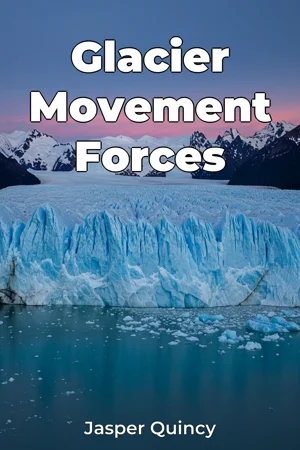
Are you truly prepared for the dynamic forces at play beneath your feet as you navigate the icy realms of glaciers? "Glacier Movement Forces" provides a comprehensive exploration of how glacial shifts directly impact terrain, gear placement strategies, and the critical skill of crevasse detection during climbs in polar and alpine environments. This book delivers crucial insights for mountaineers, glaciologists, and earth science enthusiasts alike. We focus primarily on understanding the interplay between glacial dynamics and the practical challenges faced by those who venture onto these ever-changing landscapes. "Glacier Movement Forces" delves into three core concepts: glacial mechanics, terrain deformation, and risk mitigation strategies. Understanding glacial mechanics – the physics of ice flow, basal sliding, and internal deformation – is paramount. We illuminate how these processes sculpt the landscape, creating hazards and opportunities for climbers. The book also investigates terrain deformation, showing how seemingly stable ice formations are constantly shifting and cracking under immense pressure. This understanding allows for more accurate route planning and hazard assessment. Finally, we address risk mitigation strategies, detailing the gear, techniques, and knowledge necessary to navigate glaciated terrain safely. These topics are vital because misinterpreting glacial activity can lead to critical errors in judgment with potentially fatal consequences. The study of glaciers blends historical observations with modern scientific analysis. We examine the evolution of glaciology, from early explorations to current satellite-based monitoring, providing context for understanding the scale and scope of glacial processes. A basic understanding of physics and geological principles is helpful but not required, as we explain concepts in a clear, accessible manner. The central argument of this book is that a thorough understanding of glacier movement is essential for safe and successful navigation of glaciated terrain. By bridging the gap between theoretical glaciology and practical mountaineering, we aim to empower readers with the knowledge and skills to make informed decisions in challenging environments. This argument is critical in an era of rapidly changing glacial landscapes due to climate change. "Glacier Movement Forces" is structured logically to build a comprehensive understanding. The introduction lays the foundation by defining key terminology and outlining the fundamental principles of glacial movement. The subsequent sections delve into specific aspects of glacial dynamics, including ice flow mechanisms, crevasse formation, and the impact of meltwater. These ideas are developed through detailed case studies of well-known glacial regions, highlighting how theoretical concepts manifest in real-world scenarios. The culmination of the argument synthesizes the information presented, emphasizing the importance of continuous assessment and adaptation in glacial environments. The book concludes with practical applications, offering detailed guidance on route finding, gear selection, and emergency procedures. Evidence and research presented within this book draw from diverse sources, including field observations, satellite imagery, GPS tracking data, and scientific literature. We incorporate data from long-term monitoring projects in various glacial regions, showcasing patterns of glacial movement and their impact on terrain stability. Unique data sets, such as time-lapse photography of crevasse formation and 3D models of glacial surfaces, offer visual and quantitative insights into dynamic processes. This book connects to several other fields, including climatology, engineering, and risk management. Climatology provides the broader context for understanding the drivers of glacial change. Engineering principles inform the design of specialized climbing gear and techniques. Risk management strategies guide decision-making in hazardous environments. These interdisciplinary connections enrich the reader's understanding of the complex interactions at play in glaciated regions. "Glacier Movement Forces" offers a new perspective by combining cutting-edge scientific research with practical advice for mountaineers and explorers. It emphasizes the importance of integrating real-time observations with theoretical knowledge to make informed decisions. The tone and writing style are informative yet accessible, blending technical explanations with relatable anecdotes and case studies. The book is aimed at mountaineers, climbers, glaciologists, earth science students, and anyone seeking a deeper understanding of glacial environments. It provides practical knowledge and insights that can enhance safety and success in glaciated terrain. As a work of non-fiction within earth sciences and adventure, this book adheres to standards of scientific rigor while catering to an audience interested in real-world applications. The scope is limited to the interaction between glacier movement and mountaineering challenges, focusing primarily on practical knowledge and skills. The information presented has real-world applications for route planning, hazard assessment, gear selection, and emergency response in glaciated terrain. Moreover, the book touches on the ongoing debates surrounding the impact of climate change on glacial stability and the implications for mountaineering safety.
Are you truly prepared for the dynamic forces at play beneath your feet as you navigate the icy realms of glaciers? "Glacier Movement Forces" provides a comprehensive exploration of how glacial shifts directly impact terrain, gear placement strategies, and the critical skill of crevasse detection during climbs in polar and alpine environments. This book delivers crucial insights for mountaineers, glaciologists, and earth science enthusiasts alike. We focus primarily on understanding the interplay between glacial dynamics and the practical challenges faced by those who venture onto these ever-changing landscapes. "Glacier Movement Forces" delves into three core concepts: glacial mechanics, terrain deformation, and risk mitigation strategies. Understanding glacial mechanics – the physics of ice flow, basal sliding, and internal deformation – is paramount. We illuminate how these processes sculpt the landscape, creating hazards and opportunities for climbers. The book also investigates terrain deformation, showing how seemingly stable ice formations are constantly shifting and cracking under immense pressure. This understanding allows for more accurate route planning and hazard assessment. Finally, we address risk mitigation strategies, detailing the gear, techniques, and knowledge necessary to navigate glaciated terrain safely. These topics are vital because misinterpreting glacial activity can lead to critical errors in judgment with potentially fatal consequences. The study of glaciers blends historical observations with modern scientific analysis. We examine the evolution of glaciology, from early explorations to current satellite-based monitoring, providing context for understanding the scale and scope of glacial processes. A basic understanding of physics and geological principles is helpful but not required, as we explain concepts in a clear, accessible manner. The central argument of this book is that a thorough understanding of glacier movement is essential for safe and successful navigation of glaciated terrain. By bridging the gap between theoretical glaciology and practical mountaineering, we aim to empower readers with the knowledge and skills to make informed decisions in challenging environments. This argument is critical in an era of rapidly changing glacial landscapes due to climate change. "Glacier Movement Forces" is structured logically to build a comprehensive understanding. The introduction lays the foundation by defining key terminology and outlining the fundamental principles of glacial movement. The subsequent sections delve into specific aspects of glacial dynamics, including ice flow mechanisms, crevasse formation, and the impact of meltwater. These ideas are developed through detailed case studies of well-known glacial regions, highlighting how theoretical concepts manifest in real-world scenarios. The culmination of the argument synthesizes the information presented, emphasizing the importance of continuous assessment and adaptation in glacial environments. The book concludes with practical applications, offering detailed guidance on route finding, gear selection, and emergency procedures. Evidence and research presented within this book draw from diverse sources, including field observations, satellite imagery, GPS tracking data, and scientific literature. We incorporate data from long-term monitoring projects in various glacial regions, showcasing patterns of glacial movement and their impact on terrain stability. Unique data sets, such as time-lapse photography of crevasse formation and 3D models of glacial surfaces, offer visual and quantitative insights into dynamic processes. This book connects to several other fields, including climatology, engineering, and risk management. Climatology provides the broader context for understanding the drivers of glacial change. Engineering principles inform the design of specialized climbing gear and techniques. Risk management strategies guide decision-making in hazardous environments. These interdisciplinary connections enrich the reader's understanding of the complex interactions at play in glaciated regions. "Glacier Movement Forces" offers a new perspective by combining cutting-edge scientific research with practical advice for mountaineers and explorers. It emphasizes the importance of integrating real-time observations with theoretical knowledge to make informed decisions. The tone and writing style are informative yet accessible, blending technical explanations with relatable anecdotes and case studies. The book is aimed at mountaineers, climbers, glaciologists, earth science students, and anyone seeking a deeper understanding of glacial environments. It provides practical knowledge and insights that can enhance safety and success in glaciated terrain. As a work of non-fiction within earth sciences and adventure, this book adheres to standards of scientific rigor while catering to an audience interested in real-world applications. The scope is limited to the interaction between glacier movement and mountaineering challenges, focusing primarily on practical knowledge and skills. The information presented has real-world applications for route planning, hazard assessment, gear selection, and emergency response in glaciated terrain. Moreover, the book touches on the ongoing debates surrounding the impact of climate change on glacial stability and the implications for mountaineering safety.
"Glacier Movement Forces" explores the complex dynamics of glaciers and their direct impact on mountaineering, route planning, and safety in alpine and polar environments. It emphasizes the crucial link between understanding glacial mechanics and practical skills for navigating these ever-changing landscapes. For instance, seemingly stable ice formations are constantly shifting due to immense pressure, leading to terrain deformation and the formation of crevasses. Knowledge of ice flow and basal sliding is critical for accurate hazard assessment and risk mitigation. The book progresses logically, starting with fundamental principles and key terminology. It then delves into specific aspects such as ice flow mechanisms, crevasse formation, and the impact of meltwater, illustrated with detailed case studies. By combining historical observations with modern scientific analysis, including satellite imagery and GPS tracking data, "Glacier Movement Forces" bridges the gap between theoretical glaciology and practical mountaineering. It offers a unique perspective, emphasizing the integration of real-time observations with theoretical knowledge for informed decision-making in challenging glacial environments. Ultimately, the book provides essential guidance on gear selection, emergency procedures, and continuous assessment needed to navigate glaciated terrain safely. It underscores the importance of understanding glacier movement in an era of rapidly changing glacial landscapes, making it an invaluable resource for mountaineers, glaciologists, and earth science enthusiasts alike.
Book Details
ISBN
9788235259202
Publisher
Publifye AS
Your Licenses
You don't own any licenses for this book
Purchase a license below to unlock this book and download the EPUB.
Purchase License
Select a tier to unlock this book
Need bulk licensing?
Contact us for enterprise agreements.