
About This Book
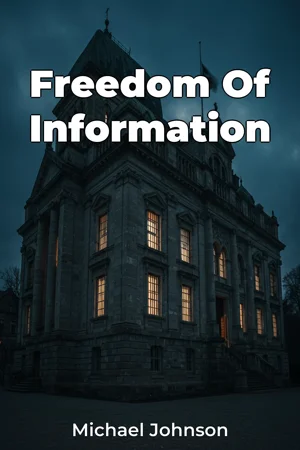
In a world increasingly shaped by information, how much do you truly know about what your government is doing? "Freedom Of Information" delves into the intricate workings of public access laws, illuminating their crucial role in a democratic society. This book serves as a comprehensive guide to understanding transparency laws, their significance, and their impact on both government accountability and informed citizenship. This book tackles three core topics: the history and evolution of Freedom of Information (FOI) laws, their practical application in accessing government records, and the ongoing debates surrounding their effectiveness and limitations. These topics are vital because they directly affect every citizen's ability to participate meaningfully in governance. Without access to information, public discourse becomes shallow, and the potential for corruption and abuse of power increases exponentially. Understanding FOI laws requires a grasp of the historical context in which they emerged. This book will explore the post-World War II era, when the demand for greater government transparency began to grow alongside rising concerns about state secrecy. The book outlines the development and implementation of such laws, starting with the US Freedom of Information Act passed in 1966. The central argument of "Freedom Of Information" is that robust and effectively enforced FOI laws are fundamental to a healthy democracy. By providing citizens with the means to scrutinize government actions, these laws promote accountability, reduce corruption, and empower the public to make informed decisions. The book's structure is designed to guide the reader through a logical progression of ideas. It begins by introducing the core concepts of transparency and accountability, establishing a theoretical framework for understanding FOI laws. The book explains the process of requesting documents, navigating bureaucratic hurdles, and understanding exemptions. It then delves into specific case studies, illustrating both the successes and failures of FOI laws in practice. The final section synthesizes the arguments presented throughout the book, focusing on practical applications and providing recommendations for strengthening transparency mechanisms. The evidence presented in "Freedom Of Information" is drawn from original legal documents, academic research, case law, journalistic investigations, and government reports. The case studies offer concrete examples of how FOI requests have been used to uncover wrongdoing, influence policy, and promote public awareness. This book connects to several academic disciplines, including political science, law, public administration, and journalism. From a political science perspective, it examines the relationship between transparency and democratic governance. From a legal standpoint, it analyzes the interpretation and enforcement of FOI laws. From a public administration lens, it evaluates the challenges of implementing transparency policies. Finally, from a journalistic perspective, it explores how FOI requests are used to hold power accountable and inform the public about important issues. "Freedom Of Information" adopts a pragmatic, analytical tone, presenting information in a clear and accessible style suitable for a wide audience. It avoids jargon and technical language whenever possible, opting for plain language and real-world examples to illustrate key concepts. The intended audience for this book includes students, journalists, researchers, policymakers, and engaged citizens who are interested in learning more about government transparency. It will be valuable to anyone who wishes to understand their rights to access government information and how to use those rights effectively. As a work of non-fiction rooted in current events and politics, the book adheres to principles of accuracy, objectivity, and thorough research expected in the genre. The book’s scope is broad, covering various aspects of public access to government records but focuses primarily on the United States legal framework. It will not delve into comparative analyses of international FOI laws in detail. The information in this book can be applied practically by readers who wish to file their own FOI requests, advocate for greater government transparency, or simply become more informed citizens. While FOI laws are intended to promote transparency, their implementation is often fraught with challenges and controversies. This book addresses the ongoing debates surrounding issues such as exemptions for national security, the cost of compliance, and the potential for abuse.
In a world increasingly shaped by information, how much do you truly know about what your government is doing? "Freedom Of Information" delves into the intricate workings of public access laws, illuminating their crucial role in a democratic society. This book serves as a comprehensive guide to understanding transparency laws, their significance, and their impact on both government accountability and informed citizenship. This book tackles three core topics: the history and evolution of Freedom of Information (FOI) laws, their practical application in accessing government records, and the ongoing debates surrounding their effectiveness and limitations. These topics are vital because they directly affect every citizen's ability to participate meaningfully in governance. Without access to information, public discourse becomes shallow, and the potential for corruption and abuse of power increases exponentially. Understanding FOI laws requires a grasp of the historical context in which they emerged. This book will explore the post-World War II era, when the demand for greater government transparency began to grow alongside rising concerns about state secrecy. The book outlines the development and implementation of such laws, starting with the US Freedom of Information Act passed in 1966. The central argument of "Freedom Of Information" is that robust and effectively enforced FOI laws are fundamental to a healthy democracy. By providing citizens with the means to scrutinize government actions, these laws promote accountability, reduce corruption, and empower the public to make informed decisions. The book's structure is designed to guide the reader through a logical progression of ideas. It begins by introducing the core concepts of transparency and accountability, establishing a theoretical framework for understanding FOI laws. The book explains the process of requesting documents, navigating bureaucratic hurdles, and understanding exemptions. It then delves into specific case studies, illustrating both the successes and failures of FOI laws in practice. The final section synthesizes the arguments presented throughout the book, focusing on practical applications and providing recommendations for strengthening transparency mechanisms. The evidence presented in "Freedom Of Information" is drawn from original legal documents, academic research, case law, journalistic investigations, and government reports. The case studies offer concrete examples of how FOI requests have been used to uncover wrongdoing, influence policy, and promote public awareness. This book connects to several academic disciplines, including political science, law, public administration, and journalism. From a political science perspective, it examines the relationship between transparency and democratic governance. From a legal standpoint, it analyzes the interpretation and enforcement of FOI laws. From a public administration lens, it evaluates the challenges of implementing transparency policies. Finally, from a journalistic perspective, it explores how FOI requests are used to hold power accountable and inform the public about important issues. "Freedom Of Information" adopts a pragmatic, analytical tone, presenting information in a clear and accessible style suitable for a wide audience. It avoids jargon and technical language whenever possible, opting for plain language and real-world examples to illustrate key concepts. The intended audience for this book includes students, journalists, researchers, policymakers, and engaged citizens who are interested in learning more about government transparency. It will be valuable to anyone who wishes to understand their rights to access government information and how to use those rights effectively. As a work of non-fiction rooted in current events and politics, the book adheres to principles of accuracy, objectivity, and thorough research expected in the genre. The book’s scope is broad, covering various aspects of public access to government records but focuses primarily on the United States legal framework. It will not delve into comparative analyses of international FOI laws in detail. The information in this book can be applied practically by readers who wish to file their own FOI requests, advocate for greater government transparency, or simply become more informed citizens. While FOI laws are intended to promote transparency, their implementation is often fraught with challenges and controversies. This book addresses the ongoing debates surrounding issues such as exemptions for national security, the cost of compliance, and the potential for abuse.
"Freedom Of Information" explores the vital role of public access laws in a democracy, focusing on government transparency and accountability. It highlights how these laws empower informed citizenship by allowing individuals to scrutinize government actions. The book argues that effective Freedom of Information (FOI) laws are fundamental to a healthy democracy, reducing corruption and enabling informed decision-making. For example, without access to information, corruption can increase exponentially. The book examines the history and evolution of FOI laws, tracing their development from the post-World War II era to the present day, with a focus on the US Freedom of Information Act of 1966. It then delves into the practical aspects of requesting government records, navigating bureaucratic hurdles, and understanding exemptions. Case studies illustrate the successes and failures of FOI laws in practice, showing how they've been used to uncover wrongdoing and influence policy. The book adopts a pragmatic and analytical approach, presenting information in plain language suitable for a broad audience. It progresses logically, starting with core concepts, then moving to practical applications and recommendations for strengthening transparency mechanisms. This makes it valuable for students, journalists, policymakers, and engaged citizens interested in understanding their rights to access government information.
Book Details
ISBN
9788235259059
Publisher
Publifye AS
Your Licenses
You don't own any licenses for this book
Purchase a license below to unlock this book and download the EPUB.
Purchase License
Select a tier to unlock this book
Need bulk licensing?
Contact us for enterprise agreements.