
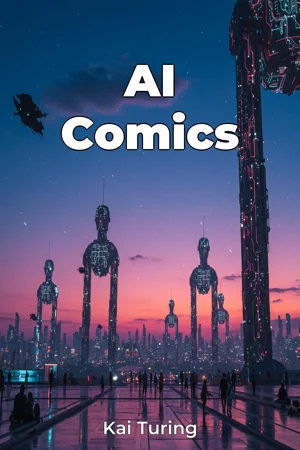
About This Book
How have the panels and speech bubbles of comics shaped our understanding of artificial intelligence and its potential impact on society? "AI Comics" delves into the fascinating intersection of sequential art and technological advancement, exploring how comics have served as a unique medium for depicting robots, grappling with AI ethics, and envisioning futuristic technologies. This book argues that comics, often dismissed as mere entertainment, have played a significant role in shaping public perception and stimulating critical discourse surrounding AI and its implications. We begin by establishing a foundation in both the history of AI and the evolution of comics as a storytelling form. Understanding the core principles of AI, from early conceptualizations to modern machine learning, is crucial. Simultaneously, we trace the development of comics from their early newspaper strip origins to their current status as a diverse and influential art form. No prior expertise in either AI or comics is required, as foundational concepts are carefully explained. The heart of the book explores three major themes. First, we examine the portrayal of robots and AI entities in comics, analyzing how artists and writers have depicted their physical forms, cognitive abilities, and emotional capacities. From benevolent helpers to malevolent overlords, these depictions reflect societal hopes and anxieties regarding automation and artificial intelligence. Second, we delve into the ethical dilemmas raised by AI in comics, investigating narratives that explore issues such as algorithmic bias, autonomous weapons, and the rights of artificial beings. These stories provide valuable thought experiments for navigating the complex ethical landscape of AI development. Third, we analyze how comics have imagined future technologies, examining their predictions about technological advancements and their potential consequences for humanity. This analysis will be supported by a wide range of examples drawn from diverse comics, graphic novels, and manga, spanning various genres and time periods. From classic superhero comics to independent alternative works, we will analyze both visual and narrative elements to understand how comics convey complex ideas about AI. The book draws upon scholarship in comics studies, artificial intelligence, and science and technology studies to provide a well-informed and interdisciplinary perspective. "AI Comics" connects to broader discussions in fields such as philosophy, sociology, and computer science. By analyzing the cultural representation of AI in comics, we gain insights into the social construction of technology and the ethical considerations that should guide its development. The book also contributes to the growing field of AI ethics, offering a unique perspective on the moral challenges posed by advanced artificial intelligence. This book offers a unique perspective by focusing specifically on comics as a medium for exploring AI. While there has been much written about AI in film and literature, the visual and narrative structures of comics offer distinct possibilities for conveying complex ideas and prompting critical reflection. The tone is academic yet accessible, aiming to engage both scholars and general readers interested in AI and comics. The target audience includes students and researchers in fields such as media studies, computer science, and ethics, as well as comic book enthusiasts and anyone curious about the social and cultural impact of AI. The book's value lies in its ability to provide a nuanced and engaging analysis of a complex and rapidly evolving technology through the lens of a popular and influential art form. The scope of "AI Comics" is intentionally broad, covering a wide range of comics and AI-related themes. However, it does not attempt to provide a comprehensive history of either AI or comics but focuses specifically on their intersection. Ultimately, this book provides readers with a framework for critically analyzing the representation of AI in comics and understanding its broader social and ethical implications. By examining how comics have imagined and grappled with AI, we can gain valuable insights into the challenges and opportunities that lie ahead. The book also offers practical applications for educators and policymakers, providing resources for teaching about AI ethics and promoting responsible AI development. While controversies surrounding AI development exist, "AI Comics" aims to provide a balanced overview of different perspectives, encouraging readers to form their own informed opinions.
How have the panels and speech bubbles of comics shaped our understanding of artificial intelligence and its potential impact on society? "AI Comics" delves into the fascinating intersection of sequential art and technological advancement, exploring how comics have served as a unique medium for depicting robots, grappling with AI ethics, and envisioning futuristic technologies. This book argues that comics, often dismissed as mere entertainment, have played a significant role in shaping public perception and stimulating critical discourse surrounding AI and its implications. We begin by establishing a foundation in both the history of AI and the evolution of comics as a storytelling form. Understanding the core principles of AI, from early conceptualizations to modern machine learning, is crucial. Simultaneously, we trace the development of comics from their early newspaper strip origins to their current status as a diverse and influential art form. No prior expertise in either AI or comics is required, as foundational concepts are carefully explained. The heart of the book explores three major themes. First, we examine the portrayal of robots and AI entities in comics, analyzing how artists and writers have depicted their physical forms, cognitive abilities, and emotional capacities. From benevolent helpers to malevolent overlords, these depictions reflect societal hopes and anxieties regarding automation and artificial intelligence. Second, we delve into the ethical dilemmas raised by AI in comics, investigating narratives that explore issues such as algorithmic bias, autonomous weapons, and the rights of artificial beings. These stories provide valuable thought experiments for navigating the complex ethical landscape of AI development. Third, we analyze how comics have imagined future technologies, examining their predictions about technological advancements and their potential consequences for humanity. This analysis will be supported by a wide range of examples drawn from diverse comics, graphic novels, and manga, spanning various genres and time periods. From classic superhero comics to independent alternative works, we will analyze both visual and narrative elements to understand how comics convey complex ideas about AI. The book draws upon scholarship in comics studies, artificial intelligence, and science and technology studies to provide a well-informed and interdisciplinary perspective. "AI Comics" connects to broader discussions in fields such as philosophy, sociology, and computer science. By analyzing the cultural representation of AI in comics, we gain insights into the social construction of technology and the ethical considerations that should guide its development. The book also contributes to the growing field of AI ethics, offering a unique perspective on the moral challenges posed by advanced artificial intelligence. This book offers a unique perspective by focusing specifically on comics as a medium for exploring AI. While there has been much written about AI in film and literature, the visual and narrative structures of comics offer distinct possibilities for conveying complex ideas and prompting critical reflection. The tone is academic yet accessible, aiming to engage both scholars and general readers interested in AI and comics. The target audience includes students and researchers in fields such as media studies, computer science, and ethics, as well as comic book enthusiasts and anyone curious about the social and cultural impact of AI. The book's value lies in its ability to provide a nuanced and engaging analysis of a complex and rapidly evolving technology through the lens of a popular and influential art form. The scope of "AI Comics" is intentionally broad, covering a wide range of comics and AI-related themes. However, it does not attempt to provide a comprehensive history of either AI or comics but focuses specifically on their intersection. Ultimately, this book provides readers with a framework for critically analyzing the representation of AI in comics and understanding its broader social and ethical implications. By examining how comics have imagined and grappled with AI, we can gain valuable insights into the challenges and opportunities that lie ahead. The book also offers practical applications for educators and policymakers, providing resources for teaching about AI ethics and promoting responsible AI development. While controversies surrounding AI development exist, "AI Comics" aims to provide a balanced overview of different perspectives, encouraging readers to form their own informed opinions.
"AI Comics" explores the intriguing relationship between artificial intelligence and comics, demonstrating how this visual medium has significantly influenced our understanding of AI's potential impact on society. Comics, often seen as mere entertainment, have served as a unique platform for depicting robots, grappling with AI ethics, and envisioning future technologies. The book argues that comics play a key role in shaping public perception and stimulating critical discourse surrounding AI and its implications, highlighting how artists and writers have used panels and speech bubbles to explore complex ideas. The book begins by establishing a foundation in both the history of AI and the evolution of comics, ensuring no prior expertise is required. It then delves into major themes like the portrayal of robots and AI entities, the ethical dilemmas raised by AI narratives, and the imagined future technologies depicted in comics. Through examples from diverse comics, graphic novels, and manga, "AI Comics" analyzes visual and narrative elements to understand how these works convey complex ideas about AI, drawing upon scholarship in comics studies, artificial intelligence, and science and technology studies to provide a well-informed and interdisciplinary perspective. By analyzing the cultural representation of AI in comics, the book offers insights into the social construction of technology and the ethical considerations that should guide its development. The book connects to broader discussions in fields such as philosophy, sociology, and computer science, providing readers with a framework for critically analyzing the representation of AI in comics and understanding its broader social and ethical implications.
Book Details
ISBN
9788235258892
Publisher
Publifye AS
Your Licenses
You don't own any licenses for this book
Purchase a license below to unlock this book and download the EPUB.
Purchase License
Select a tier to unlock this book
Need bulk licensing?
Contact us for enterprise agreements.