
About This Book
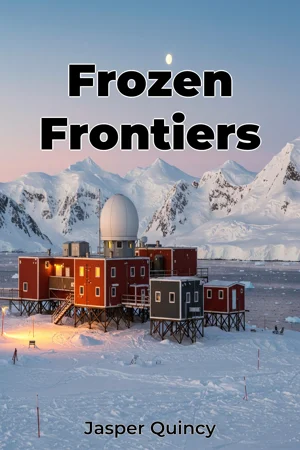
How have the allure and peril of Earth's polar regions shaped our understanding of the planet and ourselves? "Frozen Frontiers" delves into the intertwined histories of Arctic and Antarctic exploration, scientific discovery, and geopolitical maneuvering, revealing how these icy realms have acted as crucibles for human ambition and scientific progress. This book examines three central themes: the evolution of polar exploration from early, often ill-fated, voyages to modern, technologically advanced expeditions; the groundbreaking scientific discoveries made in these regions, ranging from glaciology and climate science to unique ecosystems; and the strategic importance of the Arctic and Antarctic in global politics, particularly during the Cold War and in the face of contemporary climate change. These topics are significant because they illuminate the complex relationship between humanity and the natural world, the relentless pursuit of knowledge, and the enduring quest for power and resources. "Frozen Frontiers" provides a historical context beginning with the age of discovery and the initial motivations for polar exploration: the search for new trade routes, resource exploitation, and national prestige. It explores the heroic age of Antarctic exploration, highlighting figures like Amundsen and Scott, while also examining the less-publicized but equally crucial endeavors in the Arctic. The book then transitions to the scientific era, focusing on the International Geophysical Year and the establishment of permanent research bases. Finally, it addresses the contemporary geopolitical landscape, marked by competing territorial claims and the growing significance of the Arctic as a result of melting sea ice. The central argument of "Frozen Frontiers" is that the polar regions, far from being isolated and irrelevant, have profoundly influenced global history, scientific advancement, and geopolitical strategies. Their history speaks to the resilience of the human spirit and the transformative capacity of scientific inquiry, while also issuing a stark warning about the consequences of environmental change and unchecked political ambition. The book unfolds in three major sections. Initially, it introduces the geographical characteristics of the Arctic and Antarctic, setting the stage for subsequent discussions. The second section delves into the history of polar exploration, charting the progression from early expeditions driven by commercial interests to the scientific endeavors of the 20th and 21st centuries, including the establishment of research stations and the development of specialized technologies. The final section focuses on the geopolitical and scientific implications of climate change in these regions, examining issues such as resource exploitation, territorial disputes, and the impact on global climate patterns. "Frozen Frontiers" culminates by considering the future of the polar regions in an era of unprecedented environmental change, emphasizing that these regions are not just remote wildernesses but vital components of the global ecosystem. "Frozen Frontiers" draws upon a wide range of primary sources, including expedition logs, scientific reports, and diplomatic documents, as well as secondary scholarship in history, geography, and political science. It incorporates unique data from polar research institutions and utilizes satellite imagery to illustrate the dramatic changes occurring in these regions. The book connects to several interdisciplinary fields, including environmental science, international relations, and the history of science. It explores the ethical dimensions of polar research and resource exploitation, recognizing the rights and interests of Indigenous communities in the Arctic. "Frozen Frontiers" adopts a balanced and objective tone, presenting complex information in an accessible style suitable for a broad audience. The writing combines historical narrative with scientific analysis, creating a comprehensive and engaging account of the polar regions. The target audience includes students, researchers, and general readers interested in history, geography, Earth sciences, and environmental issues. The book offers valuable insights for anyone seeking to understand the complex interplay of exploration, science, and politics in the polar regions. As a work of history and geography, “Frozen Frontiers” adheres to scholarly conventions, including thorough citation, detailed analysis, and a commitment to factual accuracy. The scope of "Frozen Frontiers" encompasses both the Arctic and Antarctic regions, providing a comparative analysis of their distinct histories and geostrategic significance. While the book touches upon the scientific aspects of climate change, its primary focus remains on the historical, geographical, and geopolitical dimensions of polar exploration and development. The information presented in "Frozen Frontiers" has real-world applications in areas such as environmental policy, resource management, and international diplomacy. It offers valuable insights for policymakers, scientists, and stakeholders involved in shaping the future of the polar regions. The book also addresses ongoing debates surrounding climate change, resource exploitation, and the governance of the Arctic and Antarctic, presenting different perspectives and offering a balanced assessment of the issues.
How have the allure and peril of Earth's polar regions shaped our understanding of the planet and ourselves? "Frozen Frontiers" delves into the intertwined histories of Arctic and Antarctic exploration, scientific discovery, and geopolitical maneuvering, revealing how these icy realms have acted as crucibles for human ambition and scientific progress. This book examines three central themes: the evolution of polar exploration from early, often ill-fated, voyages to modern, technologically advanced expeditions; the groundbreaking scientific discoveries made in these regions, ranging from glaciology and climate science to unique ecosystems; and the strategic importance of the Arctic and Antarctic in global politics, particularly during the Cold War and in the face of contemporary climate change. These topics are significant because they illuminate the complex relationship between humanity and the natural world, the relentless pursuit of knowledge, and the enduring quest for power and resources. "Frozen Frontiers" provides a historical context beginning with the age of discovery and the initial motivations for polar exploration: the search for new trade routes, resource exploitation, and national prestige. It explores the heroic age of Antarctic exploration, highlighting figures like Amundsen and Scott, while also examining the less-publicized but equally crucial endeavors in the Arctic. The book then transitions to the scientific era, focusing on the International Geophysical Year and the establishment of permanent research bases. Finally, it addresses the contemporary geopolitical landscape, marked by competing territorial claims and the growing significance of the Arctic as a result of melting sea ice. The central argument of "Frozen Frontiers" is that the polar regions, far from being isolated and irrelevant, have profoundly influenced global history, scientific advancement, and geopolitical strategies. Their history speaks to the resilience of the human spirit and the transformative capacity of scientific inquiry, while also issuing a stark warning about the consequences of environmental change and unchecked political ambition. The book unfolds in three major sections. Initially, it introduces the geographical characteristics of the Arctic and Antarctic, setting the stage for subsequent discussions. The second section delves into the history of polar exploration, charting the progression from early expeditions driven by commercial interests to the scientific endeavors of the 20th and 21st centuries, including the establishment of research stations and the development of specialized technologies. The final section focuses on the geopolitical and scientific implications of climate change in these regions, examining issues such as resource exploitation, territorial disputes, and the impact on global climate patterns. "Frozen Frontiers" culminates by considering the future of the polar regions in an era of unprecedented environmental change, emphasizing that these regions are not just remote wildernesses but vital components of the global ecosystem. "Frozen Frontiers" draws upon a wide range of primary sources, including expedition logs, scientific reports, and diplomatic documents, as well as secondary scholarship in history, geography, and political science. It incorporates unique data from polar research institutions and utilizes satellite imagery to illustrate the dramatic changes occurring in these regions. The book connects to several interdisciplinary fields, including environmental science, international relations, and the history of science. It explores the ethical dimensions of polar research and resource exploitation, recognizing the rights and interests of Indigenous communities in the Arctic. "Frozen Frontiers" adopts a balanced and objective tone, presenting complex information in an accessible style suitable for a broad audience. The writing combines historical narrative with scientific analysis, creating a comprehensive and engaging account of the polar regions. The target audience includes students, researchers, and general readers interested in history, geography, Earth sciences, and environmental issues. The book offers valuable insights for anyone seeking to understand the complex interplay of exploration, science, and politics in the polar regions. As a work of history and geography, “Frozen Frontiers” adheres to scholarly conventions, including thorough citation, detailed analysis, and a commitment to factual accuracy. The scope of "Frozen Frontiers" encompasses both the Arctic and Antarctic regions, providing a comparative analysis of their distinct histories and geostrategic significance. While the book touches upon the scientific aspects of climate change, its primary focus remains on the historical, geographical, and geopolitical dimensions of polar exploration and development. The information presented in "Frozen Frontiers" has real-world applications in areas such as environmental policy, resource management, and international diplomacy. It offers valuable insights for policymakers, scientists, and stakeholders involved in shaping the future of the polar regions. The book also addresses ongoing debates surrounding climate change, resource exploitation, and the governance of the Arctic and Antarctic, presenting different perspectives and offering a balanced assessment of the issues.
"Frozen Frontiers" explores the captivating history of Earth's polar regions, examining how exploration, scientific discovery, and geopolitics have shaped our understanding of the Arctic and Antarctic. The book reveals that these icy realms, often perceived as isolated, have been central to human ambition and scientific progress. For example, early expeditions, though perilous, sought new trade routes and resources, while later scientific endeavors uncovered unique ecosystems and critical climate data. The book examines the evolution of polar exploration, from early voyages to technologically advanced expeditions. It also highlights significant scientific discoveries and the strategic importance of these regions, especially concerning climate change and international relations. "Frozen Frontiers" traces the historical context from early exploration through the scientific era, finally addressing the contemporary geopolitical landscape, marked by competing territorial claims. The book's approach is historical, geographical, and geopolitical, drawing upon expedition logs, scientific reports, and diplomatic documents. It progresses through three major sections: geographical characteristics, the history of polar exploration, and the geopolitical and scientific implications of climate change. Ultimately, "Frozen Frontiers" emphasizes the vital role of the polar regions in the global ecosystem, urging consideration of their future in an era of unprecedented environmental change.
Book Details
ISBN
9788235258809
Publisher
Publifye AS
Your Licenses
You don't own any licenses for this book
Purchase a license below to unlock this book and download the EPUB.
Purchase License
Select a tier to unlock this book
Need bulk licensing?
Contact us for enterprise agreements.