
About This Book
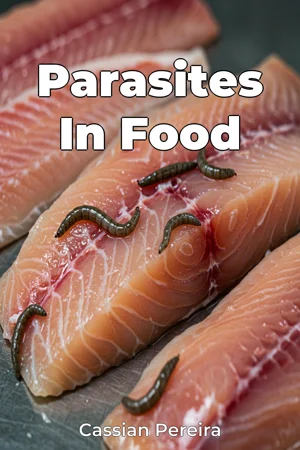
Could the next meal you prepare harbor unseen guests capable of compromising your health? *Parasites In Food* delves into the often-overlooked world of parasitic organisms lurking within our food supply and their profound impact on human well-being. This book explores the lifecycle, transmission pathways, and health consequences of foodborne parasites, providing critical insights for both professionals and concerned individuals. Our exploration begins with a fundamental understanding of foodborne parasites, classifying them based on their biological characteristics and ecological roles. We clarify the distinction between different types of parasites, from protozoa to helminths, and examine their complex life cycles, emphasizing the stages that involve food sources and human hosts. This understanding is crucial for identifying potential points of intervention to prevent infection. The central argument of *Parasites In Food* is that a comprehensive understanding of these organisms, coupled with rigorous food safety practices, is essential for mitigating the risk of parasitic infections and safeguarding public health. We aim to equip readers with the knowledge necessary to make informed decisions about food sourcing, preparation, and consumption. The book is structured to provide a clear and progressive learning experience. First, we introduce the major classes of foodborne parasites and their associated diseases. Second, we delve into the ecological factors influencing parasite prevalence in various food products, including meat, seafood, fruits, and vegetables. This section includes detailed analyses of agricultural practices, food processing methods, and environmental conditions that contribute to parasitic contamination. Third, we examine the clinical aspects of parasitic infections, covering symptoms, diagnosis, treatment options, and long-term health effects. The evidence presented throughout this book is drawn from a wide range of sources, including peer-reviewed scientific studies, epidemiological data, and reports from public health organizations such as the World Health Organization (WHO) and the Centers for Disease Control and Prevention (CDC). We also incorporate case studies and real-world examples to illustrate the practical implications of our findings. Furthermore, the book uses data visualizations such as charts and graphs to help demonstrate data and trends. *Parasites In Food* intersects with several other disciplines, including microbiology, epidemiology, and public health. The book’s discussion of diagnostic techniques and treatment strategies draws heavily from medical microbiology, while its examination of disease transmission and prevalence relies on epidemiological principles. Its emphasis on food safety and hygiene practices aligns with public health initiatives aimed at preventing foodborne illnesses. This book adopts a fact-based, scientific approach, presenting information in a clear and accessible manner. While the content is grounded in scientific research, the writing style is designed to be engaging and informative for a broad audience. The target audience includes food scientists, nutritionists, public health professionals and anyone seeking to understand the risks associated with foodborne parasites and how to mitigate them. The book can also serve as a valuable resource for students in related fields. As a work within the genre of science life sciences, the book adheres to rigorous scientific standards, with all claims supported by credible evidence and properly cited sources. It avoids sensationalism and presents information in a balanced and objective manner. The scope of this book is limited to foodborne parasites that directly impact human health through consumption of contaminated food. While it acknowledges the broader ecological context of parasites, it does not delve into parasites that are transmitted through other routes or that primarily affect animals. In practical terms, the information presented in *Parasites In Food* can be applied in various ways. Food manufacturers can use it to develop and implement more effective food safety protocols. Public health officials can use it to design targeted interventions to reduce the incidence of parasitic infections. And individuals can use it to make informed choices about food handling and preparation to protect themselves and their families. While significant progress has been made in controlling foodborne parasites, ongoing debates persist regarding the effectiveness of different prevention strategies. This book addresses some of these controversies, presenting different perspectives and offering evidence-based recommendations.
Could the next meal you prepare harbor unseen guests capable of compromising your health? *Parasites In Food* delves into the often-overlooked world of parasitic organisms lurking within our food supply and their profound impact on human well-being. This book explores the lifecycle, transmission pathways, and health consequences of foodborne parasites, providing critical insights for both professionals and concerned individuals. Our exploration begins with a fundamental understanding of foodborne parasites, classifying them based on their biological characteristics and ecological roles. We clarify the distinction between different types of parasites, from protozoa to helminths, and examine their complex life cycles, emphasizing the stages that involve food sources and human hosts. This understanding is crucial for identifying potential points of intervention to prevent infection. The central argument of *Parasites In Food* is that a comprehensive understanding of these organisms, coupled with rigorous food safety practices, is essential for mitigating the risk of parasitic infections and safeguarding public health. We aim to equip readers with the knowledge necessary to make informed decisions about food sourcing, preparation, and consumption. The book is structured to provide a clear and progressive learning experience. First, we introduce the major classes of foodborne parasites and their associated diseases. Second, we delve into the ecological factors influencing parasite prevalence in various food products, including meat, seafood, fruits, and vegetables. This section includes detailed analyses of agricultural practices, food processing methods, and environmental conditions that contribute to parasitic contamination. Third, we examine the clinical aspects of parasitic infections, covering symptoms, diagnosis, treatment options, and long-term health effects. The evidence presented throughout this book is drawn from a wide range of sources, including peer-reviewed scientific studies, epidemiological data, and reports from public health organizations such as the World Health Organization (WHO) and the Centers for Disease Control and Prevention (CDC). We also incorporate case studies and real-world examples to illustrate the practical implications of our findings. Furthermore, the book uses data visualizations such as charts and graphs to help demonstrate data and trends. *Parasites In Food* intersects with several other disciplines, including microbiology, epidemiology, and public health. The book’s discussion of diagnostic techniques and treatment strategies draws heavily from medical microbiology, while its examination of disease transmission and prevalence relies on epidemiological principles. Its emphasis on food safety and hygiene practices aligns with public health initiatives aimed at preventing foodborne illnesses. This book adopts a fact-based, scientific approach, presenting information in a clear and accessible manner. While the content is grounded in scientific research, the writing style is designed to be engaging and informative for a broad audience. The target audience includes food scientists, nutritionists, public health professionals and anyone seeking to understand the risks associated with foodborne parasites and how to mitigate them. The book can also serve as a valuable resource for students in related fields. As a work within the genre of science life sciences, the book adheres to rigorous scientific standards, with all claims supported by credible evidence and properly cited sources. It avoids sensationalism and presents information in a balanced and objective manner. The scope of this book is limited to foodborne parasites that directly impact human health through consumption of contaminated food. While it acknowledges the broader ecological context of parasites, it does not delve into parasites that are transmitted through other routes or that primarily affect animals. In practical terms, the information presented in *Parasites In Food* can be applied in various ways. Food manufacturers can use it to develop and implement more effective food safety protocols. Public health officials can use it to design targeted interventions to reduce the incidence of parasitic infections. And individuals can use it to make informed choices about food handling and preparation to protect themselves and their families. While significant progress has been made in controlling foodborne parasites, ongoing debates persist regarding the effectiveness of different prevention strategies. This book addresses some of these controversies, presenting different perspectives and offering evidence-based recommendations.
*Parasites In Food* sheds light on the hidden world of foodborne parasites and their impact on human health. It explores the lifecycle and transmission of these organisms, including protozoa and helminths, found in various food sources. Understanding these parasites is crucial, as some can survive even in refrigerated conditions, emphasizing the need for proper food handling. The book uniquely bridges microbiology, epidemiology, and public health to provide a comprehensive view of this often-overlooked aspect of food safety. The book progresses logically, starting with the classification of parasites and their diseases, before diving into ecological factors influencing parasite prevalence in foods like meat, seafood, and produce. It also examines the clinical impacts of parasitic infections, covering diagnosis, treatment, and long-term health effects. You will learn how agricultural practices and food processing can contribute to food contamination, giving you insights into making informed decisions about food sourcing and preparation.
Book Details
ISBN
9788235258748
Publisher
Publifye AS
Your Licenses
You don't own any licenses for this book
Purchase a license below to unlock this book and download the EPUB.
Purchase License
Select a tier to unlock this book
Need bulk licensing?
Contact us for enterprise agreements.