
About This Book
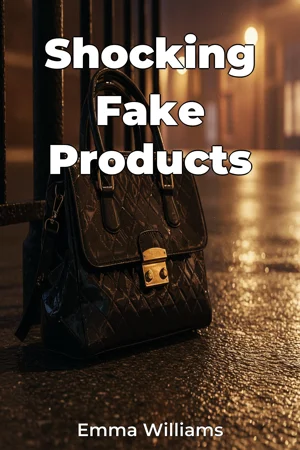
Have you ever wondered if that designer handbag or gourmet food item you purchased was truly authentic? "Shocking Fake Products" delves into the intricate world of counterfeit goods, exposing the elaborate schemes and devastating consequences of fake products that have infiltrated our global markets and deceived millions. This isn't just about knock-off purses; it's a deep dive into how fraud impacts industries, economies, and even public health. Our exploration will center on three core themes: the psychology of deception, the mechanics of counterfeiting operations, and the evolving strategies employed to combat product fraud. Understanding why consumers are susceptible to fakes, how counterfeiters operate on a global scale, and what methods are being developed to protect genuine goods are vital in today's complex marketplace. To fully grasp the scope of this issue, we’ll examine the historical roots of counterfeiting, tracing its evolution from ancient times to the digital age. We will explore how globalization, e-commerce, and technological advancements have inadvertently facilitated the spread of fake products, making it easier than ever for counterfeiters to reach consumers worldwide. The central argument of "Shocking Fake Products" is that the battle against counterfeiting is not merely an economic or legal issue, but a fundamental challenge to trust, safety, and innovation. When consumers can no longer be confident in the authenticity of the products they purchase, it erodes trust in brands, retailers, and the overall market. Furthermore, fake products often pose significant health and safety risks, especially in sectors like pharmaceuticals and food. The book unfolds in three major sections. First, we introduce the key concepts of brand protection, intellectual property rights, and the various types of counterfeit products. Second, we present case studies of specific incidents, from fake luxury goods that undermined brand reputations to imitation foods that triggered health crises. Each case study is meticulously researched, drawing from court documents, investigative reports, and interviews with industry experts. Third, the book culminates with an analysis of current anti-counterfeiting measures, including technological solutions like blockchain and advanced authentication methods, as well as legal and regulatory strategies aimed at disrupting counterfeiting networks. We will also examine the ethical considerations surrounding the purchase and consumption of fake products. The evidence presented in "Shocking Fake Products" relies heavily on primary source research, including government reports from organizations like the World Intellectual Property Organization (WIPO) and the International Anti-Counterfeiting Coalition (IACC). We also analyze data from market research firms and conduct interviews with law enforcement officials, brand protection specialists, and victims of counterfeiting. This book is inherently interdisciplinary, drawing connections between business, criminology, and technology. The business aspect focuses on the economic impacts of counterfeiting on legitimate businesses and industries. The criminology aspect examines the criminal networks involved in the production and distribution of fake products. The technology aspect explores the use of advanced technologies to both create and detect counterfeit goods. "Shocking Fake Products" offers a unique perspective by looking into the mindset of both the counterfeiter and the deceived consumer. We analyze the psychological factors that contribute to the demand for fake products, such as the desire for status symbols at a lower price point. Written in a narrative non-fiction style, the book is designed to be accessible to a broad audience, including business professionals, students, law enforcement officials, and anyone interested in understanding the pervasive problem of counterfeiting. While offering depth of knowledge, the book is not overly technical and will remain digestible for the average reader. The book's scope is limited to examining the most impactful and illustrative cases of counterfeiting across various industries. While we strive to provide a global overview, we focus primarily on examples from developed economies to highlight the vulnerabilities of even the most sophisticated markets. "Shocking Fake Products" is a valuable resource for anyone looking to protect themselves or their businesses from the dangers of counterfeit goods. It provides practical tips on how to identify fake products, report suspected counterfeiting activity, and advocate for stronger anti-counterfeiting measures. The field of anti-counterfeiting is rife with debates, particularly around the balance between protecting intellectual property rights and ensuring consumer access to affordable goods. We explore these controversies, presenting different viewpoints and encouraging readers to critically assess the complex ethical and economic issues at stake.
Have you ever wondered if that designer handbag or gourmet food item you purchased was truly authentic? "Shocking Fake Products" delves into the intricate world of counterfeit goods, exposing the elaborate schemes and devastating consequences of fake products that have infiltrated our global markets and deceived millions. This isn't just about knock-off purses; it's a deep dive into how fraud impacts industries, economies, and even public health. Our exploration will center on three core themes: the psychology of deception, the mechanics of counterfeiting operations, and the evolving strategies employed to combat product fraud. Understanding why consumers are susceptible to fakes, how counterfeiters operate on a global scale, and what methods are being developed to protect genuine goods are vital in today's complex marketplace. To fully grasp the scope of this issue, we’ll examine the historical roots of counterfeiting, tracing its evolution from ancient times to the digital age. We will explore how globalization, e-commerce, and technological advancements have inadvertently facilitated the spread of fake products, making it easier than ever for counterfeiters to reach consumers worldwide. The central argument of "Shocking Fake Products" is that the battle against counterfeiting is not merely an economic or legal issue, but a fundamental challenge to trust, safety, and innovation. When consumers can no longer be confident in the authenticity of the products they purchase, it erodes trust in brands, retailers, and the overall market. Furthermore, fake products often pose significant health and safety risks, especially in sectors like pharmaceuticals and food. The book unfolds in three major sections. First, we introduce the key concepts of brand protection, intellectual property rights, and the various types of counterfeit products. Second, we present case studies of specific incidents, from fake luxury goods that undermined brand reputations to imitation foods that triggered health crises. Each case study is meticulously researched, drawing from court documents, investigative reports, and interviews with industry experts. Third, the book culminates with an analysis of current anti-counterfeiting measures, including technological solutions like blockchain and advanced authentication methods, as well as legal and regulatory strategies aimed at disrupting counterfeiting networks. We will also examine the ethical considerations surrounding the purchase and consumption of fake products. The evidence presented in "Shocking Fake Products" relies heavily on primary source research, including government reports from organizations like the World Intellectual Property Organization (WIPO) and the International Anti-Counterfeiting Coalition (IACC). We also analyze data from market research firms and conduct interviews with law enforcement officials, brand protection specialists, and victims of counterfeiting. This book is inherently interdisciplinary, drawing connections between business, criminology, and technology. The business aspect focuses on the economic impacts of counterfeiting on legitimate businesses and industries. The criminology aspect examines the criminal networks involved in the production and distribution of fake products. The technology aspect explores the use of advanced technologies to both create and detect counterfeit goods. "Shocking Fake Products" offers a unique perspective by looking into the mindset of both the counterfeiter and the deceived consumer. We analyze the psychological factors that contribute to the demand for fake products, such as the desire for status symbols at a lower price point. Written in a narrative non-fiction style, the book is designed to be accessible to a broad audience, including business professionals, students, law enforcement officials, and anyone interested in understanding the pervasive problem of counterfeiting. While offering depth of knowledge, the book is not overly technical and will remain digestible for the average reader. The book's scope is limited to examining the most impactful and illustrative cases of counterfeiting across various industries. While we strive to provide a global overview, we focus primarily on examples from developed economies to highlight the vulnerabilities of even the most sophisticated markets. "Shocking Fake Products" is a valuable resource for anyone looking to protect themselves or their businesses from the dangers of counterfeit goods. It provides practical tips on how to identify fake products, report suspected counterfeiting activity, and advocate for stronger anti-counterfeiting measures. The field of anti-counterfeiting is rife with debates, particularly around the balance between protecting intellectual property rights and ensuring consumer access to affordable goods. We explore these controversies, presenting different viewpoints and encouraging readers to critically assess the complex ethical and economic issues at stake.
"Shocking Fake Products" explores the pervasive world of counterfeit goods, revealing how these deceptive practices impact global markets, economies, and consumer trust. It's not just about fake luxury goods; the book investigates how product fraud extends to various industries, from pharmaceuticals to food, posing significant economic and health risks. Did you know that counterfeiting operations often involve intricate schemes and criminal networks operating on a global scale? Or that e-commerce has inadvertently amplified the spread of these fake products, making it easier for counterfeiters to reach consumers worldwide? The book delves into the psychology behind why consumers fall for fake products and how counterfeiters exploit vulnerabilities in brand protection and intellectual property rights. By presenting detailed case studies and investigative reports, "Shocking Fake Products" illustrates the evolution of anti-counterfeiting measures, including technological solutions like blockchain and advanced authentication methods. The book progresses by first introducing key concepts, then examining specific incidents, and finally analyzing current anti-counterfeiting measures. This approach helps readers understand both the problem and the potential solutions for combating this growing form of economic crime.
Book Details
ISBN
9788235258700
Publisher
Publifye AS
Your Licenses
You don't own any licenses for this book
Purchase a license below to unlock this book and download the EPUB.
Purchase License
Select a tier to unlock this book
Need bulk licensing?
Contact us for enterprise agreements.