
About This Book
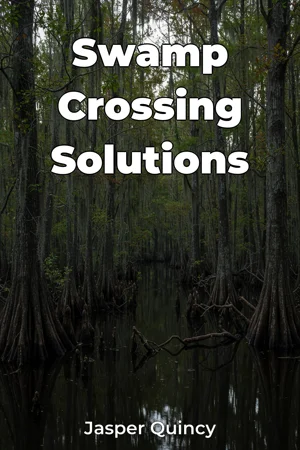
Have you ever considered the complex interplay of physics, botany, and environmental awareness required to safely traverse a seemingly impassable swamp? "Swamp Crossing Solutions" delves into precisely that: the science and practical techniques necessary for navigating these challenging terrains. This book explores three crucial elements: the art of raft improvisation using readily available natural materials, the critical analysis of ground pressure distribution, and the application of coordinated pole support walking methods, all vital for safe and efficient swamp traversal. Understanding these topics is paramount not only for adventurers and outdoor enthusiasts, but also for ecologists, search and rescue teams, and anyone whose work or passion leads them into these unique ecosystems. Swamps, often viewed as stagnant and foreboding, play an essential role in global biodiversity and water filtration. Historically, swamps have presented formidable barriers, shaping migration patterns, military strategies, and even folklore. This book offers a scientific perspective, demystifying swamp navigation through a blend of time-tested techniques and modern analytical tools. No prior in-depth knowledge of botany or engineering is required, although a basic understanding of physics and ecological principles will enhance the reader's comprehension. The central argument of "Swamp Crossing Solutions" is that safe and effective swamp traversal relies on a combination of practical skill, scientific understanding, and environmental respect. We demonstrate that by applying fundamental principles of physics, and ecological awareness, one can navigate swamps with minimal impact and maximum safety. The book unfolds in a structured manner. The initial chapters introduce the ecological significance of swamps and the inherent challenges they pose. We then delve into raft construction, detailing various designs, material selection, and load-bearing calculations. The next section focuses on ground pressure analysis, teaching readers how to assess soil composition, identify potential hazards (like quicksand), and calculate safe weight distribution. Following that, we present a comprehensive guide to coordinated pole support walking, explaining the biomechanics of this technique and providing practical exercises for skill development. The concluding chapters synthesize these elements, offering case studies of successful swamp crossings and highlighting the importance of minimizing environmental impact. Our research incorporates a variety of evidence, including field experiments conducted in diverse swamp environments, analysis of historical crossing techniques, and data from engineering simulations. We draw upon botanical surveys to identify suitable raft-building materials and utilize soil mechanics principles to analyze ground stability. Data sets collected from environmental impact assessments are integrated to ensure all recommended practices adhere to the requirements of responsible land stewardship. "Swamp Crossing Solutions" bridges gaps between earth sciences, adventure sports, and environmental conservation. The principles of ground pressure analysis are directly applicable to civil engineering and construction in wetland areas. The botanical knowledge required for raft construction is relevant to ethnobotany and sustainable resource management. The book’s focus on minimizing environmental impact aligns with the principles of conservation biology and ecotourism. What makes this book unique is its practical, solutions-oriented approach. Rather than simply describing the challenges of swamp traversal, we provide the reader with the knowledge and skills needed to overcome these challenges safely and responsibly. The tone is informative and accessible, blending scientific rigor with practical guidance. The primary audience includes outdoor enthusiasts, adventurers, ecologists, conservationists, search and rescue personnel, and anyone working or recreating in swamp environments. The book offers valuable insights into understanding and navigating these complex ecosystems. As a work of non-fiction, "Swamp Crossing Solutions" emphasizes factual accuracy, evidence-based reasoning, and clear communication. We strive to present information in an objective and unbiased manner, acknowledging the limitations of our research and the inherent uncertainties of swamp environments. The scope of the book is limited to techniques for traversing swamps on foot or with improvised rafts. It does not cover the use of motorized vehicles or large-scale engineering projects. While we address the environmental impact of swamp traversal, a comprehensive discussion of wetland ecology is beyond the scope of this work. Readers can apply the information in this book to plan and execute safe swamp crossings, to conduct ecological surveys in wetland areas, and to develop sustainable tourism practices. The principles of ground pressure analysis can be used to assess the stability of soils in a wide range of environments. The book also provides a framework for understanding and appreciating the ecological value of swamps. While the fundamental physics of swamp traversal are well-established, debates persist regarding the permissible level of environmental impact and the ethics of altering natural environments. This book presents a balanced perspective, encouraging readers to consider the potential consequences of their actions and to prioritize the preservation of these unique ecosystems.
Have you ever considered the complex interplay of physics, botany, and environmental awareness required to safely traverse a seemingly impassable swamp? "Swamp Crossing Solutions" delves into precisely that: the science and practical techniques necessary for navigating these challenging terrains. This book explores three crucial elements: the art of raft improvisation using readily available natural materials, the critical analysis of ground pressure distribution, and the application of coordinated pole support walking methods, all vital for safe and efficient swamp traversal. Understanding these topics is paramount not only for adventurers and outdoor enthusiasts, but also for ecologists, search and rescue teams, and anyone whose work or passion leads them into these unique ecosystems. Swamps, often viewed as stagnant and foreboding, play an essential role in global biodiversity and water filtration. Historically, swamps have presented formidable barriers, shaping migration patterns, military strategies, and even folklore. This book offers a scientific perspective, demystifying swamp navigation through a blend of time-tested techniques and modern analytical tools. No prior in-depth knowledge of botany or engineering is required, although a basic understanding of physics and ecological principles will enhance the reader's comprehension. The central argument of "Swamp Crossing Solutions" is that safe and effective swamp traversal relies on a combination of practical skill, scientific understanding, and environmental respect. We demonstrate that by applying fundamental principles of physics, and ecological awareness, one can navigate swamps with minimal impact and maximum safety. The book unfolds in a structured manner. The initial chapters introduce the ecological significance of swamps and the inherent challenges they pose. We then delve into raft construction, detailing various designs, material selection, and load-bearing calculations. The next section focuses on ground pressure analysis, teaching readers how to assess soil composition, identify potential hazards (like quicksand), and calculate safe weight distribution. Following that, we present a comprehensive guide to coordinated pole support walking, explaining the biomechanics of this technique and providing practical exercises for skill development. The concluding chapters synthesize these elements, offering case studies of successful swamp crossings and highlighting the importance of minimizing environmental impact. Our research incorporates a variety of evidence, including field experiments conducted in diverse swamp environments, analysis of historical crossing techniques, and data from engineering simulations. We draw upon botanical surveys to identify suitable raft-building materials and utilize soil mechanics principles to analyze ground stability. Data sets collected from environmental impact assessments are integrated to ensure all recommended practices adhere to the requirements of responsible land stewardship. "Swamp Crossing Solutions" bridges gaps between earth sciences, adventure sports, and environmental conservation. The principles of ground pressure analysis are directly applicable to civil engineering and construction in wetland areas. The botanical knowledge required for raft construction is relevant to ethnobotany and sustainable resource management. The book’s focus on minimizing environmental impact aligns with the principles of conservation biology and ecotourism. What makes this book unique is its practical, solutions-oriented approach. Rather than simply describing the challenges of swamp traversal, we provide the reader with the knowledge and skills needed to overcome these challenges safely and responsibly. The tone is informative and accessible, blending scientific rigor with practical guidance. The primary audience includes outdoor enthusiasts, adventurers, ecologists, conservationists, search and rescue personnel, and anyone working or recreating in swamp environments. The book offers valuable insights into understanding and navigating these complex ecosystems. As a work of non-fiction, "Swamp Crossing Solutions" emphasizes factual accuracy, evidence-based reasoning, and clear communication. We strive to present information in an objective and unbiased manner, acknowledging the limitations of our research and the inherent uncertainties of swamp environments. The scope of the book is limited to techniques for traversing swamps on foot or with improvised rafts. It does not cover the use of motorized vehicles or large-scale engineering projects. While we address the environmental impact of swamp traversal, a comprehensive discussion of wetland ecology is beyond the scope of this work. Readers can apply the information in this book to plan and execute safe swamp crossings, to conduct ecological surveys in wetland areas, and to develop sustainable tourism practices. The principles of ground pressure analysis can be used to assess the stability of soils in a wide range of environments. The book also provides a framework for understanding and appreciating the ecological value of swamps. While the fundamental physics of swamp traversal are well-established, debates persist regarding the permissible level of environmental impact and the ethics of altering natural environments. This book presents a balanced perspective, encouraging readers to consider the potential consequences of their actions and to prioritize the preservation of these unique ecosystems.
"Swamp Crossing Solutions" offers a comprehensive guide to navigating swamps, blending earth sciences, geography, and adventure. It tackles the challenges of swamp traversal by focusing on raft construction, ground pressure analysis, and pole support walking. Understanding these elements is crucial for anyone venturing into these unique ecosystems, from outdoor enthusiasts to ecologists. Did you know that swamps play a vital role in global biodiversity and water filtration, acting as natural purifiers? The book emphasizes the importance of minimizing environmental impact while maximizing safety. The book progresses systematically, starting with the ecological significance of swamps and their inherent challenges. It then delves into practical solutions, such as raft building using available natural materials and assessing ground stability to avoid hazards like quicksand. The later chapters integrate these elements, offering real-world examples and underscoring the importance of responsible land stewardship. By blending scientific rigor with practical guidance, "Swamp Crossing Solutions" provides readers with the knowledge and skills needed to safely and responsibly traverse these challenging environments.
Book Details
ISBN
9788235258687
Publisher
Publifye AS
Your Licenses
You don't own any licenses for this book
Purchase a license below to unlock this book and download the EPUB.
Purchase License
Select a tier to unlock this book
Need bulk licensing?
Contact us for enterprise agreements.