
About This Book
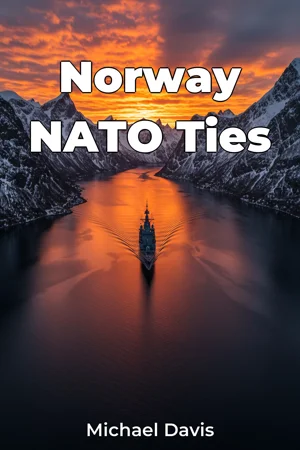
Can Norway, a nation strategically vital to both NATO and Russia, truly rely on its transatlantic allies in an era of evolving geopolitical uncertainties? 'Norway NATO Ties' delves into the complex and often precarious relationship between Norway and its NATO allies, specifically examining the shifting reliability of the United States as a guarantor of Norwegian security, particularly in light of commentary from figures like Diesen. This book navigates the critical intersections of politics, military history, and contemporary military strategy to provide a comprehensive analysis of Norway's security posture within the framework of the North Atlantic Treaty Organization. The book's central argument revolves around the need for Norway to critically assess its dependence on external security guarantees in an age defined by unpredictable international relations and the potential for a decline in American commitment to European defense. This argument's importance lies in its direct relevance to Norwegian national security policy, as well as its broader implications for the future of transatlantic security cooperation and the stability of the Arctic region. 'Norway NATO Ties' begins by establishing the historical context of Norway’s relationship with NATO, tracing its evolution from the Cold War to the present day. An examination of key treaties, military exercises, and political agreements forms the foundation for understanding the depth and breadth of this alliance. The book then pivots to a detailed exploration of the strategic significance of Norway, highlighting its geographical location, its rich natural resources, and its role as a crucial maritime gateway. The core of the book consists of three major sections: First, an analysis of the historical reliability of the United States as a security partner, scrutinizing past instances of American foreign policy shifts and their impact on NATO allies. Second, a contemporary assessment of US foreign policy under the Trump administration is presented, dissecting the potential ramifications of "America First" policies on transatlantic defense commitments, drawing directly from Diesen's observations and other expert analyses. Third, an evaluation of alternative security strategies for Norway, exploring options for enhanced Nordic defense cooperation, increased domestic military capabilities, and a more diversified network of international partnerships. The evidence presented within 'Norway NATO Ties' is drawn from a diversity of sources, including official NATO documents, government reports, academic studies, and open-source intelligence. The book also incorporates insights from interviews with Norwegian and international security experts, providing a nuanced understanding of the challenges and opportunities facing Norway in the current geopolitical landscape. Specifically, the work utilizes documented instances of shifts in US foreign policy and military deployments to illustrate the potential vulnerabilities of relying solely on American security guarantees. 'Norway NATO Ties' has interdisciplinary connections to international relations theory, strategic studies, and Arctic security studies. These connections enrich the book’s argument by situating Norway’s security concerns within a broader framework of global power dynamics and regional strategic competition. The book offers a unique perspective by combining historical analysis with contemporary political commentary to provide a forward-looking assessment of Norway’s security options. It avoids simplistic narratives of unwavering alliance solidarity, instead presenting a balanced and critical examination of the risks and rewards of Norway's reliance on NATO. Written in a clear and accessible style, the book is aimed at policymakers, academics, students of international relations, and anyone interested in Norwegian security policy and the future of NATO. The book's value to these audiences lies in its comprehensive analysis, its balanced perspective, and its actionable recommendations for strengthening Norway’s security posture in an uncertain world. As a work of non-fiction, it adheres to the genre's conventions of factual accuracy, objectivity, and evidence-based argumentation. The scope of 'Norway NATO Ties' is intentionally limited to the specific context of Norway's relationship with NATO and the implications for Norwegian security. The information presented in the book can be applied by policymakers to inform strategic planning, by academics to stimulate further research, and by the public to foster informed debate about Norway's security policy. The book addresses ongoing debates about the future of NATO, the role of the United States in European security, and the challenges of defending the Arctic region in an era of great power competition.
Can Norway, a nation strategically vital to both NATO and Russia, truly rely on its transatlantic allies in an era of evolving geopolitical uncertainties? 'Norway NATO Ties' delves into the complex and often precarious relationship between Norway and its NATO allies, specifically examining the shifting reliability of the United States as a guarantor of Norwegian security, particularly in light of commentary from figures like Diesen. This book navigates the critical intersections of politics, military history, and contemporary military strategy to provide a comprehensive analysis of Norway's security posture within the framework of the North Atlantic Treaty Organization. The book's central argument revolves around the need for Norway to critically assess its dependence on external security guarantees in an age defined by unpredictable international relations and the potential for a decline in American commitment to European defense. This argument's importance lies in its direct relevance to Norwegian national security policy, as well as its broader implications for the future of transatlantic security cooperation and the stability of the Arctic region. 'Norway NATO Ties' begins by establishing the historical context of Norway’s relationship with NATO, tracing its evolution from the Cold War to the present day. An examination of key treaties, military exercises, and political agreements forms the foundation for understanding the depth and breadth of this alliance. The book then pivots to a detailed exploration of the strategic significance of Norway, highlighting its geographical location, its rich natural resources, and its role as a crucial maritime gateway. The core of the book consists of three major sections: First, an analysis of the historical reliability of the United States as a security partner, scrutinizing past instances of American foreign policy shifts and their impact on NATO allies. Second, a contemporary assessment of US foreign policy under the Trump administration is presented, dissecting the potential ramifications of "America First" policies on transatlantic defense commitments, drawing directly from Diesen's observations and other expert analyses. Third, an evaluation of alternative security strategies for Norway, exploring options for enhanced Nordic defense cooperation, increased domestic military capabilities, and a more diversified network of international partnerships. The evidence presented within 'Norway NATO Ties' is drawn from a diversity of sources, including official NATO documents, government reports, academic studies, and open-source intelligence. The book also incorporates insights from interviews with Norwegian and international security experts, providing a nuanced understanding of the challenges and opportunities facing Norway in the current geopolitical landscape. Specifically, the work utilizes documented instances of shifts in US foreign policy and military deployments to illustrate the potential vulnerabilities of relying solely on American security guarantees. 'Norway NATO Ties' has interdisciplinary connections to international relations theory, strategic studies, and Arctic security studies. These connections enrich the book’s argument by situating Norway’s security concerns within a broader framework of global power dynamics and regional strategic competition. The book offers a unique perspective by combining historical analysis with contemporary political commentary to provide a forward-looking assessment of Norway’s security options. It avoids simplistic narratives of unwavering alliance solidarity, instead presenting a balanced and critical examination of the risks and rewards of Norway's reliance on NATO. Written in a clear and accessible style, the book is aimed at policymakers, academics, students of international relations, and anyone interested in Norwegian security policy and the future of NATO. The book's value to these audiences lies in its comprehensive analysis, its balanced perspective, and its actionable recommendations for strengthening Norway’s security posture in an uncertain world. As a work of non-fiction, it adheres to the genre's conventions of factual accuracy, objectivity, and evidence-based argumentation. The scope of 'Norway NATO Ties' is intentionally limited to the specific context of Norway's relationship with NATO and the implications for Norwegian security. The information presented in the book can be applied by policymakers to inform strategic planning, by academics to stimulate further research, and by the public to foster informed debate about Norway's security policy. The book addresses ongoing debates about the future of NATO, the role of the United States in European security, and the challenges of defending the Arctic region in an era of great power competition.
"Norway NATO Ties" explores the intricate relationship between Norway and its NATO allies, particularly focusing on the reliability of the United States as a security guarantor. It addresses the critical need for Norway to re-evaluate its dependence on external security amid evolving geopolitical uncertainties. The book argues that with shifts in US foreign policy and commentary from figures like Diesen, Norway must consider alternative strategies for its national security, especially considering Norway's strategic importance to both NATO and Russia. The book examines the historical context of Norway's NATO ties from the Cold War to the present, dissecting key treaties and military exercises. It highlights Norway's strategic significance due to its geographical location and rich natural resources. The core analysis includes scrutiny of America's historical reliability as a security partner, an assessment of US foreign policy particularly under the Trump administration, and an evaluation of alternative security strategies, such as enhanced Nordic defense cooperation. This book provides a unique perspective by merging historical analysis with contemporary political commentary, offering a forward-looking assessment of Norway's security options. It utilizes official NATO documents, government reports, academic studies, and expert interviews to present a balanced and critical examination of the risks and rewards of Norway's reliance on NATO, ultimately informing policymakers, academics, and the public interested in Norwegian security policy and the future of transatlantic security cooperation.
Book Details
ISBN
9788235258588
Publisher
Publifye AS
Your Licenses
You don't own any licenses for this book
Purchase a license below to unlock this book and download the EPUB.
Purchase License
Select a tier to unlock this book
Need bulk licensing?
Contact us for enterprise agreements.