
About This Book
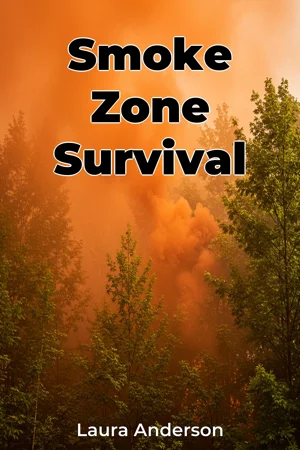
Do you know what to do when the air turns toxic? "Smoke Zone Survival" is your essential guide to navigating the increasingly frequent danger of smoke-filled environments caused by wildfires, industrial accidents, and other disasters. This book addresses the critical need for practical knowledge in a world where air quality can rapidly deteriorate, posing immediate threats to health and safety. This book focuses on three key areas: breathing techniques for minimizing smoke inhalation, strategic evacuation protocols prioritizing safety and efficiency, and effective shelter positioning to maximize protection from environmental hazards. These topics are vital because exposure to smoke can cause immediate respiratory problems, long-term health issues, and significantly impair decision-making during emergencies. Understanding how to mitigate these effects can be life-saving. The rise in extreme weather events and industrial incidents has made understanding smoke-related survival strategies more crucial than ever. While public health advisories offer general guidelines, this book delves into specific actions individuals can take. It builds upon established emergency response principles, incorporating the latest scientific understanding of smoke composition, dispersion, and health impacts. Readers should have a basic awareness of environmental risks and a desire to learn practical self-preservation techniques. The central argument of "Smoke Zone Survival" is that proactive knowledge and preparation are the most potent defenses against the dangers of smoke-filled environments. This book empowers individuals to take control of their safety by providing actionable strategies grounded in scientific research and real-world scenarios. It highlights that survival is not merely about luck but about informed decision-making and effective action. "Smoke Zone Survival" is structured to provide a comprehensive understanding of smoke-related risks and mitigation strategies. It begins by introducing the fundamental concepts of smoke composition, behavior, and health effects. The book then progresses to develop practical skills in three key areas: breathing techniques, evacuation strategies, and shelter positioning. Each section builds upon the previous one, culminating in a holistic approach to smoke zone survival. Practical application exercises and real-life examples are provided. The book's arguments are supported by a range of evidence, including scientific studies on respiratory health, analyses of wildfire behavior and industrial accident scenarios, and expert opinions from emergency responders and medical professionals. Data from government agencies, such as the EPA and FEMA, are also incorporated to provide context and validate recommendations. "Smoke Zone Survival" connects to several other fields, including environmental science, public health, and disaster management. Understanding smoke's impact requires knowledge of atmospheric conditions and pollutant dispersion. Protecting health relies on applying medical expertise in respiratory care. Effective response calls for disaster management principles of risk assessment, planning, and coordination. This book offers a unique, integrated approach to smoke zone survival by combining scientific knowledge with practical skills. It goes beyond general recommendations by providing specific techniques and strategies tailored to various scenarios. It emphasizes individual responsibility in preparedness and action, filling a gap in existing resources that often focus on broader public health initiatives. The book adopts a clear, concise, and action-oriented writing style. Information is presented logically, with complex concepts explained in accessible language. While grounded in scientific research, the tone remains practical and encouraging, empowering readers to take proactive steps. "Smoke Zone Survival" is intended for a wide audience, including homeowners in wildfire-prone areas, outdoor enthusiasts, industrial workers, and anyone concerned about environmental hazards. It is valuable for individuals seeking to enhance their preparedness and resilience in the face of increasingly frequent smoke-related events. As a non-fiction health and fitness guide, the book focuses on delivering verifiable information and actionable advice. It avoids anecdotal storytelling and prioritizes evidence-based recommendations. It maintains a responsible and cautious tone, emphasizing the importance of heeding official warnings and seeking professional medical assistance when necessary. The book focuses primarily on short-term survival strategies applicable during or immediately following a smoke-related event. While it touches on long-term health considerations, it does not provide comprehensive medical advice. The scope is intentionally limited to practical actions individuals can take to protect themselves in the immediate crisis. The strategies outlined in "Smoke Zone Survival" can be applied in various real-world situations, from escaping a wildfire to sheltering in place during an industrial accident. The book provides checklists, step-by-step instructions, and scenario-based exercises to help readers translate knowledge into action. While the scientific understanding of smoke and its effects is generally well-established, there are ongoing debates about the effectiveness of certain mitigation strategies and the long-term health consequences of exposure. The book addresses these debates by presenting different viewpoints and highlighting areas of uncertainty while offering the best available evidence-based recommendations.
Do you know what to do when the air turns toxic? "Smoke Zone Survival" is your essential guide to navigating the increasingly frequent danger of smoke-filled environments caused by wildfires, industrial accidents, and other disasters. This book addresses the critical need for practical knowledge in a world where air quality can rapidly deteriorate, posing immediate threats to health and safety. This book focuses on three key areas: breathing techniques for minimizing smoke inhalation, strategic evacuation protocols prioritizing safety and efficiency, and effective shelter positioning to maximize protection from environmental hazards. These topics are vital because exposure to smoke can cause immediate respiratory problems, long-term health issues, and significantly impair decision-making during emergencies. Understanding how to mitigate these effects can be life-saving. The rise in extreme weather events and industrial incidents has made understanding smoke-related survival strategies more crucial than ever. While public health advisories offer general guidelines, this book delves into specific actions individuals can take. It builds upon established emergency response principles, incorporating the latest scientific understanding of smoke composition, dispersion, and health impacts. Readers should have a basic awareness of environmental risks and a desire to learn practical self-preservation techniques. The central argument of "Smoke Zone Survival" is that proactive knowledge and preparation are the most potent defenses against the dangers of smoke-filled environments. This book empowers individuals to take control of their safety by providing actionable strategies grounded in scientific research and real-world scenarios. It highlights that survival is not merely about luck but about informed decision-making and effective action. "Smoke Zone Survival" is structured to provide a comprehensive understanding of smoke-related risks and mitigation strategies. It begins by introducing the fundamental concepts of smoke composition, behavior, and health effects. The book then progresses to develop practical skills in three key areas: breathing techniques, evacuation strategies, and shelter positioning. Each section builds upon the previous one, culminating in a holistic approach to smoke zone survival. Practical application exercises and real-life examples are provided. The book's arguments are supported by a range of evidence, including scientific studies on respiratory health, analyses of wildfire behavior and industrial accident scenarios, and expert opinions from emergency responders and medical professionals. Data from government agencies, such as the EPA and FEMA, are also incorporated to provide context and validate recommendations. "Smoke Zone Survival" connects to several other fields, including environmental science, public health, and disaster management. Understanding smoke's impact requires knowledge of atmospheric conditions and pollutant dispersion. Protecting health relies on applying medical expertise in respiratory care. Effective response calls for disaster management principles of risk assessment, planning, and coordination. This book offers a unique, integrated approach to smoke zone survival by combining scientific knowledge with practical skills. It goes beyond general recommendations by providing specific techniques and strategies tailored to various scenarios. It emphasizes individual responsibility in preparedness and action, filling a gap in existing resources that often focus on broader public health initiatives. The book adopts a clear, concise, and action-oriented writing style. Information is presented logically, with complex concepts explained in accessible language. While grounded in scientific research, the tone remains practical and encouraging, empowering readers to take proactive steps. "Smoke Zone Survival" is intended for a wide audience, including homeowners in wildfire-prone areas, outdoor enthusiasts, industrial workers, and anyone concerned about environmental hazards. It is valuable for individuals seeking to enhance their preparedness and resilience in the face of increasingly frequent smoke-related events. As a non-fiction health and fitness guide, the book focuses on delivering verifiable information and actionable advice. It avoids anecdotal storytelling and prioritizes evidence-based recommendations. It maintains a responsible and cautious tone, emphasizing the importance of heeding official warnings and seeking professional medical assistance when necessary. The book focuses primarily on short-term survival strategies applicable during or immediately following a smoke-related event. While it touches on long-term health considerations, it does not provide comprehensive medical advice. The scope is intentionally limited to practical actions individuals can take to protect themselves in the immediate crisis. The strategies outlined in "Smoke Zone Survival" can be applied in various real-world situations, from escaping a wildfire to sheltering in place during an industrial accident. The book provides checklists, step-by-step instructions, and scenario-based exercises to help readers translate knowledge into action. While the scientific understanding of smoke and its effects is generally well-established, there are ongoing debates about the effectiveness of certain mitigation strategies and the long-term health consequences of exposure. The book addresses these debates by presenting different viewpoints and highlighting areas of uncertainty while offering the best available evidence-based recommendations.
"Smoke Zone Survival" offers crucial strategies for navigating the increasing dangers of smoke-filled environments, focusing on wildfires and industrial incidents. This essential guide emphasizes proactive knowledge and preparation, teaching you how to minimize smoke inhalation through specialized breathing techniques, implement strategic evacuation plans prioritizing safety, and effectively position yourself in shelters to maximize protection from environmental hazards. Did you know that smoke exposure can impair decision-making, and understanding mitigation can be life-saving? The book uniquely combines scientific understanding with practical skills, going beyond general advice to provide specific techniques tailored to various scenarios. It progresses from fundamental concepts like smoke composition and health effects to actionable strategies for breathing, evacuation, and sheltering. Each chapter builds upon the last, providing a holistic approach to smoke zone survival, empowering readers to take control of their health fitness and safety amid environmental hazards.
Book Details
ISBN
9788235258540
Publisher
Publifye AS
Your Licenses
You don't own any licenses for this book
Purchase a license below to unlock this book and download the EPUB.
Purchase License
Select a tier to unlock this book
Need bulk licensing?
Contact us for enterprise agreements.