
About This Book
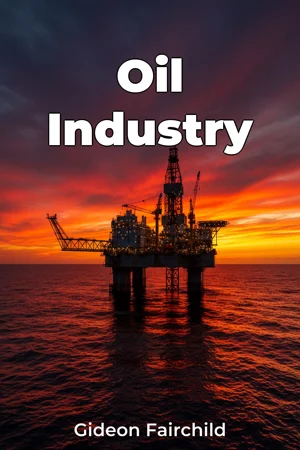
How has a single commodity shaped the modern world, dictating economic policies, defining geopolitical landscapes, and fueling technological advancements? "Oil Industry" offers a comprehensive exploration of the extraction, refining, and global impact of oil, examining its profound influence on economies, energy policies, and international markets. This book delves into the complex and often contentious world of oil, a resource central to contemporary society yet fraught with environmental and political challenges. This book's core focuses are threefold: first, the intricate processes of oil extraction, from traditional methods to cutting-edge technologies like deep-sea drilling and fracking; second, the refining process, transforming crude oil into the diverse range of products that power our lives; and third, the multifaceted impacts of the oil industry on global economies, national energy policies, and the dynamics of international trade and power. Understanding these areas is crucial for anyone seeking to grasp the underlying forces shaping our world, from the price at the pump to international relations. Historically, the rise of the oil industry is intertwined with the development of the internal combustion engine and the subsequent explosion of the automobile industry. This created an unprecedented demand for oil, transforming it from a niche product to a globally traded commodity. Moreover, the geopolitical landscape of the 20th and 21st centuries has been significantly sculpted by the pursuit and control of oil resources. A basic understanding of economics, particularly supply and demand, and political science, especially international relations, will be beneficial to the reader. The central argument of "Oil Industry" is that the oil industry, while undeniably a driving force of economic progress and technological innovation, simultaneously presents significant challenges related to environmental sustainability, geopolitical stability, and equitable resource distribution. Understanding this inherent tension is paramount for developing informed policies and strategies for a more sustainable and secure energy future. The book is structured to provide a clear and logical progression of understanding. It begins by introducing the fundamental concepts of oil geology, exploration, and extraction. It then moves into the refining process, detailing the science and technology behind transforming crude oil into usable products. The core of the book analyzes the economic impact of the oil industry, examining its role in global trade, national economies, and the investment sector. It then analyzes environmental consequences, focusing on oil spills, carbon emissions and climate change implications. The book concludes by examining energy policies, technological advancements and the ongoing debates surrounding peak oil, renewable energy transitions, and the future of the oil industry in a carbon-constrained world. The evidence and research presented in "Oil Industry" are drawn from a wide array of sources, including industry reports, government statistics, academic studies, and case studies of specific oil-producing regions and companies. Unique data sources such as geological surveys and economic modeling are employed to provide a comprehensive and data-driven analysis. "Oil Industry" connects directly to fields like environmental science through its analysis of oil spills, carbon emissions, and climate change. It further connects to political science through coverage of global markets, and international trade, highlighting the complex relationships between oil-producing and oil-consuming nations. This book adopts a fact-based and analytical approach, presenting information in a clear and accessible style suitable for both academic and general audiences. It avoids sensationalism, instead focusing on providing a balanced and nuanced perspective on a complex and often controversial topic. The target audience includes students of economics, political science, and environmental studies, as well as business professionals, policymakers, and anyone interested in understanding the energy landscape. This book offers valuable insights into the economic, political, and environmental forces shaping the global oil industry. As a work of non-fiction in the fields of politics and economics, "Oil Industry" adheres to the conventions of rigorous research, objective analysis, and clear presentation of evidence. It seeks to inform rather than persuade, providing readers with the knowledge they need to form their own informed opinions. The scope of "Oil Industry" is broad, encompassing the entire value chain of the oil industry from exploration to consumption. However, it intentionally limits its scope to focus on the core economic, political, and environmental aspects, acknowledging that other areas, like the social impact of oil development in specific communities, could warrant their own dedicated studies. The knowledge gained from reading "Oil Industry" can be applied in various practical ways. For example, investors can use the insights to make informed decisions about energy stocks, policymakers can leverage the analysis to design effective energy policies, and citizens can draw upon the information to engage in informed debates about energy and climate change. "Oil Industry" addresses several ongoing debates, including those surrounding peak oil theory, the role of government regulation in the oil industry, and the feasibility of transitioning to a low-carbon economy. It presents different perspectives on these issues.
How has a single commodity shaped the modern world, dictating economic policies, defining geopolitical landscapes, and fueling technological advancements? "Oil Industry" offers a comprehensive exploration of the extraction, refining, and global impact of oil, examining its profound influence on economies, energy policies, and international markets. This book delves into the complex and often contentious world of oil, a resource central to contemporary society yet fraught with environmental and political challenges. This book's core focuses are threefold: first, the intricate processes of oil extraction, from traditional methods to cutting-edge technologies like deep-sea drilling and fracking; second, the refining process, transforming crude oil into the diverse range of products that power our lives; and third, the multifaceted impacts of the oil industry on global economies, national energy policies, and the dynamics of international trade and power. Understanding these areas is crucial for anyone seeking to grasp the underlying forces shaping our world, from the price at the pump to international relations. Historically, the rise of the oil industry is intertwined with the development of the internal combustion engine and the subsequent explosion of the automobile industry. This created an unprecedented demand for oil, transforming it from a niche product to a globally traded commodity. Moreover, the geopolitical landscape of the 20th and 21st centuries has been significantly sculpted by the pursuit and control of oil resources. A basic understanding of economics, particularly supply and demand, and political science, especially international relations, will be beneficial to the reader. The central argument of "Oil Industry" is that the oil industry, while undeniably a driving force of economic progress and technological innovation, simultaneously presents significant challenges related to environmental sustainability, geopolitical stability, and equitable resource distribution. Understanding this inherent tension is paramount for developing informed policies and strategies for a more sustainable and secure energy future. The book is structured to provide a clear and logical progression of understanding. It begins by introducing the fundamental concepts of oil geology, exploration, and extraction. It then moves into the refining process, detailing the science and technology behind transforming crude oil into usable products. The core of the book analyzes the economic impact of the oil industry, examining its role in global trade, national economies, and the investment sector. It then analyzes environmental consequences, focusing on oil spills, carbon emissions and climate change implications. The book concludes by examining energy policies, technological advancements and the ongoing debates surrounding peak oil, renewable energy transitions, and the future of the oil industry in a carbon-constrained world. The evidence and research presented in "Oil Industry" are drawn from a wide array of sources, including industry reports, government statistics, academic studies, and case studies of specific oil-producing regions and companies. Unique data sources such as geological surveys and economic modeling are employed to provide a comprehensive and data-driven analysis. "Oil Industry" connects directly to fields like environmental science through its analysis of oil spills, carbon emissions, and climate change. It further connects to political science through coverage of global markets, and international trade, highlighting the complex relationships between oil-producing and oil-consuming nations. This book adopts a fact-based and analytical approach, presenting information in a clear and accessible style suitable for both academic and general audiences. It avoids sensationalism, instead focusing on providing a balanced and nuanced perspective on a complex and often controversial topic. The target audience includes students of economics, political science, and environmental studies, as well as business professionals, policymakers, and anyone interested in understanding the energy landscape. This book offers valuable insights into the economic, political, and environmental forces shaping the global oil industry. As a work of non-fiction in the fields of politics and economics, "Oil Industry" adheres to the conventions of rigorous research, objective analysis, and clear presentation of evidence. It seeks to inform rather than persuade, providing readers with the knowledge they need to form their own informed opinions. The scope of "Oil Industry" is broad, encompassing the entire value chain of the oil industry from exploration to consumption. However, it intentionally limits its scope to focus on the core economic, political, and environmental aspects, acknowledging that other areas, like the social impact of oil development in specific communities, could warrant their own dedicated studies. The knowledge gained from reading "Oil Industry" can be applied in various practical ways. For example, investors can use the insights to make informed decisions about energy stocks, policymakers can leverage the analysis to design effective energy policies, and citizens can draw upon the information to engage in informed debates about energy and climate change. "Oil Industry" addresses several ongoing debates, including those surrounding peak oil theory, the role of government regulation in the oil industry, and the feasibility of transitioning to a low-carbon economy. It presents different perspectives on these issues.
"Oil Industry" comprehensively examines the multifaceted world of oil, a commodity that profoundly shapes global economies, energy policies, and international trade. It explores how oil extraction and refining processes fuel technological advancements and influence geopolitical landscapes. The book highlights the intricate connection between the rise of the oil industry, the internal combustion engine, and the explosion of the automobile industry, creating unprecedented global demand. This exploration progresses logically, starting with oil geology and extraction, then moving to refining processes. A core focus is on the economic impact of the oil industry, examining its role in global trade and national economies. The book further analyzes environmental consequences, such as oil spills and carbon emissions, before concluding with energy policies and debates surrounding peak oil and renewable energy transitions. This book uniquely addresses the inherent tension between the oil industry's contributions to economic progress and the significant environmental and political challenges it presents. By presenting a balanced and data-driven analysis, "Oil Industry" equips readers with the knowledge to understand the forces shaping our world and to engage in informed discussions about energy and climate change.
Book Details
ISBN
9788235258533
Publisher
Publifye AS
Your Licenses
You don't own any licenses for this book
Purchase a license below to unlock this book and download the EPUB.
Purchase License
Select a tier to unlock this book
Need bulk licensing?
Contact us for enterprise agreements.