
About This Book
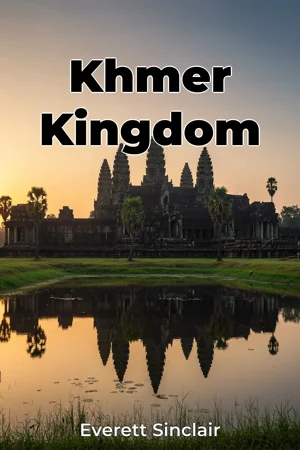
What if one of history’s most impressive empires simply vanished, leaving behind only stone temples as silent witnesses? This book, "Khmer Kingdom," explores the captivating story of the Khmer Empire, a dominant force in Southeast Asia for centuries. We delve into its remarkable rise, examine the zenith of its cultural and architectural achievements, most notably Angkor Wat, and scrutinize the complex factors that led to its gradual decline and eventual fall. Understanding the Khmer Empire is crucial, not only for comprehending the historical tapestry of Southeast Asia but also for appreciating the enduring legacy of its art, engineering, and sociopolitical structures. This book examines three key areas: first, the political and military strategies that enabled the Khmer to consolidate power and build a vast empire; second, their unprecedented engineering and artistic skills, culminating in the construction of Angkor, a sprawling urban complex and a testament to their advanced knowledge; and third, the environmental, social, and political pressures that ultimately undermined the empire's stability. These topics are essential to understanding the Khmer Empire's significance and its lasting impact on the region. To fully appreciate the narrative, we provide historical background on the pre-Angkorian kingdoms and the socio-religious context of the time, including the influence of Hinduism and Buddhism. No prior knowledge of Southeast Asian history is strictly required, but a general understanding of ancient civilizations will be beneficial for comprehending the book’s arguments. "Khmer Kingdom" argues that the Khmer Empire's success was a result of a sophisticated system of water management, agricultural productivity, and divine kingship, allowing it to exert influence over a broad geographical area. However, the same intricate infrastructure and rigid social hierarchy eventually became vulnerabilities, making the empire susceptible to environmental changes, external invasions, and internal strife. This argument is important because it challenges simplistic narratives of imperial rise and fall, highlighting the complex interplay of factors that determine a civilization's trajectory. The book is structured to provide a comprehensive understanding of the Khmer Empire. It begins by introducing the geographical setting and the early kingdoms that preceded the empire's formation. It then explores the reigns of key monarchs, such as Jayavarman II, who laid the foundation for the empire, and Suryavarman II, the builder of Angkor Wat. Subsequent chapters will analyze the empire's economic system, its social structure, its religious beliefs, and its artistic achievements. The book culminates with an examination of the factors contributing to the empire's decline, including climate change, military defeats, and internal rebellions. A final chapter discusses the rediscovery and preservation of Angkor in the modern era, emphasizing the ongoing efforts to understand and protect this invaluable cultural heritage site. Evidence presented in "Khmer Kingdom" is drawn from a variety of sources, including archaeological excavations, epigraphic inscriptions, contemporary historical accounts (such as those from Chinese envoys), and iconographic analysis of Khmer art. The book utilizes recent archaeological findings and reinterpretations of existing historical data to offer a balanced and nuanced perspective on the Khmer Empire. Interdisciplinary connections enhance the book’s argument. We explore the relationship between environmental science and Khmer history, focusing on the role of water management and climate change. Connections to art history allow for a deeper appreciation of Khmer artistic achievements and their sociopolitical significance. Links to religious studies help illuminate the complex interplay of Hinduism, Buddhism, and ancestor worship in Khmer society. This book distinguishes itself by integrating diverse lines of evidence to offer a holistic view of the Khmer Empire. It bridges the gap between traditional historical narratives and more recent scholarship. The tone is academic yet accessible, aimed at engaging both scholars and general readers interested in history and archaeology. The target audience includes students of history, archaeology, and Southeast Asian studies, as well as general readers with an interest in ancient civilizations and architectural wonders. This book is valuable because it provides a comprehensive and up-to-date account of the Khmer Empire, synthesizing the latest research into a coherent and engaging narrative. As a work of history and architecture, "Khmer Kingdom" adheres to the genre's conventions of presenting verifiable facts, credible interpretations, and detailed references. It also incorporates architectural analyses and visual aids to enhance understanding of Angkor's design and construction. The book's scope is limited to the Khmer Empire, focusing primarily on the period between the 9th and 15th centuries. While acknowledging the impact of neighboring kingdoms, the book does not delve deeply into their internal histories, maintaining its focus on the Khmer themselves. Understanding the Khmer Empire has real-world applications. Its sophisticated water management systems offer insights into sustainable resource management in the face of climate change. The challenges faced by the Khmer Empire also offer valuable lessons about the importance of social cohesion and political stability in maintaining long-term prosperity. The book also addresses ongoing debates surrounding the causes of the Khmer Empire's decline, including the relative importance of environmental factors, internal conflicts, and external pressures. It presents different perspectives on these issues, encouraging readers to critically evaluate the evidence and form their own conclusions.
What if one of history’s most impressive empires simply vanished, leaving behind only stone temples as silent witnesses? This book, "Khmer Kingdom," explores the captivating story of the Khmer Empire, a dominant force in Southeast Asia for centuries. We delve into its remarkable rise, examine the zenith of its cultural and architectural achievements, most notably Angkor Wat, and scrutinize the complex factors that led to its gradual decline and eventual fall. Understanding the Khmer Empire is crucial, not only for comprehending the historical tapestry of Southeast Asia but also for appreciating the enduring legacy of its art, engineering, and sociopolitical structures. This book examines three key areas: first, the political and military strategies that enabled the Khmer to consolidate power and build a vast empire; second, their unprecedented engineering and artistic skills, culminating in the construction of Angkor, a sprawling urban complex and a testament to their advanced knowledge; and third, the environmental, social, and political pressures that ultimately undermined the empire's stability. These topics are essential to understanding the Khmer Empire's significance and its lasting impact on the region. To fully appreciate the narrative, we provide historical background on the pre-Angkorian kingdoms and the socio-religious context of the time, including the influence of Hinduism and Buddhism. No prior knowledge of Southeast Asian history is strictly required, but a general understanding of ancient civilizations will be beneficial for comprehending the book’s arguments. "Khmer Kingdom" argues that the Khmer Empire's success was a result of a sophisticated system of water management, agricultural productivity, and divine kingship, allowing it to exert influence over a broad geographical area. However, the same intricate infrastructure and rigid social hierarchy eventually became vulnerabilities, making the empire susceptible to environmental changes, external invasions, and internal strife. This argument is important because it challenges simplistic narratives of imperial rise and fall, highlighting the complex interplay of factors that determine a civilization's trajectory. The book is structured to provide a comprehensive understanding of the Khmer Empire. It begins by introducing the geographical setting and the early kingdoms that preceded the empire's formation. It then explores the reigns of key monarchs, such as Jayavarman II, who laid the foundation for the empire, and Suryavarman II, the builder of Angkor Wat. Subsequent chapters will analyze the empire's economic system, its social structure, its religious beliefs, and its artistic achievements. The book culminates with an examination of the factors contributing to the empire's decline, including climate change, military defeats, and internal rebellions. A final chapter discusses the rediscovery and preservation of Angkor in the modern era, emphasizing the ongoing efforts to understand and protect this invaluable cultural heritage site. Evidence presented in "Khmer Kingdom" is drawn from a variety of sources, including archaeological excavations, epigraphic inscriptions, contemporary historical accounts (such as those from Chinese envoys), and iconographic analysis of Khmer art. The book utilizes recent archaeological findings and reinterpretations of existing historical data to offer a balanced and nuanced perspective on the Khmer Empire. Interdisciplinary connections enhance the book’s argument. We explore the relationship between environmental science and Khmer history, focusing on the role of water management and climate change. Connections to art history allow for a deeper appreciation of Khmer artistic achievements and their sociopolitical significance. Links to religious studies help illuminate the complex interplay of Hinduism, Buddhism, and ancestor worship in Khmer society. This book distinguishes itself by integrating diverse lines of evidence to offer a holistic view of the Khmer Empire. It bridges the gap between traditional historical narratives and more recent scholarship. The tone is academic yet accessible, aimed at engaging both scholars and general readers interested in history and archaeology. The target audience includes students of history, archaeology, and Southeast Asian studies, as well as general readers with an interest in ancient civilizations and architectural wonders. This book is valuable because it provides a comprehensive and up-to-date account of the Khmer Empire, synthesizing the latest research into a coherent and engaging narrative. As a work of history and architecture, "Khmer Kingdom" adheres to the genre's conventions of presenting verifiable facts, credible interpretations, and detailed references. It also incorporates architectural analyses and visual aids to enhance understanding of Angkor's design and construction. The book's scope is limited to the Khmer Empire, focusing primarily on the period between the 9th and 15th centuries. While acknowledging the impact of neighboring kingdoms, the book does not delve deeply into their internal histories, maintaining its focus on the Khmer themselves. Understanding the Khmer Empire has real-world applications. Its sophisticated water management systems offer insights into sustainable resource management in the face of climate change. The challenges faced by the Khmer Empire also offer valuable lessons about the importance of social cohesion and political stability in maintaining long-term prosperity. The book also addresses ongoing debates surrounding the causes of the Khmer Empire's decline, including the relative importance of environmental factors, internal conflicts, and external pressures. It presents different perspectives on these issues, encouraging readers to critically evaluate the evidence and form their own conclusions.
The "Khmer Kingdom" explores the fascinating story of the Khmer Empire, a dominant force in Southeast Asia renowned for its architectural prowess and sophisticated socio-political structures. The book traces the empire's rise, highlighting the construction of Angkor Wat, a testament to their advanced engineering and artistic skills, and examines the factors contributing to its eventual decline. This book uniquely integrates historical narratives with recent scholarship and interdisciplinary connections to provide a comprehensive understanding of this ancient civilization. The book argues that the Khmer Empire's success stemmed from its innovative water management systems and agricultural productivity, which allowed it to exert influence over a vast region. However, these very systems, along with a rigid social hierarchy, ultimately made the empire vulnerable to environmental changes, external invasions, and internal strife. Delving into archaeology, epigraphic inscriptions, and contemporary accounts, the book progresses chronologically, from the empire's geographical setting and early kingdoms to the reigns of key monarchs and the factors leading to its decline, offering insights into the rediscovery and preservation of Angkor.
Book Details
ISBN
9788235258526
Publisher
Publifye AS
Your Licenses
You don't own any licenses for this book
Purchase a license below to unlock this book and download the EPUB.
Purchase License
Select a tier to unlock this book
Need bulk licensing?
Contact us for enterprise agreements.