
About This Book
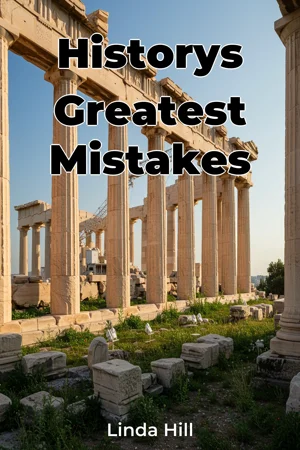
What if history's pivotal moments weren't always the result of brilliance, but instead stemmed from critical errors in judgment, navigation, or execution? "History's Greatest Mistakes" delves into the consequential missteps throughout human history, exploring how blunders of varying magnitudes have redirected the course of civilizations, triggered widespread disasters, and reshaped the world we inhabit today. This book examines not just the mistakes themselves, but the complex interplay of factors – political, social, economic, and technological – that amplified their impact. We traverse a landscape of human fallibility, investigating recurring themes such as failures in strategic planning, misinterpretations of data, and the often-catastrophic consequences of ego and hubris. The narrative emphasizes that comprehending past errors provides vital lessons for current and future decision-making. The book is structured around three core areas. First, we analyze navigational and exploratory errors that inadvertently led to significant geographical discoveries, albeit often with devastating consequences for indigenous populations. These examples demonstrate how miscalculations and inaccurate maps spurred unintended colonization and cultural clashes. Second, we explore political and military blunders that triggered or exacerbated conflicts, resulting in immense human suffering and geopolitical shifts. Through in-depth analyses of key battles and policy decisions, we pinpoint the flaws in reasoning and execution that led to defeat and destruction. Third, we examine technological and scientific oversights that produced catastrophic outcomes, from industrial accidents to environmental disasters. These cases highlight the critical importance of risk assessment, safety protocols, and ethical considerations in the advancement of knowledge. The central argument of "History's Greatest Mistakes" is that a systematic analysis of past failures is not merely a historical exercise, but an essential tool for fostering critical thinking, improving decision-making processes, and preventing similar errors in the future. By understanding the root causes of historical missteps, we can develop strategies for mitigating risk, promoting informed judgment, and fostering a more resilient and responsible global society. Supporting this argument is a diverse array of primary and secondary sources, including historical records, eyewitness accounts, scientific reports, and expert analyses. The book draws upon interdisciplinary perspectives, connecting historical analysis with fields such as political science, economics, sociology, and environmental studies. This multifaceted approach provides a richer and more nuanced understanding of the complex factors that contribute to historical outcomes. A unique aspect of this book lies in its emphasis on the psychological dimensions of decision-making, exploring how cognitive biases, groupthink, and leadership styles can significantly impact the likelihood of errors. The tone is informative and analytical, aiming to present a balanced and objective account of events while acknowledging the human element in historical processes. The writing style is accessible to a broad audience, avoiding technical jargon and focusing on clear and engaging storytelling. "History's Greatest Mistakes" is targeted towards anyone interested in history, current affairs, and the dynamics of decision-making. It appeals to readers seeking a deeper understanding of the forces that shape human events. The book avoids offering simplistic answers, instead encouraging readers to grapple with the complexities of historical causality and the ongoing relevance of past mistakes. While the book offers a wide-ranging survey of significant historical errors, it acknowledges the limitations of its scope. It does not attempt to be an exhaustive encyclopedia of mistakes, but rather a selective exploration of key cases that illustrate broader themes and lessons. Ultimately, "History's Greatest Mistakes" demonstrates that even in an era of unprecedented technological advancement and global interconnectedness, the capacity for human error remains a powerful force shaping our world. The book serves both as a cautionary tale and a call to action, urging us to learn from the past in order to build a more informed, resilient, and sustainable future.
What if history's pivotal moments weren't always the result of brilliance, but instead stemmed from critical errors in judgment, navigation, or execution? "History's Greatest Mistakes" delves into the consequential missteps throughout human history, exploring how blunders of varying magnitudes have redirected the course of civilizations, triggered widespread disasters, and reshaped the world we inhabit today. This book examines not just the mistakes themselves, but the complex interplay of factors – political, social, economic, and technological – that amplified their impact. We traverse a landscape of human fallibility, investigating recurring themes such as failures in strategic planning, misinterpretations of data, and the often-catastrophic consequences of ego and hubris. The narrative emphasizes that comprehending past errors provides vital lessons for current and future decision-making. The book is structured around three core areas. First, we analyze navigational and exploratory errors that inadvertently led to significant geographical discoveries, albeit often with devastating consequences for indigenous populations. These examples demonstrate how miscalculations and inaccurate maps spurred unintended colonization and cultural clashes. Second, we explore political and military blunders that triggered or exacerbated conflicts, resulting in immense human suffering and geopolitical shifts. Through in-depth analyses of key battles and policy decisions, we pinpoint the flaws in reasoning and execution that led to defeat and destruction. Third, we examine technological and scientific oversights that produced catastrophic outcomes, from industrial accidents to environmental disasters. These cases highlight the critical importance of risk assessment, safety protocols, and ethical considerations in the advancement of knowledge. The central argument of "History's Greatest Mistakes" is that a systematic analysis of past failures is not merely a historical exercise, but an essential tool for fostering critical thinking, improving decision-making processes, and preventing similar errors in the future. By understanding the root causes of historical missteps, we can develop strategies for mitigating risk, promoting informed judgment, and fostering a more resilient and responsible global society. Supporting this argument is a diverse array of primary and secondary sources, including historical records, eyewitness accounts, scientific reports, and expert analyses. The book draws upon interdisciplinary perspectives, connecting historical analysis with fields such as political science, economics, sociology, and environmental studies. This multifaceted approach provides a richer and more nuanced understanding of the complex factors that contribute to historical outcomes. A unique aspect of this book lies in its emphasis on the psychological dimensions of decision-making, exploring how cognitive biases, groupthink, and leadership styles can significantly impact the likelihood of errors. The tone is informative and analytical, aiming to present a balanced and objective account of events while acknowledging the human element in historical processes. The writing style is accessible to a broad audience, avoiding technical jargon and focusing on clear and engaging storytelling. "History's Greatest Mistakes" is targeted towards anyone interested in history, current affairs, and the dynamics of decision-making. It appeals to readers seeking a deeper understanding of the forces that shape human events. The book avoids offering simplistic answers, instead encouraging readers to grapple with the complexities of historical causality and the ongoing relevance of past mistakes. While the book offers a wide-ranging survey of significant historical errors, it acknowledges the limitations of its scope. It does not attempt to be an exhaustive encyclopedia of mistakes, but rather a selective exploration of key cases that illustrate broader themes and lessons. Ultimately, "History's Greatest Mistakes" demonstrates that even in an era of unprecedented technological advancement and global interconnectedness, the capacity for human error remains a powerful force shaping our world. The book serves both as a cautionary tale and a call to action, urging us to learn from the past in order to build a more informed, resilient, and sustainable future.
"History's Greatest Mistakes" explores pivotal moments where critical errors in judgment reshaped civilizations and triggered disasters. The book examines failures in strategic planning, misinterpretations of data, and the consequences of ego, emphasizing that understanding past errors is vital for future decision-making. One intriguing insight is how navigational errors spurred unintended colonization, while political and military blunders led to immense suffering and geopolitical shifts. The book systematically analyzes historical errors across three core areas. First, it investigates navigational and exploratory errors. Second, it explores political and military blunders that triggered conflicts. Third, it examines technological and scientific oversights that produced catastrophic outcomes, highlighting the importance of risk assessment. This approach provides a richer understanding of the complex factors contributing to historical outcomes, connecting historical analysis with political science, economics, and sociology. The book's unique value lies in its emphasis on the psychological dimensions of decision-making, exploring how cognitive biases and leadership styles impact the likelihood of errors. By presenting a balanced account of events and avoiding simplistic answers, "History's Greatest Mistakes" encourages readers to grapple with the complexities of historical causality and the ongoing relevance of past mistakes, urging us to learn from the past for a better future.
Book Details
ISBN
9788235258410
Publisher
Publifye AS
Your Licenses
You don't own any licenses for this book
Purchase a license below to unlock this book and download the EPUB.
Purchase License
Select a tier to unlock this book
Need bulk licensing?
Contact us for enterprise agreements.