
About This Book
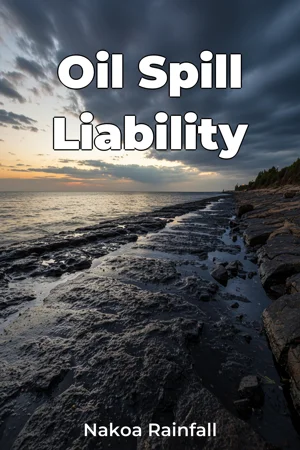
Who is truly responsible when disaster strikes our oceans, coating shorelines in black and disrupting marine ecosystems for generations? This book, *Oil Spill Liability*, delves into the complex legal frameworks that govern the assignment of responsibility following oil spills, exploring the intricacies of cleanup costs, environmental damages, and the implementation of preventative measures. Understanding these legal mechanisms is crucial for policymakers, environmental advocates, and industry stakeholders alike, as they shape both the immediate response to spills and the long-term strategies for preventing future catastrophes. This book examines the core principles of liability as they apply to oil spills, differentiating between strict liability, negligence, and other legal doctrines used to determine fault. A historical overview traces the evolution of oil spill legislation, from early regulations to landmark events that spurred significant legal reforms, such as the Exxon Valdez and Deepwater Horizon disasters. This context provides a foundation for understanding the current legal landscape and its effectiveness in addressing the multifaceted challenges posed by oil spills. The central argument asserts that a robust and consistently enforced system of oil spill liability is essential not only for compensating victims and restoring damaged ecosystems but also for incentivizing responsible behavior among oil companies and other actors involved in the transportation and extraction of petroleum products. This argument is vital because it connects legal accountability directly to environmental stewardship and economic responsibility. The structure of *Oil Spill Liability* unfolds systematically. First, it introduces fundamental legal concepts related to environmental liability and maritime law. Then, it develops key ideas through distinct sections addressing: (1) the assessment and quantification of environmental damages, including both economic and non-economic losses; (2) the legal mechanisms for recovering cleanup costs and compensating affected parties, such as fishermen, coastal communities, and tourism industries; (3) an analysis of international agreements and conventions governing oil spill liability across national borders. The book culminates in a discussion of preventative measures and the role of regulatory oversight in mitigating the risk of future spills, arguing for a proactive approach that integrates legal incentives with technological innovation. The book's arguments are supported by a wide range of evidence, including case law analysis, statistical data on spill incidents and associated costs, economic models for valuing environmental damages, and comparative assessments of different legal regimes around the world. It draws upon unique data sources, such as government reports, industry databases, and expert testimony from environmental scientists, economists, and legal scholars. This analysis connects to broader fields of study, including environmental economics, which examines the economic impacts of environmental damage and the valuation of ecosystem services; political science, which analyzes the role of government regulation and international cooperation in addressing environmental problems; and risk management, which focuses on assessing and mitigating the risks associated with industrial activities. These interdisciplinary connections enhance the book's argument by providing a more holistic understanding of the complex interplay between law, economics, and environmental protection. A unique aspect of *Oil Spill Liability* is its comparative analysis of different legal approaches to oil spill liability, highlighting the strengths and weaknesses of various models and offering insights for improving regulatory frameworks. The tone is academic yet accessible, aiming to inform a broad audience without sacrificing intellectual rigor. The target audience includes legal professionals specializing in environmental or maritime law, policymakers involved in drafting or implementing oil spill regulations, environmental advocates seeking to strengthen legal protections for marine environments, and industry stakeholders aiming to understand their legal obligations and manage their environmental risks. This book is valuable to them as it provides a comprehensive and up-to-date analysis of the legal landscape governing oil spill liability, equipping them with the knowledge and tools to navigate this complex area of law. As a work in the genres of Environment and Politics, the book provides factual, well-researched information, follows a logical structure, and maintains an objective tone. The scope of the book is limited to the legal and regulatory aspects of oil spill liability, focusing on developed legal systems and major international conventions. It does not delve into the technical details of oil spill response or the scientific complexities of marine ecosystems, except where they directly bear on legal issues. The information presented can be applied practically by readers in several ways, including: informing policy debates about oil spill prevention and response, guiding legal strategies for recovering damages from oil spills, and assisting industry stakeholders in developing and implementing best practices for environmental risk management. The book addresses ongoing debates about the appropriate level of liability for oil spills, the effectiveness of different regulatory approaches, and the challenges of valuing environmental damages in legal proceedings.
Who is truly responsible when disaster strikes our oceans, coating shorelines in black and disrupting marine ecosystems for generations? This book, *Oil Spill Liability*, delves into the complex legal frameworks that govern the assignment of responsibility following oil spills, exploring the intricacies of cleanup costs, environmental damages, and the implementation of preventative measures. Understanding these legal mechanisms is crucial for policymakers, environmental advocates, and industry stakeholders alike, as they shape both the immediate response to spills and the long-term strategies for preventing future catastrophes. This book examines the core principles of liability as they apply to oil spills, differentiating between strict liability, negligence, and other legal doctrines used to determine fault. A historical overview traces the evolution of oil spill legislation, from early regulations to landmark events that spurred significant legal reforms, such as the Exxon Valdez and Deepwater Horizon disasters. This context provides a foundation for understanding the current legal landscape and its effectiveness in addressing the multifaceted challenges posed by oil spills. The central argument asserts that a robust and consistently enforced system of oil spill liability is essential not only for compensating victims and restoring damaged ecosystems but also for incentivizing responsible behavior among oil companies and other actors involved in the transportation and extraction of petroleum products. This argument is vital because it connects legal accountability directly to environmental stewardship and economic responsibility. The structure of *Oil Spill Liability* unfolds systematically. First, it introduces fundamental legal concepts related to environmental liability and maritime law. Then, it develops key ideas through distinct sections addressing: (1) the assessment and quantification of environmental damages, including both economic and non-economic losses; (2) the legal mechanisms for recovering cleanup costs and compensating affected parties, such as fishermen, coastal communities, and tourism industries; (3) an analysis of international agreements and conventions governing oil spill liability across national borders. The book culminates in a discussion of preventative measures and the role of regulatory oversight in mitigating the risk of future spills, arguing for a proactive approach that integrates legal incentives with technological innovation. The book's arguments are supported by a wide range of evidence, including case law analysis, statistical data on spill incidents and associated costs, economic models for valuing environmental damages, and comparative assessments of different legal regimes around the world. It draws upon unique data sources, such as government reports, industry databases, and expert testimony from environmental scientists, economists, and legal scholars. This analysis connects to broader fields of study, including environmental economics, which examines the economic impacts of environmental damage and the valuation of ecosystem services; political science, which analyzes the role of government regulation and international cooperation in addressing environmental problems; and risk management, which focuses on assessing and mitigating the risks associated with industrial activities. These interdisciplinary connections enhance the book's argument by providing a more holistic understanding of the complex interplay between law, economics, and environmental protection. A unique aspect of *Oil Spill Liability* is its comparative analysis of different legal approaches to oil spill liability, highlighting the strengths and weaknesses of various models and offering insights for improving regulatory frameworks. The tone is academic yet accessible, aiming to inform a broad audience without sacrificing intellectual rigor. The target audience includes legal professionals specializing in environmental or maritime law, policymakers involved in drafting or implementing oil spill regulations, environmental advocates seeking to strengthen legal protections for marine environments, and industry stakeholders aiming to understand their legal obligations and manage their environmental risks. This book is valuable to them as it provides a comprehensive and up-to-date analysis of the legal landscape governing oil spill liability, equipping them with the knowledge and tools to navigate this complex area of law. As a work in the genres of Environment and Politics, the book provides factual, well-researched information, follows a logical structure, and maintains an objective tone. The scope of the book is limited to the legal and regulatory aspects of oil spill liability, focusing on developed legal systems and major international conventions. It does not delve into the technical details of oil spill response or the scientific complexities of marine ecosystems, except where they directly bear on legal issues. The information presented can be applied practically by readers in several ways, including: informing policy debates about oil spill prevention and response, guiding legal strategies for recovering damages from oil spills, and assisting industry stakeholders in developing and implementing best practices for environmental risk management. The book addresses ongoing debates about the appropriate level of liability for oil spills, the effectiveness of different regulatory approaches, and the challenges of valuing environmental damages in legal proceedings.
*Oil Spill Liability* explores the intricate legal frameworks determining responsibility after oceanic oil spills, a critical issue impacting environmental policy and marine ecosystems. It examines how cleanup costs are allocated, environmental damages are assessed, and preventative measures are enforced. The book uniquely addresses liability through the lenses of negligence, strict liability, and other legal doctrines, revealing the evolution of oil spill legislation from early regulations to reforms spurred by disasters like the Exxon Valdez and Deepwater Horizon. Understanding these legal mechanisms is essential for preventing future catastrophes and holding responsible parties accountable. The book progresses systematically, first introducing fundamental legal concepts related to maritime and environmental law. It then delves into the assessment of environmental damages, both economic and non-economic. A key argument is that a robust system of oil spill liability incentivizes responsible behavior among oil companies. It analyzes international agreements and conventions, advocating for proactive, legally incentivized approaches combined with technological innovation. This comprehensive analysis makes the book invaluable for policymakers, environmental advocates, and industry stakeholders seeking a deeper understanding of oil spill liability and its implications for environmental stewardship and risk management.
Book Details
ISBN
9788235258311
Publisher
Publifye AS
Your Licenses
You don't own any licenses for this book
Purchase a license below to unlock this book and download the EPUB.
Purchase License
Select a tier to unlock this book
Need bulk licensing?
Contact us for enterprise agreements.