
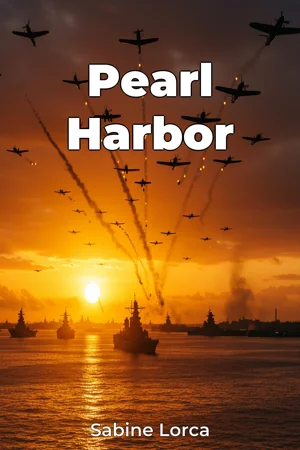
About This Book
Why did Japan attack Pearl Harbor? The answer is more complex than often portrayed. This book, "Pearl Harbor," delves into the intricate web of political, economic, and military factors that culminated in the devastating attack on December 7, 1941, and examines how this event propelled the United States into World War II. We will explore Japanese strategic planning and assess the attack's long-term consequences. Understanding Pearl Harbor requires not just recounting the events of that day, but also understanding the geopolitical landscape that made it possible. This book grapples with several key themes. First, the long-term deterioration of US-Japanese relations. Second, the meticulous planning and execution of the attack itself, analyzing its successes and failures. Third, the immediate and long-lasting impact of Pearl Harbor on American society, politics, and the course of World War II. The historical context is crucial. In the decades leading up to the attack, Japan had been expanding its influence in Asia, seeking resources and regional dominance. The United States, while officially neutral, opposed this expansion and imposed economic sanctions, particularly an oil embargo, that severely hampered Japan's war machine. This created a sense of desperation within the Japanese government and military, leading them to view the destruction of the U.S. Pacific Fleet at Pearl Harbor as a necessary pre-emptive strike to secure their interests in the Pacific. The book also considers the American perspective, analyzing intelligence failures and potential miscalculations that contributed to the surprise attack. The central argument of "Pearl Harbor" is that the attack was not simply an isolated act of aggression, but the culmination of years of escalating tensions and strategic miscalculations on both sides. It demonstrates that Pearl Harbor was a turning point, solidifying American public opinion in favor of war and fundamentally altering the balance of power in the Pacific. The book is structured to provide a comprehensive understanding of the event. We begin by examining the historical context, tracing the roots of the conflict between the U.S. and Japan. Next, we dissect the Japanese strategic planning, including the objectives, resources, and personnel involved. A detailed account of the attack itself follows, using primary sources and eyewitness testimonies to reconstruct the events of December 7th. The book then analyzes the aftermath of the attack, focusing on the American response, the declaration of war, and the immediate mobilization of resources. Finally, we assess the long-term impact of Pearl Harbor on the course of World War II and its lasting legacy on American foreign policy. The book draws upon a wide range of primary and secondary sources, including declassified military documents, personal letters and diaries of soldiers and civilians, diplomatic cables, and Japanese war plans. It uses these resources to provide a nuanced and comprehensive account of Pearl Harbor, avoiding simplistic narratives and exploring the complexities of the event. "Pearl Harbor" connects to fields such as political science, economics, and sociology. The attack had profound political implications, leading to a shift in American foreign policy and the rise of the United States as a global superpower. The economic ramifications were equally significant, as the war effort spurred industrial growth and transformed the American economy. Sociologically, Pearl Harbor profoundly impacted American society, fostering a sense of national unity and shaping attitudes towards war and international relations. This book offers a fresh perspective by emphasizing the interconnectedness of events and decisions leading up to the attack, challenging the notion of Pearl Harbor as an isolated incident. It avoids sensationalism, maintaining a balanced and objective tone. The target audience includes history enthusiasts, students, military history buffs, and anyone interested in understanding the causes and consequences of World War II. The book provides the reader with the factual information necessary to properly form their own opinions regarding the attack. This book adheres to the conventions of military history, world history, and general history by providing rigorous analysis, clear documentation, and objective interpretation of events. It covers the strategic planning, execution, and consequences of the attack within the broader context of global events. The scope is intentionally limited to the events directly related to the Pearl Harbor attack and its immediate aftermath. While the book acknowledges the broader context of World War II, it does not attempt to provide a comprehensive history of the war. An understanding of Pearl Harbor is crucial for understanding contemporary international relations. The lessons learned from the attack, particularly regarding the importance of intelligence gathering, strategic planning, and maintaining a strong military deterrent, remain relevant today. The book addresses ongoing debates among historians regarding the extent to which American policy provoked the attack. It presents different perspectives and allows the reader to draw their own conclusions based on the evidence presented.
Why did Japan attack Pearl Harbor? The answer is more complex than often portrayed. This book, "Pearl Harbor," delves into the intricate web of political, economic, and military factors that culminated in the devastating attack on December 7, 1941, and examines how this event propelled the United States into World War II. We will explore Japanese strategic planning and assess the attack's long-term consequences. Understanding Pearl Harbor requires not just recounting the events of that day, but also understanding the geopolitical landscape that made it possible. This book grapples with several key themes. First, the long-term deterioration of US-Japanese relations. Second, the meticulous planning and execution of the attack itself, analyzing its successes and failures. Third, the immediate and long-lasting impact of Pearl Harbor on American society, politics, and the course of World War II. The historical context is crucial. In the decades leading up to the attack, Japan had been expanding its influence in Asia, seeking resources and regional dominance. The United States, while officially neutral, opposed this expansion and imposed economic sanctions, particularly an oil embargo, that severely hampered Japan's war machine. This created a sense of desperation within the Japanese government and military, leading them to view the destruction of the U.S. Pacific Fleet at Pearl Harbor as a necessary pre-emptive strike to secure their interests in the Pacific. The book also considers the American perspective, analyzing intelligence failures and potential miscalculations that contributed to the surprise attack. The central argument of "Pearl Harbor" is that the attack was not simply an isolated act of aggression, but the culmination of years of escalating tensions and strategic miscalculations on both sides. It demonstrates that Pearl Harbor was a turning point, solidifying American public opinion in favor of war and fundamentally altering the balance of power in the Pacific. The book is structured to provide a comprehensive understanding of the event. We begin by examining the historical context, tracing the roots of the conflict between the U.S. and Japan. Next, we dissect the Japanese strategic planning, including the objectives, resources, and personnel involved. A detailed account of the attack itself follows, using primary sources and eyewitness testimonies to reconstruct the events of December 7th. The book then analyzes the aftermath of the attack, focusing on the American response, the declaration of war, and the immediate mobilization of resources. Finally, we assess the long-term impact of Pearl Harbor on the course of World War II and its lasting legacy on American foreign policy. The book draws upon a wide range of primary and secondary sources, including declassified military documents, personal letters and diaries of soldiers and civilians, diplomatic cables, and Japanese war plans. It uses these resources to provide a nuanced and comprehensive account of Pearl Harbor, avoiding simplistic narratives and exploring the complexities of the event. "Pearl Harbor" connects to fields such as political science, economics, and sociology. The attack had profound political implications, leading to a shift in American foreign policy and the rise of the United States as a global superpower. The economic ramifications were equally significant, as the war effort spurred industrial growth and transformed the American economy. Sociologically, Pearl Harbor profoundly impacted American society, fostering a sense of national unity and shaping attitudes towards war and international relations. This book offers a fresh perspective by emphasizing the interconnectedness of events and decisions leading up to the attack, challenging the notion of Pearl Harbor as an isolated incident. It avoids sensationalism, maintaining a balanced and objective tone. The target audience includes history enthusiasts, students, military history buffs, and anyone interested in understanding the causes and consequences of World War II. The book provides the reader with the factual information necessary to properly form their own opinions regarding the attack. This book adheres to the conventions of military history, world history, and general history by providing rigorous analysis, clear documentation, and objective interpretation of events. It covers the strategic planning, execution, and consequences of the attack within the broader context of global events. The scope is intentionally limited to the events directly related to the Pearl Harbor attack and its immediate aftermath. While the book acknowledges the broader context of World War II, it does not attempt to provide a comprehensive history of the war. An understanding of Pearl Harbor is crucial for understanding contemporary international relations. The lessons learned from the attack, particularly regarding the importance of intelligence gathering, strategic planning, and maintaining a strong military deterrent, remain relevant today. The book addresses ongoing debates among historians regarding the extent to which American policy provoked the attack. It presents different perspectives and allows the reader to draw their own conclusions based on the evidence presented.
"Pearl Harbor" examines the complex factors leading to the Japanese attack on December 7, 1941, an event that propelled the U.S. into World War II. It explores the deterioration of US-Japanese relations, Japan's strategic planning, and the attack’s profound impact on American society. The book highlights the economic sanctions imposed on Japan, particularly the oil embargo, which fueled Japan's sense of desperation and its view of the attack as a necessary pre-emptive strike. The book avoids simplistic narratives by using primary sources to reconstruct events. It begins by tracing the roots of the conflict, then dissects Japanese planning and details the attack itself. Finally, the book analyzes the American response, the declaration of war, and the long-term impacts of Pearl Harbor on World War II and American foreign policy. This approach provides a comprehensive understanding of how escalating tensions and strategic miscalculations culminated in this pivotal moment in history.
Book Details
ISBN
9788235258151
Publisher
Publifye AS
Your Licenses
You don't own any licenses for this book
Purchase a license below to unlock this book and download the EPUB.
Purchase License
Select a tier to unlock this book
Need bulk licensing?
Contact us for enterprise agreements.