
About This Book
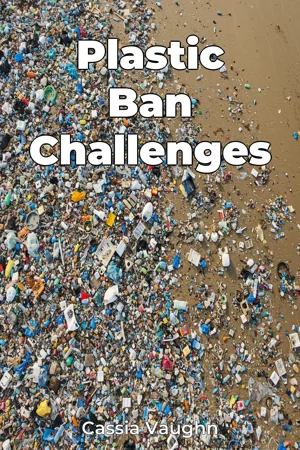
Is the proliferation of single-use plastics an environmental crisis we can legislate our way out of, or are bans merely symbolic gestures that shift the problem without solving it? "Plastic Ban Challenges" delves into the complex and often contradictory realities of legal attempts to curtail single-use plastic pollution worldwide. This book examines not only the structure and enforcement of these bans but also the significant resistance they face from various industries and the ultimately measurable impact, or lack thereof, on pollution levels. The key topics explored are the legal frameworks of plastic bans, the political economy of resistance, and the environmental efficacy of these interventions. These are crucial because they highlight the multifaceted nature of environmental policy and the often-unintended consequences of well-meaning legislation. Central to understanding this issue is recognizing the historical context. The rise of single-use plastics in the latter half of the 20th century, driven by their convenience and low cost, has created a pollution problem of immense scale. "Plastic Ban Challenges" argues that while plastic bans are a popular and seemingly straightforward solution, their effectiveness is often undermined by weak enforcement, lobbying efforts, and the substitution of banned plastics with other, potentially more harmful materials. This argument is essential because it moves the conversation beyond simplistic solutions, encouraging a more critical and nuanced approach to environmental policy. The book unfolds in several stages. It begins by dissecting the legal architecture of plastic bans across different jurisdictions, from national policies to local ordinances. This section examines the common elements of these laws, such as the types of plastics targeted, the exemptions granted, and the penalties for non-compliance. Following this, the book explores the political economy of resistance, analyzing the strategies employed by industries – particularly those in packaging, manufacturing, and retail – to undermine or circumvent these bans. This includes lobbying efforts, public relations campaigns, and the development of alternative materials. Finally, the book evaluates the environmental impact of plastic bans, using empirical data on pollution levels, waste generation, and material flows to assess their effectiveness. This section critically examines whether bans actually reduce pollution or simply displace it, leading to increased use of other materials or increased waste. The evidence presented is drawn from a variety of sources, including legal documents, industry reports, government statistics, and scientific studies on pollution levels. Unique data sources include analyses of lobbying expenditures and interviews with policymakers, industry representatives, and environmental activists. "Plastic Ban Challenges" connects to several other fields, including environmental science, political science, and economics. Its analysis of pollution levels draws upon scientific research on the environmental impact of plastics, while its examination of industry resistance is informed by political science theories of interest group behavior. The economic analysis explores the costs and benefits of plastic bans, considering factors such as consumer behavior and producer responses. What sets this book apart is its holistic approach, which integrates legal, political, and environmental perspectives to provide a comprehensive assessment of plastic bans. It avoids simplistic narratives, instead offering a nuanced and critical analysis of their strengths and weaknesses. The tone is academic yet accessible, making the book suitable for a broad audience interested in environmental policy. The target audience includes policymakers, environmental advocates, industry leaders, and students and scholars in environmental studies, political science, and economics. The book is valuable to them because it provides a rigorous and evidence-based assessment of plastic bans, offering insights that can inform more effective environmental policies. As a work in the environmental and political genres, the book aims to combine scientific rigor with policy relevance, contributing to a more informed public debate on environmental issues. The scope of "Plastic Ban Challenges" is global, examining plastic bans in various countries and regions. However, it is limited to single-use plastics, excluding other types of plastic pollution, such as microplastics and plastic waste from other sources. The information in this book can be applied practically by policymakers seeking to design more effective plastic bans, by environmental advocates seeking to promote evidence-based policies, and by industry leaders seeking to understand and adapt to changing regulatory landscapes. The book addresses the controversies surrounding plastic bans, including debates over their economic impact, their environmental effectiveness, and their potential to disproportionately affect certain communities.
Is the proliferation of single-use plastics an environmental crisis we can legislate our way out of, or are bans merely symbolic gestures that shift the problem without solving it? "Plastic Ban Challenges" delves into the complex and often contradictory realities of legal attempts to curtail single-use plastic pollution worldwide. This book examines not only the structure and enforcement of these bans but also the significant resistance they face from various industries and the ultimately measurable impact, or lack thereof, on pollution levels. The key topics explored are the legal frameworks of plastic bans, the political economy of resistance, and the environmental efficacy of these interventions. These are crucial because they highlight the multifaceted nature of environmental policy and the often-unintended consequences of well-meaning legislation. Central to understanding this issue is recognizing the historical context. The rise of single-use plastics in the latter half of the 20th century, driven by their convenience and low cost, has created a pollution problem of immense scale. "Plastic Ban Challenges" argues that while plastic bans are a popular and seemingly straightforward solution, their effectiveness is often undermined by weak enforcement, lobbying efforts, and the substitution of banned plastics with other, potentially more harmful materials. This argument is essential because it moves the conversation beyond simplistic solutions, encouraging a more critical and nuanced approach to environmental policy. The book unfolds in several stages. It begins by dissecting the legal architecture of plastic bans across different jurisdictions, from national policies to local ordinances. This section examines the common elements of these laws, such as the types of plastics targeted, the exemptions granted, and the penalties for non-compliance. Following this, the book explores the political economy of resistance, analyzing the strategies employed by industries – particularly those in packaging, manufacturing, and retail – to undermine or circumvent these bans. This includes lobbying efforts, public relations campaigns, and the development of alternative materials. Finally, the book evaluates the environmental impact of plastic bans, using empirical data on pollution levels, waste generation, and material flows to assess their effectiveness. This section critically examines whether bans actually reduce pollution or simply displace it, leading to increased use of other materials or increased waste. The evidence presented is drawn from a variety of sources, including legal documents, industry reports, government statistics, and scientific studies on pollution levels. Unique data sources include analyses of lobbying expenditures and interviews with policymakers, industry representatives, and environmental activists. "Plastic Ban Challenges" connects to several other fields, including environmental science, political science, and economics. Its analysis of pollution levels draws upon scientific research on the environmental impact of plastics, while its examination of industry resistance is informed by political science theories of interest group behavior. The economic analysis explores the costs and benefits of plastic bans, considering factors such as consumer behavior and producer responses. What sets this book apart is its holistic approach, which integrates legal, political, and environmental perspectives to provide a comprehensive assessment of plastic bans. It avoids simplistic narratives, instead offering a nuanced and critical analysis of their strengths and weaknesses. The tone is academic yet accessible, making the book suitable for a broad audience interested in environmental policy. The target audience includes policymakers, environmental advocates, industry leaders, and students and scholars in environmental studies, political science, and economics. The book is valuable to them because it provides a rigorous and evidence-based assessment of plastic bans, offering insights that can inform more effective environmental policies. As a work in the environmental and political genres, the book aims to combine scientific rigor with policy relevance, contributing to a more informed public debate on environmental issues. The scope of "Plastic Ban Challenges" is global, examining plastic bans in various countries and regions. However, it is limited to single-use plastics, excluding other types of plastic pollution, such as microplastics and plastic waste from other sources. The information in this book can be applied practically by policymakers seeking to design more effective plastic bans, by environmental advocates seeking to promote evidence-based policies, and by industry leaders seeking to understand and adapt to changing regulatory landscapes. The book addresses the controversies surrounding plastic bans, including debates over their economic impact, their environmental effectiveness, and their potential to disproportionately affect certain communities.
"Plastic Ban Challenges" explores the complexities surrounding single-use plastic bans as a solution to plastic pollution, moving beyond simple solutions to offer a nuanced perspective. It examines how these bans, while well-intentioned, often face industry resistance and may not always lead to the intended environmental outcomes. For example, the book highlights how banned plastics might be replaced with equally or more harmful alternatives, or that weak enforcement undermines the bans' effectiveness. The book adopts a holistic approach, integrating legal, political, and environmental viewpoints. It begins by analyzing the legal frameworks of plastic bans across different regions, examining common elements such as targeted plastics and penalties for non-compliance. It then explores the political economy of industry resistance, including lobbying efforts and alternative material development. Finally, it evaluates the environmental impact using empirical data to assess whether bans truly reduce pollution or merely displace it. This book is valuable for policymakers, environmental advocates, and industry leaders because it provides a rigorous, evidence-based assessment of plastic bans. By connecting environmental science, political science, and economics, "Plastic Ban Challenges" contributes to a more informed debate on environmental policy and the multifaceted nature of environmental regulation.
Book Details
ISBN
9788235258083
Publisher
Publifye AS
Your Licenses
You don't own any licenses for this book
Purchase a license below to unlock this book and download the EPUB.
Purchase License
Select a tier to unlock this book
Need bulk licensing?
Contact us for enterprise agreements.