
About This Book
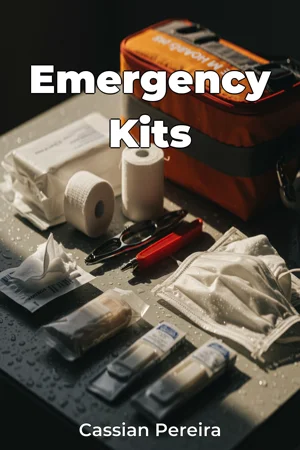
Are you truly prepared for the unexpected? This book, "Emergency Kits," provides essential guidance on assembling and utilizing first aid and survival kits tailored for diverse environments, ensuring effective emergency preparedness at home, in the workplace, and during outdoor adventures. It underscores that readiness isn't just about owning a kit, it's about knowing what to include and how to use it. The book primarily addresses three critical areas: creating customized kits, understanding the purpose of each item within the kit, and adapting kit contents to specific situations. These topics are paramount because emergencies are inherently unpredictable, requiring a proactive and adaptable approach to preparedness. Focusing on these elements empowers readers to move beyond generic, pre-packaged solutions and develop resourcefulness in managing unforeseen events. While first aid practices have ancient roots, the concept of comprehensive, portable emergency kits is relatively modern, evolving alongside advancements in medical technology and a growing awareness of disaster preparedness. Understanding basic anatomy, physiology, and common medical conditions is helpful but not mandatory; the book provides clear, step-by-step instructions applicable to a wide range of skill levels. The central argument is that effective emergency preparedness hinges on personalized, situation-specific kits and a thorough understanding of their contents, not simply the possession of a commercially available product. This is crucial because commercially available kits often lack items specific to individual needs or regional hazards, potentially leaving individuals vulnerable in critical situations. The book begins by introducing fundamental concepts of emergency preparedness and risk assessment. Part 1 delves into the contents of a general-purpose first aid kit, explaining the function of each item, from bandages and antiseptics to splints and CPR masks. Part 2 expands upon this foundation, focusing on customizing kits for specific environments—home, workplace, and outdoors—considering factors such as potential hazards, environmental conditions, and the number of people the kit is intended to serve. Part 3 culminates in practical guidance on using the kits effectively, covering topics such as basic first aid techniques, wilderness survival skills, and strategies for managing common medical emergencies. Finally, the book explores advanced topics like disaster preparedness and long-term survival scenarios. The book draws on a variety of sources, including established first aid protocols from organizations like the American Red Cross, wilderness survival manuals, and safety guidelines from government agencies like FEMA and OSHA. The information presented is evidence-based and reflects current best practices in emergency medicine and survival techniques. In addition, the book utilizes case studies of real-world emergencies to illustrate the importance of proper kit preparation and utilization. "Emergency Kits" connects to several interdisciplinary fields, including public health, environmental science, and risk management. Understanding the epidemiological aspects of injuries and illnesses enhances decision-making in emergency situations. Considering environmental factors like climate and terrain is crucial for tailoring outdoor survival kits. Applying principles of risk management facilitates proactive planning and mitigation of potential hazards. The unique approach of this book lies in its emphasis on personalization and adaptability. Rather than providing a one-size-fits-all solution, it empowers readers to critically evaluate their own needs and create kits that are truly relevant and effective. The writing style is clear, concise, and accessible, avoiding technical jargon and prioritizing practical application. The target audience includes homeowners, parents, teachers, employers, outdoor enthusiasts, and anyone seeking to enhance their emergency preparedness. This book is valuable to them because it provides practical, actionable guidance that can make a significant difference in managing unexpected events. As a health and fitness-oriented guide, it aligns with the genre's conventions by presenting information in a user-friendly format, focusing on preventative measures, and promoting health and safety. The scope of this book is comprehensive, covering a wide range of emergency situations and kit configurations. However, it is intentionally limited to basic and intermediate-level skills, avoiding advanced medical procedures that require professional training. The information presented can be applied in a variety of real-world settings, from treating minor injuries at home to managing survival situations in the wilderness. The book addresses relevant debates in the field, such as the optimal composition of first aid kits and the effectiveness of different survival techniques, presenting a balanced perspective based on available evidence.
Are you truly prepared for the unexpected? This book, "Emergency Kits," provides essential guidance on assembling and utilizing first aid and survival kits tailored for diverse environments, ensuring effective emergency preparedness at home, in the workplace, and during outdoor adventures. It underscores that readiness isn't just about owning a kit, it's about knowing what to include and how to use it. The book primarily addresses three critical areas: creating customized kits, understanding the purpose of each item within the kit, and adapting kit contents to specific situations. These topics are paramount because emergencies are inherently unpredictable, requiring a proactive and adaptable approach to preparedness. Focusing on these elements empowers readers to move beyond generic, pre-packaged solutions and develop resourcefulness in managing unforeseen events. While first aid practices have ancient roots, the concept of comprehensive, portable emergency kits is relatively modern, evolving alongside advancements in medical technology and a growing awareness of disaster preparedness. Understanding basic anatomy, physiology, and common medical conditions is helpful but not mandatory; the book provides clear, step-by-step instructions applicable to a wide range of skill levels. The central argument is that effective emergency preparedness hinges on personalized, situation-specific kits and a thorough understanding of their contents, not simply the possession of a commercially available product. This is crucial because commercially available kits often lack items specific to individual needs or regional hazards, potentially leaving individuals vulnerable in critical situations. The book begins by introducing fundamental concepts of emergency preparedness and risk assessment. Part 1 delves into the contents of a general-purpose first aid kit, explaining the function of each item, from bandages and antiseptics to splints and CPR masks. Part 2 expands upon this foundation, focusing on customizing kits for specific environments—home, workplace, and outdoors—considering factors such as potential hazards, environmental conditions, and the number of people the kit is intended to serve. Part 3 culminates in practical guidance on using the kits effectively, covering topics such as basic first aid techniques, wilderness survival skills, and strategies for managing common medical emergencies. Finally, the book explores advanced topics like disaster preparedness and long-term survival scenarios. The book draws on a variety of sources, including established first aid protocols from organizations like the American Red Cross, wilderness survival manuals, and safety guidelines from government agencies like FEMA and OSHA. The information presented is evidence-based and reflects current best practices in emergency medicine and survival techniques. In addition, the book utilizes case studies of real-world emergencies to illustrate the importance of proper kit preparation and utilization. "Emergency Kits" connects to several interdisciplinary fields, including public health, environmental science, and risk management. Understanding the epidemiological aspects of injuries and illnesses enhances decision-making in emergency situations. Considering environmental factors like climate and terrain is crucial for tailoring outdoor survival kits. Applying principles of risk management facilitates proactive planning and mitigation of potential hazards. The unique approach of this book lies in its emphasis on personalization and adaptability. Rather than providing a one-size-fits-all solution, it empowers readers to critically evaluate their own needs and create kits that are truly relevant and effective. The writing style is clear, concise, and accessible, avoiding technical jargon and prioritizing practical application. The target audience includes homeowners, parents, teachers, employers, outdoor enthusiasts, and anyone seeking to enhance their emergency preparedness. This book is valuable to them because it provides practical, actionable guidance that can make a significant difference in managing unexpected events. As a health and fitness-oriented guide, it aligns with the genre's conventions by presenting information in a user-friendly format, focusing on preventative measures, and promoting health and safety. The scope of this book is comprehensive, covering a wide range of emergency situations and kit configurations. However, it is intentionally limited to basic and intermediate-level skills, avoiding advanced medical procedures that require professional training. The information presented can be applied in a variety of real-world settings, from treating minor injuries at home to managing survival situations in the wilderness. The book addresses relevant debates in the field, such as the optimal composition of first aid kits and the effectiveness of different survival techniques, presenting a balanced perspective based on available evidence.
"Emergency Kits" emphasizes the importance of being prepared for unexpected medical or survival scenarios by creating customized first aid and survival kits. Instead of relying on generic, store-bought solutions, this book guides readers in understanding the purpose of each item in their kit, ensuring they're not just equipped, but also knowledgeable. Did you know that commercially available kits often lack items tailored to individual needs or regional hazards, leaving you vulnerable in critical situations? The book highlights that effective emergency preparedness hinges on personalized, situation-specific kits. The book begins with fundamental concepts of risk assessment and general first aid, then progresses to customizing kits for home, work, and outdoor environments, considering specific hazards and needs. It offers practical guidance on using these kits effectively, covering basic first aid techniques and wilderness survival skills. The book uses a plain, accessible style to empower readers to critically evaluate their own needs and create kits that are truly relevant and effective.
Book Details
ISBN
9788235257925
Publisher
Publifye AS
Your Licenses
You don't own any licenses for this book
Purchase a license below to unlock this book and download the EPUB.
Purchase License
Select a tier to unlock this book
Need bulk licensing?
Contact us for enterprise agreements.