
About This Book
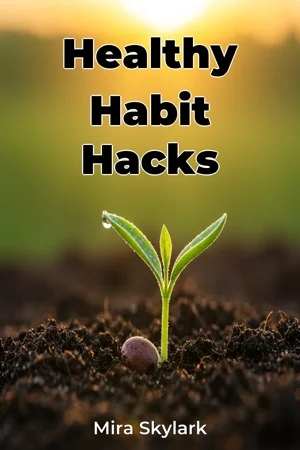
Are you tired of unsustainable diets and fitness fads that promise quick results but leave you back where you started? "Healthy Habit Hacks" offers a different path: a deep dive into the science of behavior change, the psychology of motivation, and the practical strategies necessary for cultivating long-term healthy habits. This book tackles two key topics: understanding why we struggle to maintain healthy behaviors and providing evidence-based solutions to overcome these challenges. These topics are essential because lasting well-being isn't about drastic, short-term changes; it's about building a foundation of small, consistent habits that become an integral part of our lives. We'll explore the historical context of health advice, tracing the evolution of popular diet and exercise trends, while also examining the social factors that influence our choices, such as cultural norms and environmental influences. No prior knowledge of psychology or behavioral science is required; the book presents complex concepts in an accessible and engaging manner. The central argument of "Healthy Habit Hacks" is that sustainable behavior change isn't about willpower; it's about understanding the underlying psychological and environmental factors that drive our actions, and strategically engineering our lives to make healthy choices easier and more rewarding. This argument is critical because it shifts the focus from self-blame to empowerment, providing readers with actionable tools to take control of their health. The book is structured in four parts. First, foundational concepts, such as the psychology of habit formation, the role of motivation, and the importance of environmental cues are introduced. The second part develops specific strategies for modifying behavior, including goal setting, implementation intentions, and habit tracking. This section contains detailed exploration of techniques for overcoming common obstacles like procrastination, negative self-talk, and environmental triggers. The third part synthesizes these strategies into a comprehensive framework for sustainable change, addressing the importance of self-compassion, resilience, and continuous improvement. Finally, the culmination of the argument is presented with practical examples of how to apply these principles to various areas of life, such as diet, exercise, sleep, and stress management. Throughout the book, claims are supported by evidence-based research from the fields of psychology, behavioral economics, and neuroscience. Studies on habit formation, motivation, and behavior change are cited, referencing peer-reviewed journals and meta-analyses. The book also draws on real-world case studies and examples to illustrate the practical application of these principles. "Healthy Habit Hacks" connects to several other fields, including behavioral economics (understanding how cognitive biases influence our choices), environmental psychology (examining the impact of our surroundings on our behavior), and public health (promoting population-level behavior change). This interdisciplinary approach enhances the book's argument by providing a holistic perspective on the factors that influence our health. The book's unique approach lies in its emphasis on self-experimentation and personalized strategies. Rather than prescribing a one-size-fits-all solution, it encourages readers to identify their own unique challenges and develop customized plans based on their individual needs and preferences. The tone of the book is conversational and encouraging, aiming to empower readers to take control of their health journey. While grounded in scientific research, the writing style avoids jargon and technical language, making the information accessible to a wide audience. "Healthy Habit Hacks" is aimed at anyone who wants to develop healthier habits but struggles to maintain them long-term. This includes individuals seeking to improve their diet, exercise, sleep, or stress management, as well as health professionals looking for evidence-based strategies to support their clients. The book is valuable to readers because it provides a practical, actionable roadmap for sustainable change, based on the latest scientific research. As a self-help book within the Health & Fitness genre, the book provides practical advice, step-by-step guidance, and real-world examples. The content directly addresses the reader and offers strategies for immediate implementation. The book's scope is limited to the psychological and behavioral aspects of habit formation, with a focus on individual-level change. While it acknowledges the influence of social and environmental factors, it does not delve into policy interventions or large-scale public health initiatives. The information in this book can be applied in countless ways, from setting realistic fitness goals, to creating a supportive home environment, to developing strategies for managing cravings and temptations. While the principles of behavior change are generally well-established, there are ongoing debates about the relative effectiveness of different strategies and the role of individual differences in predicting success. "Healthy Habit Hacks" acknowledges these debates, presenting a balanced perspective and encouraging readers to experiment with different approaches to find what works best for them.
Are you tired of unsustainable diets and fitness fads that promise quick results but leave you back where you started? "Healthy Habit Hacks" offers a different path: a deep dive into the science of behavior change, the psychology of motivation, and the practical strategies necessary for cultivating long-term healthy habits. This book tackles two key topics: understanding why we struggle to maintain healthy behaviors and providing evidence-based solutions to overcome these challenges. These topics are essential because lasting well-being isn't about drastic, short-term changes; it's about building a foundation of small, consistent habits that become an integral part of our lives. We'll explore the historical context of health advice, tracing the evolution of popular diet and exercise trends, while also examining the social factors that influence our choices, such as cultural norms and environmental influences. No prior knowledge of psychology or behavioral science is required; the book presents complex concepts in an accessible and engaging manner. The central argument of "Healthy Habit Hacks" is that sustainable behavior change isn't about willpower; it's about understanding the underlying psychological and environmental factors that drive our actions, and strategically engineering our lives to make healthy choices easier and more rewarding. This argument is critical because it shifts the focus from self-blame to empowerment, providing readers with actionable tools to take control of their health. The book is structured in four parts. First, foundational concepts, such as the psychology of habit formation, the role of motivation, and the importance of environmental cues are introduced. The second part develops specific strategies for modifying behavior, including goal setting, implementation intentions, and habit tracking. This section contains detailed exploration of techniques for overcoming common obstacles like procrastination, negative self-talk, and environmental triggers. The third part synthesizes these strategies into a comprehensive framework for sustainable change, addressing the importance of self-compassion, resilience, and continuous improvement. Finally, the culmination of the argument is presented with practical examples of how to apply these principles to various areas of life, such as diet, exercise, sleep, and stress management. Throughout the book, claims are supported by evidence-based research from the fields of psychology, behavioral economics, and neuroscience. Studies on habit formation, motivation, and behavior change are cited, referencing peer-reviewed journals and meta-analyses. The book also draws on real-world case studies and examples to illustrate the practical application of these principles. "Healthy Habit Hacks" connects to several other fields, including behavioral economics (understanding how cognitive biases influence our choices), environmental psychology (examining the impact of our surroundings on our behavior), and public health (promoting population-level behavior change). This interdisciplinary approach enhances the book's argument by providing a holistic perspective on the factors that influence our health. The book's unique approach lies in its emphasis on self-experimentation and personalized strategies. Rather than prescribing a one-size-fits-all solution, it encourages readers to identify their own unique challenges and develop customized plans based on their individual needs and preferences. The tone of the book is conversational and encouraging, aiming to empower readers to take control of their health journey. While grounded in scientific research, the writing style avoids jargon and technical language, making the information accessible to a wide audience. "Healthy Habit Hacks" is aimed at anyone who wants to develop healthier habits but struggles to maintain them long-term. This includes individuals seeking to improve their diet, exercise, sleep, or stress management, as well as health professionals looking for evidence-based strategies to support their clients. The book is valuable to readers because it provides a practical, actionable roadmap for sustainable change, based on the latest scientific research. As a self-help book within the Health & Fitness genre, the book provides practical advice, step-by-step guidance, and real-world examples. The content directly addresses the reader and offers strategies for immediate implementation. The book's scope is limited to the psychological and behavioral aspects of habit formation, with a focus on individual-level change. While it acknowledges the influence of social and environmental factors, it does not delve into policy interventions or large-scale public health initiatives. The information in this book can be applied in countless ways, from setting realistic fitness goals, to creating a supportive home environment, to developing strategies for managing cravings and temptations. While the principles of behavior change are generally well-established, there are ongoing debates about the relative effectiveness of different strategies and the role of individual differences in predicting success. "Healthy Habit Hacks" acknowledges these debates, presenting a balanced perspective and encouraging readers to experiment with different approaches to find what works best for them.
"Healthy Habit Hacks" explores the science behind behavior change, offering sustainable approaches to building healthy habits for lasting well-being. Moving beyond quick-fix solutions, it emphasizes understanding the psychology of motivation and the environmental factors influencing our choices, empowering readers to engineer their lives for easier, more rewarding healthy decisions. The book argues that willpower isn't the key; instead, strategic lifestyle adjustments are crucial. For example, did you know that understanding cognitive biases can significantly improve your decision-making around diet and exercise? The book progresses systematically, starting with foundational concepts of habit formation and motivation. It then introduces specific strategies for behavior modification, such as goal setting and habit tracking, to overcome common obstacles. Finally, it synthesizes these strategies into a comprehensive framework, emphasizing self-compassion and continuous improvement. By focusing on self-experimentation and personalized strategies, "Healthy Habit Hacks" provides a unique, actionable roadmap for anyone seeking to improve their diet, exercise, sleep, or stress management, making it a valuable self-help resource.
Book Details
ISBN
9788235257758
Publisher
Publifye AS
Your Licenses
You don't own any licenses for this book
Purchase a license below to unlock this book and download the EPUB.
Purchase License
Select a tier to unlock this book
Need bulk licensing?
Contact us for enterprise agreements.