
About This Book
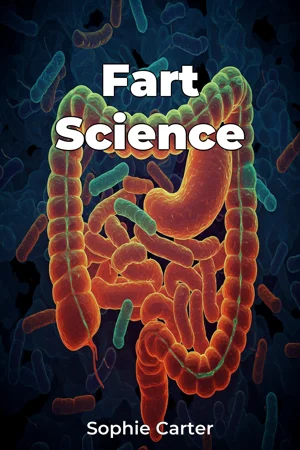
Have you ever wondered why some farts smell worse than others, or why we even fart in the first place? "Fart Science" delves into the often-avoided but universally experienced phenomenon of flatulence, offering a comprehensive, fact-based exploration of its biological, social, and even humorous aspects. This book aims to demystify the science behind gas, revealing its crucial role in bodily function and overall health. We will examine three key areas: the physiological mechanisms of flatulence, the factors influencing its composition and odor, and the broader implications for digestive health and well-being. Understanding these topics is important because flatulence, while often a source of embarrassment, is a natural and necessary process. Examining it closely can provide insights into our digestive systems, dietary habits, and potential health concerns. Throughout history, flatulence has been a subject of humor, social discomfort, and even scientific inquiry. We will explore the historical context of societal attitudes towards gas, from ancient medicinal practices to modern dietary fads. While no prior scientific knowledge is required, an open mind and a willingness to confront an often-taboo topic will definitely enhance the reading experience. The central argument of "Fart Science" is that flatulence, far from being merely a source of jokes, is a valuable indicator of digestive health and a byproduct of essential biological processes. By understanding the science behind it, we can gain a deeper appreciation for our bodies and make informed choices about our diets and lifestyles. The book is structured to guide the reader through a logical progression of understanding. It begins with an introduction to the basic biology of digestion and gas production, explaining how different foods are processed and how gas is formed as a result. It then develops into an exploration of the various factors influencing the smell of flatulence, including specific bacteria in the gut and the consumption of certain foods. The book culminates with a discussion of the potential health implications of flatulence, such as identifying digestive disorders or dietary sensitivities. Practical tips for managing excessive or malodorous gas will also be included. The evidence presented will be drawn from scientific studies, medical research, and data analysis. The book will cite research on gut microbiota, the effects of different diets on gas production, and clinical studies on digestive disorders. Data from various sources will be presented in an accessible format, including charts, graphs, and illustrations. "Fart Science" connects to several other fields of study, including microbiology (the role of gut bacteria), nutrition (the impact of diet on digestion), and gastroenterology (the diagnosis and treatment of digestive disorders). These interdisciplinary connections will enhance the book's argument by providing a more holistic understanding of flatulence and its relationship to overall health. The distinctive approach of this book lies in its accessible and engaging writing style, which makes complex scientific concepts understandable to a broad audience. Rather than employing a strictly academic tone, "Fart Science" adopts a conversational and informative approach. The target audience includes anyone interested in learning more about their bodies, improving their digestive health, or simply satisfying their curiosity about this universal phenomenon. This work will be valuable to readers seeking to understand the science behind everyday bodily functions. As a work of non-fiction science, "Fart Science" adheres to principles of accuracy and objectivity. While the topic may lend itself to humor, every effort is made to present information in a factual and evidence-based manner. The scope of "Fart Science" is intentionally limited to the biological and health-related aspects of flatulence. While cultural and social attitudes toward gas are touched upon, the primary focus remains on the scientific explanations. The information presented can be applied in several practical ways. Readers can use the knowledge gained to adjust their diets, identify potential food sensitivities, and improve their overall digestive health. While the basic science of flatulence is well-established, ongoing debates exist regarding the optimal diets for managing gas production and the effectiveness of various over-the-counter remedies. "Fart Science" will acknowledge these debates and present different perspectives based on available evidence.
Have you ever wondered why some farts smell worse than others, or why we even fart in the first place? "Fart Science" delves into the often-avoided but universally experienced phenomenon of flatulence, offering a comprehensive, fact-based exploration of its biological, social, and even humorous aspects. This book aims to demystify the science behind gas, revealing its crucial role in bodily function and overall health. We will examine three key areas: the physiological mechanisms of flatulence, the factors influencing its composition and odor, and the broader implications for digestive health and well-being. Understanding these topics is important because flatulence, while often a source of embarrassment, is a natural and necessary process. Examining it closely can provide insights into our digestive systems, dietary habits, and potential health concerns. Throughout history, flatulence has been a subject of humor, social discomfort, and even scientific inquiry. We will explore the historical context of societal attitudes towards gas, from ancient medicinal practices to modern dietary fads. While no prior scientific knowledge is required, an open mind and a willingness to confront an often-taboo topic will definitely enhance the reading experience. The central argument of "Fart Science" is that flatulence, far from being merely a source of jokes, is a valuable indicator of digestive health and a byproduct of essential biological processes. By understanding the science behind it, we can gain a deeper appreciation for our bodies and make informed choices about our diets and lifestyles. The book is structured to guide the reader through a logical progression of understanding. It begins with an introduction to the basic biology of digestion and gas production, explaining how different foods are processed and how gas is formed as a result. It then develops into an exploration of the various factors influencing the smell of flatulence, including specific bacteria in the gut and the consumption of certain foods. The book culminates with a discussion of the potential health implications of flatulence, such as identifying digestive disorders or dietary sensitivities. Practical tips for managing excessive or malodorous gas will also be included. The evidence presented will be drawn from scientific studies, medical research, and data analysis. The book will cite research on gut microbiota, the effects of different diets on gas production, and clinical studies on digestive disorders. Data from various sources will be presented in an accessible format, including charts, graphs, and illustrations. "Fart Science" connects to several other fields of study, including microbiology (the role of gut bacteria), nutrition (the impact of diet on digestion), and gastroenterology (the diagnosis and treatment of digestive disorders). These interdisciplinary connections will enhance the book's argument by providing a more holistic understanding of flatulence and its relationship to overall health. The distinctive approach of this book lies in its accessible and engaging writing style, which makes complex scientific concepts understandable to a broad audience. Rather than employing a strictly academic tone, "Fart Science" adopts a conversational and informative approach. The target audience includes anyone interested in learning more about their bodies, improving their digestive health, or simply satisfying their curiosity about this universal phenomenon. This work will be valuable to readers seeking to understand the science behind everyday bodily functions. As a work of non-fiction science, "Fart Science" adheres to principles of accuracy and objectivity. While the topic may lend itself to humor, every effort is made to present information in a factual and evidence-based manner. The scope of "Fart Science" is intentionally limited to the biological and health-related aspects of flatulence. While cultural and social attitudes toward gas are touched upon, the primary focus remains on the scientific explanations. The information presented can be applied in several practical ways. Readers can use the knowledge gained to adjust their diets, identify potential food sensitivities, and improve their overall digestive health. While the basic science of flatulence is well-established, ongoing debates exist regarding the optimal diets for managing gas production and the effectiveness of various over-the-counter remedies. "Fart Science" will acknowledge these debates and present different perspectives based on available evidence.
"Fart Science" explores the often-humorous yet fundamentally important phenomenon of flatulence, demystifying the science behind gas and its role in digestion and overall health fitness. This book reveals that flatulence isn't just a source of jokes, but rather a valuable indicator of digestive health, influenced by dietary habits and gut microbiota. Interestingly, the composition and odor of gas can be significantly affected by specific bacteria in the gut and the consumption of certain foods. The book takes an accessible approach, avoiding overly technical jargon to engage a broad audience interested in human biology and health. Beginning with the basic biology of digestion and gas production, it progresses to explore factors influencing odor and potential health implications, such as identifying food sensitivities. By understanding these biological processes, readers can gain insights into their digestive systems and make informed choices about their diets. The book's value lies in its ability to transform a taboo subject into an opportunity for learning and self-improvement, providing practical tips for managing gas and improving digestive health.
Book Details
ISBN
9788235257628
Publisher
Publifye AS
Your Licenses
You don't own any licenses for this book
Purchase a license below to unlock this book and download the EPUB.
Purchase License
Select a tier to unlock this book
Need bulk licensing?
Contact us for enterprise agreements.