
About This Book
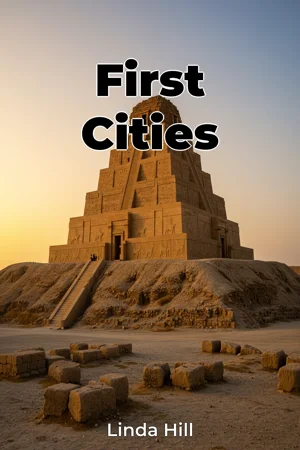
How did humanity transition from nomadic hunter-gatherers to settled city dwellers, and what unforeseen consequences arose from this monumental shift? "First Cities" embarks on a journey to explore the genesis of urban life, tracing the development of the earliest cities from Mesopotamia to the Yellow River Valley in China. We delve into the intricacies of urban planning, social organization, and daily life in these nascent metropolises, revealing the innovative solutions and complex challenges faced by our ancestors. This book examines two pivotal areas: the environmental factors that fostered urban development and the socio-political structures that governed early city life. Understanding these elements is crucial to comprehending the trajectory of human civilization and the roots of many contemporary societal norms and challenges. Neglecting the study of early urbanism leaves a significant gap in our knowledge of human history, hindering our ability to analyze current global trends related to urbanization and resource management. "First Cities" argues that the transition to urban living was not merely a change in settlement patterns but a fundamental restructuring of human society, with lasting impacts on social hierarchies, resource allocation, and technological innovation. This argument is central to understanding the subsequent development of civilizations and the ongoing evolution of urban environments. The book unfolds in a structured manner, beginning with an examination of the environmental preconditions that enabled the rise of cities, such as fertile river valleys and access to essential resources. It then moves to detailed case studies of specific early cities, including Uruk in Mesopotamia and Erlitou in China, analyzing their urban layouts, architectural innovations, and systems of governance. We explore the development of specialized labor, the emergence of social classes, and the role of religion in shaping urban life. Succeeding chapters investigate the technological advancements that sustained these early cities, focusing on irrigation systems, agricultural techniques, and methods of construction. Finally, the book addresses the challenges faced by these urban centers, including environmental degradation, social inequality, and external threats, ultimately assessing their legacies and contributions to subsequent civilizations. The analysis presented relies on a combination of archaeological evidence, textual sources (where available), and comparative studies of early urban centers across different geographical regions. We draw upon recent archaeological discoveries and reinterpretations of existing data to provide a nuanced and up-to-date account of early urban life. The study of early cities naturally intersects with fields such as archaeology, anthropology, and environmental science. Archaeological findings provide tangible evidence of urban structures and artifacts. Anthropological insights help us understand the social and cultural dynamics of early city dwellers. Environmental science sheds light on the ecological impact of urbanization and the challenges of resource management. By integrating these perspectives, "First Cities" offers a holistic understanding of the multifaceted nature of early urbanism. This book adopts a comparative approach, examining similarities and differences in the development of early cities across diverse cultural contexts. This perspective allows us to identify universal patterns of urban development while also acknowledging the unique characteristics of each region. Written in a clear and accessible style, "First Cities" is intended for a broad audience, including students, general readers interested in history, and anyone curious about the origins of urban life. It provides a valuable resource for those seeking to understand the historical roots of contemporary urban challenges and opportunities. As a work of non-fiction, "First Cities" adheres to the conventions of historical scholarship, emphasizing factual accuracy, rigorous analysis, and clear presentation of evidence. The book focuses primarily on the earliest examples of urbanism in Mesopotamia, Egypt, the Indus Valley, and China, with limited discussion of later developments in other regions. This scope allows for a more in-depth analysis of the formative stages of urban development. The lessons learned from the successes and failures of early cities have direct relevance to contemporary urban planning and sustainability efforts. By understanding how our ancestors addressed the challenges of urban living, we can gain valuable insights into creating more resilient and equitable cities in the present. The interpretation of archaeological evidence and the reconstruction of ancient social structures are often subject to ongoing debates among scholars. "First Cities" acknowledges these debates and presents a balanced perspective, highlighting areas of consensus and disagreement within the field.
How did humanity transition from nomadic hunter-gatherers to settled city dwellers, and what unforeseen consequences arose from this monumental shift? "First Cities" embarks on a journey to explore the genesis of urban life, tracing the development of the earliest cities from Mesopotamia to the Yellow River Valley in China. We delve into the intricacies of urban planning, social organization, and daily life in these nascent metropolises, revealing the innovative solutions and complex challenges faced by our ancestors. This book examines two pivotal areas: the environmental factors that fostered urban development and the socio-political structures that governed early city life. Understanding these elements is crucial to comprehending the trajectory of human civilization and the roots of many contemporary societal norms and challenges. Neglecting the study of early urbanism leaves a significant gap in our knowledge of human history, hindering our ability to analyze current global trends related to urbanization and resource management. "First Cities" argues that the transition to urban living was not merely a change in settlement patterns but a fundamental restructuring of human society, with lasting impacts on social hierarchies, resource allocation, and technological innovation. This argument is central to understanding the subsequent development of civilizations and the ongoing evolution of urban environments. The book unfolds in a structured manner, beginning with an examination of the environmental preconditions that enabled the rise of cities, such as fertile river valleys and access to essential resources. It then moves to detailed case studies of specific early cities, including Uruk in Mesopotamia and Erlitou in China, analyzing their urban layouts, architectural innovations, and systems of governance. We explore the development of specialized labor, the emergence of social classes, and the role of religion in shaping urban life. Succeeding chapters investigate the technological advancements that sustained these early cities, focusing on irrigation systems, agricultural techniques, and methods of construction. Finally, the book addresses the challenges faced by these urban centers, including environmental degradation, social inequality, and external threats, ultimately assessing their legacies and contributions to subsequent civilizations. The analysis presented relies on a combination of archaeological evidence, textual sources (where available), and comparative studies of early urban centers across different geographical regions. We draw upon recent archaeological discoveries and reinterpretations of existing data to provide a nuanced and up-to-date account of early urban life. The study of early cities naturally intersects with fields such as archaeology, anthropology, and environmental science. Archaeological findings provide tangible evidence of urban structures and artifacts. Anthropological insights help us understand the social and cultural dynamics of early city dwellers. Environmental science sheds light on the ecological impact of urbanization and the challenges of resource management. By integrating these perspectives, "First Cities" offers a holistic understanding of the multifaceted nature of early urbanism. This book adopts a comparative approach, examining similarities and differences in the development of early cities across diverse cultural contexts. This perspective allows us to identify universal patterns of urban development while also acknowledging the unique characteristics of each region. Written in a clear and accessible style, "First Cities" is intended for a broad audience, including students, general readers interested in history, and anyone curious about the origins of urban life. It provides a valuable resource for those seeking to understand the historical roots of contemporary urban challenges and opportunities. As a work of non-fiction, "First Cities" adheres to the conventions of historical scholarship, emphasizing factual accuracy, rigorous analysis, and clear presentation of evidence. The book focuses primarily on the earliest examples of urbanism in Mesopotamia, Egypt, the Indus Valley, and China, with limited discussion of later developments in other regions. This scope allows for a more in-depth analysis of the formative stages of urban development. The lessons learned from the successes and failures of early cities have direct relevance to contemporary urban planning and sustainability efforts. By understanding how our ancestors addressed the challenges of urban living, we can gain valuable insights into creating more resilient and equitable cities in the present. The interpretation of archaeological evidence and the reconstruction of ancient social structures are often subject to ongoing debates among scholars. "First Cities" acknowledges these debates and presents a balanced perspective, highlighting areas of consensus and disagreement within the field.
"First Cities" explores the dawn of urban life, examining how humans transitioned from nomadic existence to settled urbanism in regions like Mesopotamia and the Yellow River Valley. The book investigates the environmental and socio-political factors that shaped these early cities, highlighting innovations in urban planning and social organization. Intriguingly, the shift to urban living wasn't just about settlement; it fundamentally restructured human society, impacting social hierarchies and resource allocation. The book progresses systematically, first analyzing the environmental conditions that enabled the rise of cities, such as fertile river valleys. It then presents detailed case studies of early urban centers like Uruk and Erlitou, exploring their layouts, architecture, and governance. By combining archaeological evidence, textual sources, and comparative studies, "First Cities" offers a comprehensive look at the challenges and legacies of these nascent metropolises.
Book Details
ISBN
9788235257550
Publisher
Publifye AS
Your Licenses
You don't own any licenses for this book
Purchase a license below to unlock this book and download the EPUB.
Purchase License
Select a tier to unlock this book
Need bulk licensing?
Contact us for enterprise agreements.