
About This Book
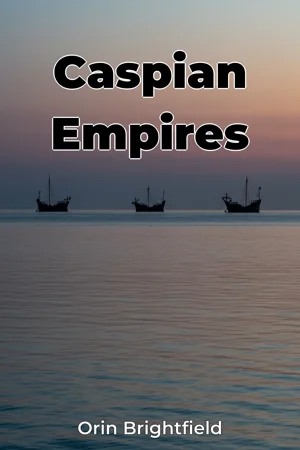
What if the shifting tides of history were dictated not just by land, but by a sea? "Caspian Empires" explores how the Caspian Sea served as a pivotal stage for competing empires, facilitating trade, projecting military power, and shaping the destinies of civilizations from antiquity to the early modern era. This book will delve into the critical role of this inland sea in the rise and fall of empires, offering a fresh perspective on world history. This book's central argument posits that control of the Caspian Sea and its surrounding territories was a key determinant of regional dominance, enabling empires to control vital trade routes, access valuable resources, and exert military influence over diverse populations. We will demonstrate how successive empires strategically utilized the Caspian Sea to consolidate their power, project their influence, and thwart rival ambitions. The importance of this argument lies in presenting a nuanced understanding of geopolitical power dynamics in a region often overlooked in mainstream historical narratives. "Caspian Empires" unfolds in three major sections. First, we introduce the geographical and ecological significance of the Caspian Sea, outlining its resource wealth and its function as a natural highway connecting disparate cultures. This section will also address the pre-imperial history of the region, describing the various nomadic groups and early settlements that laid the foundations for later empires. Second, we examine the rise and fall of specific empires – including the Achaemenid, Parthian, Sasanian, Arab Caliphates, Khazar, Seljuk, Mongol, Timurid, Safavid, and Russian empires – detailing their strategies for controlling the Caspian Sea and its adjacent territories. We analyze their naval capabilities, trade policies, and military campaigns, providing insights into their successes and failures. Third, the book assesses the long-term consequences of imperial competition around the Caspian Sea. We explore the legacies of these empires on the region's cultural landscape, ethnic composition, and geopolitical dynamics. We will also consider the Caspian’s role in the early modern period's shifting global trade networks. The evidence presented in "Caspian Empires" draws from a wide range of sources, including archaeological findings, numismatic evidence, primary accounts from contemporary historians and travelers, diplomatic correspondence, and cartographic materials. We integrate these diverse sources to provide a comprehensive and nuanced reconstruction of the past. Interdisciplinary connections enrich the narrative. We will explore aspects of economic history by examining the role of the Silk Road and other trade networks. Political science will help analyze the geopolitical strategies employed by different empires. Cultural studies will help investigate the cultural exchanges and syncretism that occurred across empires. "Caspian Empires" offers a unique perspective by focusing specifically on the Caspian Sea as a central actor in shaping regional and global power dynamics. Unlike traditional narratives that prioritize land-based empires, this book places the inland sea at the heart of its analysis, demonstrating its strategic importance as a conduit for trade, a theater of war, and a crossroads of cultures. Written in a clear and accessible style, "Caspian Empires" aims to appeal to a broad audience, including history enthusiasts, students, researchers, and policymakers interested in Central Asia, the Middle East, and geopolitical strategy. The book provides valuable insights into the historical roots of contemporary challenges and opportunities in the Caspian region. While "Caspian Empires" covers a broad sweep of history, it focuses primarily on the major empires that exerted significant control over the Caspian Sea and its surrounding lands. It does not delve into every minor power or local dynasty, maintaining a focus on the broader patterns of imperial competition and regional transformation. The strategies and insights presented in "Caspian Empires" have relevance for understanding contemporary geopolitical dynamics in the Caspian region and beyond. The lessons learned from past imperial rivalries can inform current debates about energy security, regional stability, and international relations. The book addresses ongoing debates about the relative influence of different empires and the lasting impact of imperial rule on the region's cultural and political landscape. By engaging with these controversies, "Caspian Empires" seeks to contribute to a deeper understanding of the complex history of the Caspian Sea and its surrounding territories.
What if the shifting tides of history were dictated not just by land, but by a sea? "Caspian Empires" explores how the Caspian Sea served as a pivotal stage for competing empires, facilitating trade, projecting military power, and shaping the destinies of civilizations from antiquity to the early modern era. This book will delve into the critical role of this inland sea in the rise and fall of empires, offering a fresh perspective on world history. This book's central argument posits that control of the Caspian Sea and its surrounding territories was a key determinant of regional dominance, enabling empires to control vital trade routes, access valuable resources, and exert military influence over diverse populations. We will demonstrate how successive empires strategically utilized the Caspian Sea to consolidate their power, project their influence, and thwart rival ambitions. The importance of this argument lies in presenting a nuanced understanding of geopolitical power dynamics in a region often overlooked in mainstream historical narratives. "Caspian Empires" unfolds in three major sections. First, we introduce the geographical and ecological significance of the Caspian Sea, outlining its resource wealth and its function as a natural highway connecting disparate cultures. This section will also address the pre-imperial history of the region, describing the various nomadic groups and early settlements that laid the foundations for later empires. Second, we examine the rise and fall of specific empires – including the Achaemenid, Parthian, Sasanian, Arab Caliphates, Khazar, Seljuk, Mongol, Timurid, Safavid, and Russian empires – detailing their strategies for controlling the Caspian Sea and its adjacent territories. We analyze their naval capabilities, trade policies, and military campaigns, providing insights into their successes and failures. Third, the book assesses the long-term consequences of imperial competition around the Caspian Sea. We explore the legacies of these empires on the region's cultural landscape, ethnic composition, and geopolitical dynamics. We will also consider the Caspian’s role in the early modern period's shifting global trade networks. The evidence presented in "Caspian Empires" draws from a wide range of sources, including archaeological findings, numismatic evidence, primary accounts from contemporary historians and travelers, diplomatic correspondence, and cartographic materials. We integrate these diverse sources to provide a comprehensive and nuanced reconstruction of the past. Interdisciplinary connections enrich the narrative. We will explore aspects of economic history by examining the role of the Silk Road and other trade networks. Political science will help analyze the geopolitical strategies employed by different empires. Cultural studies will help investigate the cultural exchanges and syncretism that occurred across empires. "Caspian Empires" offers a unique perspective by focusing specifically on the Caspian Sea as a central actor in shaping regional and global power dynamics. Unlike traditional narratives that prioritize land-based empires, this book places the inland sea at the heart of its analysis, demonstrating its strategic importance as a conduit for trade, a theater of war, and a crossroads of cultures. Written in a clear and accessible style, "Caspian Empires" aims to appeal to a broad audience, including history enthusiasts, students, researchers, and policymakers interested in Central Asia, the Middle East, and geopolitical strategy. The book provides valuable insights into the historical roots of contemporary challenges and opportunities in the Caspian region. While "Caspian Empires" covers a broad sweep of history, it focuses primarily on the major empires that exerted significant control over the Caspian Sea and its surrounding lands. It does not delve into every minor power or local dynasty, maintaining a focus on the broader patterns of imperial competition and regional transformation. The strategies and insights presented in "Caspian Empires" have relevance for understanding contemporary geopolitical dynamics in the Caspian region and beyond. The lessons learned from past imperial rivalries can inform current debates about energy security, regional stability, and international relations. The book addresses ongoing debates about the relative influence of different empires and the lasting impact of imperial rule on the region's cultural and political landscape. By engaging with these controversies, "Caspian Empires" seeks to contribute to a deeper understanding of the complex history of the Caspian Sea and its surrounding territories.
"Caspian Empires" unveils the pivotal role of the Caspian Sea in shaping world history, demonstrating how it functioned as a stage for empires vying for control from antiquity to the early modern era. This fresh perspective on world history positions the inland sea as a key determinant of regional dominance, enabling empires to control trade routes, access vital resources, and exert military influence. The book argues that successive empires strategically utilized the Caspian Sea to consolidate power and thwart rivals, highlighting a nuanced understanding of geopolitical power dynamics in a frequently overlooked region. For instance, the book examines how the Silk Road intersected with Caspian trade networks and how empires like the Achaemenids, Parthians, and Sasanians leveraged the sea for military and economic gains. The book unfolds across three sections, beginning with the geographical and ecological significance of the Caspian Sea and the pre-imperial history of the region. It then examines the rise and fall of various empires including the Arab Caliphates, the Khazar Empire, and the Russian Empire, detailing their strategies for controlling the Caspian Sea. Finally, it assesses the long-term consequences of imperial competition, exploring the legacies of these empires on the region's cultural landscape and geopolitical dynamics. By focusing on the Caspian Sea as a central actor, "Caspian Empires" offers unique insights into regional and global power dynamics, making it valuable for those interested in military history, world history, and geopolitical strategy.
Book Details
ISBN
9788235256812
Publisher
Publifye AS
Your Licenses
You don't own any licenses for this book
Purchase a license below to unlock this book and download the EPUB.
Purchase License
Select a tier to unlock this book
Need bulk licensing?
Contact us for enterprise agreements.