
About This Book
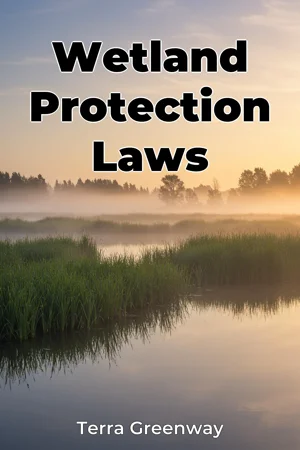
Are our wetlands truly protected, or are they slowly vanishing under the pressure of industrial progress? This book, "Wetland Protection Laws," delves into the complicated world of wetland preservation, examining the legal frameworks, permitting processes, and persistent challenges that threaten these vital ecosystems. This is crucial because wetlands play an indispensable role in flood control, water purification, biodiversity conservation, and carbon sequestration, all of which are increasingly critical in the face of climate change. This book provides an in-depth exploration of three core areas: the legal designation of wetlands at various jurisdictional levels, the function of environmental permits in regulating activities within and around these sensitive areas, and the impact of industrial encroachment on wetland health. It will explore the history of wetland regulation, revealing a tapestry of legislation, court decisions, and administrative rules shaping current policies. Understanding this history is essential for appreciating the present challenges and anticipating future trends in wetland conservation. The central argument advanced throughout this book is that while legal frameworks for wetland protection exist, their effectiveness is often undermined by inconsistent enforcement, political pressures, and the complexities of balancing economic development with environmental stewardship. By examining case studies and analyzing policy outcomes, this book seeks to demonstrate the gaps between legal intent and practical implementation, advocating for more robust and adaptive approaches to wetland protection. The book begins by defining "wetlands" through legal and scientific lenses, navigating the often-blurred lines that determine jurisdictional boundaries. It then progresses to a detailed analysis of the Clean Water Act and its implications for wetland regulation, alongside other relevant federal and state laws. The core of the book is dedicated to exploring the environmental permitting process, scrutinizing the roles and responsibilities of various regulatory agencies. It examines the types of activities that require permits, the criteria used for evaluating permit applications, and the mechanisms for public participation and legal challenges. Finally, the book investigates the specific challenges posed by industrial encroachment, focusing on sectors such as agriculture, energy, and manufacturing. It examines the direct and indirect impacts of these activities on wetland ecosystems, including habitat destruction, pollution, and hydrological alterations. The research presented draws upon legal documents, scientific studies, government reports, and case law. It incorporates data from environmental monitoring programs, permit records, and economic impact assessments to provide a comprehensive and evidence-based analysis. The book has strong interdisciplinary connections spanning environmental law, ecology, and economics. It provides legal scholars with a practical understanding of ecological principles, ecologists with insights into the legal and regulatory landscape, and economists with a framework for assessing the costs and benefits of wetland protection. This book offers a novel perspective by integrating legal, scientific, and economic analyses to assess the effectiveness of wetland protection laws. It moves beyond a purely legalistic approach to consider the ecological and socio-economic implications of policy decisions. Written in a comprehensive yet accessible style, "Wetland Protection Laws" targets a broad audience, including environmental lawyers, policy makers, conservation professionals, environmental scientists, and concerned citizens. The book avoids technical jargon where possible and provides clear explanations of complex legal and scientific concepts. As a work of environmental law and conservation, the book is committed to providing accurate, objective, and balanced information. While advocating for stronger wetland protection measures, it acknowledges the legitimate concerns of landowners, businesses, and other stakeholders. The scope of this book is limited to the legal and regulatory aspects of wetland protection. While it touches upon the ecological functions of wetlands, it does not delve into detailed scientific analyses of wetland ecology or management. The insights provided can be applied by policymakers seeking to reform wetland protection laws, environmental advocates working to defend wetlands from development pressures, and landowners seeking to understand their rights and responsibilities. This book addresses current debates surrounding the definition of "waters of the United States" and the appropriate balance between federal and state authority over wetland regulation. It examines the arguments for and against stricter wetland protection measures, providing a balanced assessment of the competing interests at stake.
Are our wetlands truly protected, or are they slowly vanishing under the pressure of industrial progress? This book, "Wetland Protection Laws," delves into the complicated world of wetland preservation, examining the legal frameworks, permitting processes, and persistent challenges that threaten these vital ecosystems. This is crucial because wetlands play an indispensable role in flood control, water purification, biodiversity conservation, and carbon sequestration, all of which are increasingly critical in the face of climate change. This book provides an in-depth exploration of three core areas: the legal designation of wetlands at various jurisdictional levels, the function of environmental permits in regulating activities within and around these sensitive areas, and the impact of industrial encroachment on wetland health. It will explore the history of wetland regulation, revealing a tapestry of legislation, court decisions, and administrative rules shaping current policies. Understanding this history is essential for appreciating the present challenges and anticipating future trends in wetland conservation. The central argument advanced throughout this book is that while legal frameworks for wetland protection exist, their effectiveness is often undermined by inconsistent enforcement, political pressures, and the complexities of balancing economic development with environmental stewardship. By examining case studies and analyzing policy outcomes, this book seeks to demonstrate the gaps between legal intent and practical implementation, advocating for more robust and adaptive approaches to wetland protection. The book begins by defining "wetlands" through legal and scientific lenses, navigating the often-blurred lines that determine jurisdictional boundaries. It then progresses to a detailed analysis of the Clean Water Act and its implications for wetland regulation, alongside other relevant federal and state laws. The core of the book is dedicated to exploring the environmental permitting process, scrutinizing the roles and responsibilities of various regulatory agencies. It examines the types of activities that require permits, the criteria used for evaluating permit applications, and the mechanisms for public participation and legal challenges. Finally, the book investigates the specific challenges posed by industrial encroachment, focusing on sectors such as agriculture, energy, and manufacturing. It examines the direct and indirect impacts of these activities on wetland ecosystems, including habitat destruction, pollution, and hydrological alterations. The research presented draws upon legal documents, scientific studies, government reports, and case law. It incorporates data from environmental monitoring programs, permit records, and economic impact assessments to provide a comprehensive and evidence-based analysis. The book has strong interdisciplinary connections spanning environmental law, ecology, and economics. It provides legal scholars with a practical understanding of ecological principles, ecologists with insights into the legal and regulatory landscape, and economists with a framework for assessing the costs and benefits of wetland protection. This book offers a novel perspective by integrating legal, scientific, and economic analyses to assess the effectiveness of wetland protection laws. It moves beyond a purely legalistic approach to consider the ecological and socio-economic implications of policy decisions. Written in a comprehensive yet accessible style, "Wetland Protection Laws" targets a broad audience, including environmental lawyers, policy makers, conservation professionals, environmental scientists, and concerned citizens. The book avoids technical jargon where possible and provides clear explanations of complex legal and scientific concepts. As a work of environmental law and conservation, the book is committed to providing accurate, objective, and balanced information. While advocating for stronger wetland protection measures, it acknowledges the legitimate concerns of landowners, businesses, and other stakeholders. The scope of this book is limited to the legal and regulatory aspects of wetland protection. While it touches upon the ecological functions of wetlands, it does not delve into detailed scientific analyses of wetland ecology or management. The insights provided can be applied by policymakers seeking to reform wetland protection laws, environmental advocates working to defend wetlands from development pressures, and landowners seeking to understand their rights and responsibilities. This book addresses current debates surrounding the definition of "waters of the United States" and the appropriate balance between federal and state authority over wetland regulation. It examines the arguments for and against stricter wetland protection measures, providing a balanced assessment of the competing interests at stake.
"Wetland Protection Laws" explores the complex intersection of law, policy, and environmental science in safeguarding these critical ecosystems. Wetlands provide invaluable services like flood control and water purification, yet face constant threats from industrial encroachment and inconsistent enforcement. The book examines the legal frameworks and permitting processes intended to protect wetlands, highlighting the ongoing struggle to balance economic development with environmental stewardship. The book begins by establishing a clear legal and scientific definition of wetlands, then moves into an analysis of key legislation like the Clean Water Act. A core focus involves scrutinizing the environmental permitting process, detailing the roles of regulatory agencies and the criteria for evaluating permit applications. Readers will gain insights into how current laws address or fail to address challenges from agriculture, energy, and manufacturing sectors, including habitat destruction and pollution. Drawing on legal documents, scientific studies, and government reports, the book integrates legal, scientific, and economic analyses. It aims to provide a comprehensive understanding of wetland protection, advocating for more robust and adaptive approaches to wetland conservation benefiting environmental lawyers, policy makers, conservation professionals, environmental scientists, and concerned citizens.
Book Details
ISBN
9788235256676
Publisher
Publifye AS
Your Licenses
You don't own any licenses for this book
Purchase a license below to unlock this book and download the EPUB.
Purchase License
Select a tier to unlock this book
Need bulk licensing?
Contact us for enterprise agreements.