
About This Book
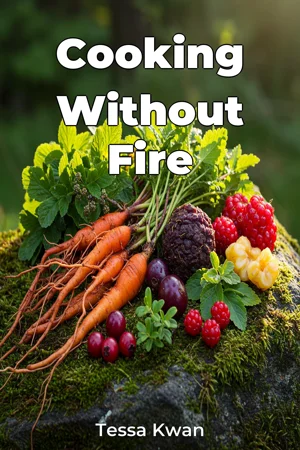
Did fire truly revolutionize human evolution, or did our ancestors thrive long before its mastery through sophisticated techniques of food preparation that have been largely overlooked? "Cooking Without Fire" delves into the fascinating world of raw food diets and fermentation, revealing how these methods played a pivotal role in shaping early human nutrition and, consequently, our species' development. This book unearths a narrative that challenges conventional wisdom, arguing that raw food preparation, particularly fermentation, offered early humans a means of accessing essential nutrients, detoxifying otherwise inedible plants, and preserving food sources, long before the advent of cooking with fire. The primary focus will be on two key areas: the nutritional benefits derived from raw foods and the transformative power of fermentation. We will explore the enzymatic activity present in raw ingredients, demonstrating how these enzymes aid digestion and enhance nutrient absorption. The often-dismissed practice of fermentation will be examined in detail, highlighting its capacity to not only preserve food but also to create vital nutrients, break down indigestible plant fibers, and neutralize harmful toxins. Understanding these processes is important because it sheds light on the ingenuity of early humans and provides valuable insights into optimizing our own diets today. To properly contextualize these topics, the book will present an overview of early human history, examining the archaeological and anthropological evidence related to dietary practices. We will analyze the types of plants and animals that were available to early humans, the challenges they faced in obtaining and preparing food, and the tools and techniques they developed to overcome these challenges. "Cooking Without Fire" puts forth a central argument: that raw food preparation, specifically through fermentation, was a critical adaptive strategy that enabled early humans to survive and thrive in diverse environments. This argument is important because it shifts the focus away from the traditional narrative of fire as the sole catalyst for human evolution and highlights the significance of other equally important food preparation techniques. The book is structured in three parts. The first section introduces the foundational concepts of raw food nutrition and the science behind fermentation, accompanied by paleobotanical data and archaeological findings. The second section details the development of these techniques through various stages of hominin evolution, detailing specific examples of fermented foods and their impact on early human health. Finally, the third section explores the lasting impact of these practices, investigating possible links to the human microbiome and offering practical applications for incorporating raw and fermented foods into modern diets. The evidence presented within "Cooking Without Fire" draws from a range of sources, including archaeological records of food processing tools, anthropological studies of traditional cultures that still practice raw food preparation and fermentation, and modern scientific research on the nutritional properties of raw and fermented foods. The book will also utilize comparative analyses of the gut microbiomes of humans and other primates to understand the evolutionary impact of different dietary patterns. "Cooking Without Fire" connects to several other fields of study, including anthropology, microbiology, and nutritional science. By integrating these perspectives, the book offers a more complete and nuanced understanding of early human nutrition. This work stands out by offering a re-evaluation of current understanding, highlighting the critical role of raw food consumption and fermentation, alongside the use of fire, in shaping human history. The tone is informative and accessible, geared toward a general audience interested in history, nutrition, and cooking. "Cooking Without Fire" is intended for readers interested in paleoanthropology, nutrition, and culinary history, as well as those seeking a deeper understanding of how our ancestors' dietary choices shaped human evolution and those simply looking for healthier cooking alternatives. As a history and cooking book, it adheres to the genre conventions of providing factual information, evidence-based arguments, and practical applications. The scope of "Cooking Without Fire" is limited to the period before the widespread adoption of cooking with fire. While the book addresses ongoing debates about the optimal human diet, it does not advocate for a strictly raw food lifestyle but rather seeks to highlight the importance of raw and fermented foods as a complement to modern diets. Readers will learn practical applications for incorporating these ancient techniques into their modern diets, such as fermenting vegetables, sprouting grains, and preparing raw food dishes. This book addresses the controversy surrounding raw food diets, providing a balanced perspective on the benefits and risks of these eating patterns.
Did fire truly revolutionize human evolution, or did our ancestors thrive long before its mastery through sophisticated techniques of food preparation that have been largely overlooked? "Cooking Without Fire" delves into the fascinating world of raw food diets and fermentation, revealing how these methods played a pivotal role in shaping early human nutrition and, consequently, our species' development. This book unearths a narrative that challenges conventional wisdom, arguing that raw food preparation, particularly fermentation, offered early humans a means of accessing essential nutrients, detoxifying otherwise inedible plants, and preserving food sources, long before the advent of cooking with fire. The primary focus will be on two key areas: the nutritional benefits derived from raw foods and the transformative power of fermentation. We will explore the enzymatic activity present in raw ingredients, demonstrating how these enzymes aid digestion and enhance nutrient absorption. The often-dismissed practice of fermentation will be examined in detail, highlighting its capacity to not only preserve food but also to create vital nutrients, break down indigestible plant fibers, and neutralize harmful toxins. Understanding these processes is important because it sheds light on the ingenuity of early humans and provides valuable insights into optimizing our own diets today. To properly contextualize these topics, the book will present an overview of early human history, examining the archaeological and anthropological evidence related to dietary practices. We will analyze the types of plants and animals that were available to early humans, the challenges they faced in obtaining and preparing food, and the tools and techniques they developed to overcome these challenges. "Cooking Without Fire" puts forth a central argument: that raw food preparation, specifically through fermentation, was a critical adaptive strategy that enabled early humans to survive and thrive in diverse environments. This argument is important because it shifts the focus away from the traditional narrative of fire as the sole catalyst for human evolution and highlights the significance of other equally important food preparation techniques. The book is structured in three parts. The first section introduces the foundational concepts of raw food nutrition and the science behind fermentation, accompanied by paleobotanical data and archaeological findings. The second section details the development of these techniques through various stages of hominin evolution, detailing specific examples of fermented foods and their impact on early human health. Finally, the third section explores the lasting impact of these practices, investigating possible links to the human microbiome and offering practical applications for incorporating raw and fermented foods into modern diets. The evidence presented within "Cooking Without Fire" draws from a range of sources, including archaeological records of food processing tools, anthropological studies of traditional cultures that still practice raw food preparation and fermentation, and modern scientific research on the nutritional properties of raw and fermented foods. The book will also utilize comparative analyses of the gut microbiomes of humans and other primates to understand the evolutionary impact of different dietary patterns. "Cooking Without Fire" connects to several other fields of study, including anthropology, microbiology, and nutritional science. By integrating these perspectives, the book offers a more complete and nuanced understanding of early human nutrition. This work stands out by offering a re-evaluation of current understanding, highlighting the critical role of raw food consumption and fermentation, alongside the use of fire, in shaping human history. The tone is informative and accessible, geared toward a general audience interested in history, nutrition, and cooking. "Cooking Without Fire" is intended for readers interested in paleoanthropology, nutrition, and culinary history, as well as those seeking a deeper understanding of how our ancestors' dietary choices shaped human evolution and those simply looking for healthier cooking alternatives. As a history and cooking book, it adheres to the genre conventions of providing factual information, evidence-based arguments, and practical applications. The scope of "Cooking Without Fire" is limited to the period before the widespread adoption of cooking with fire. While the book addresses ongoing debates about the optimal human diet, it does not advocate for a strictly raw food lifestyle but rather seeks to highlight the importance of raw and fermented foods as a complement to modern diets. Readers will learn practical applications for incorporating these ancient techniques into their modern diets, such as fermenting vegetables, sprouting grains, and preparing raw food dishes. This book addresses the controversy surrounding raw food diets, providing a balanced perspective on the benefits and risks of these eating patterns.
"Cooking Without Fire" presents a compelling exploration of early human nutrition, challenging the long-held belief that fire was the sole catalyst for human evolution. By diving into raw food diets and fermentation techniques, the book uncovers how our ancestors ingeniously accessed essential nutrients and preserved food. It highlights that raw foods contain active enzymes that aid digestion and boost nutrient absorption, while fermentation not only preserves food but also generates vital nutrients and detoxifies harmful substances. The book progresses by first introducing the fundamental concepts of raw food nutrition and the science behind fermentation, supported by paleobotanical and archaeological evidence. It then details the development of these techniques through various stages of hominin evolution, showcasing specific examples of fermented foods and their impact on early human health. Finally, it explores the lasting impact of these practices, investigating links to the human microbiome and offering practical applications for modern diets. This approach provides readers with a unique perspective on human evolution, emphasizing the importance of raw food preparation and fermented foods alongside traditional cooking methods. This culinary history also offers practical applications for incorporating these ancient techniques into modern diets, such as fermenting vegetables and preparing raw food dishes. By integrating perspectives from anthropology, microbiology, and nutritional science, "Cooking Without Fire" provides a nuanced understanding of early human dietary habits and their lasting effects.
Book Details
ISBN
9788235256669
Publisher
Publifye AS
Your Licenses
You don't own any licenses for this book
Purchase a license below to unlock this book and download the EPUB.
Purchase License
Select a tier to unlock this book
Need bulk licensing?
Contact us for enterprise agreements.