
About This Book
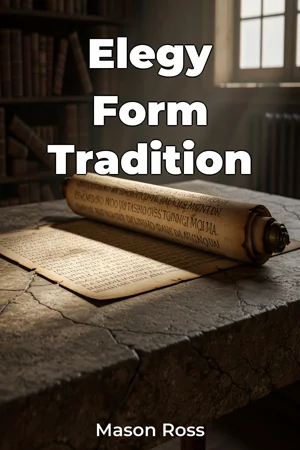
How did a simple two-line poetic form become the vessel for Rome's most profound expressions of personal tragedy, military conflict, and unfulfilled desire? "Elegy Form Tradition" explores the Roman elegiac couplet, dissecting its profound influence on the development of Roman poetry and its deployment as a vehicle for exploring themes of personal loss, the realities of war, and the pervasive sense of longing that permeated Roman society. This book seeks to provide a comprehensive history of this poetic form, its evolution, and its enduring influence on Western literature. The book will primarily focus on three key topics: the structural development of the elegiac couplet, its thematic application by major Roman poets, and its broader socio-cultural implications. Understanding these topics is crucial because the elegiac couplet, with its alternating lines of dactylic hexameter and pentameter, provided a unique framework for poetic expression, shaping not only the sound but also the very content of Roman verse. Its thematic adaptability, from Ovid's eroticism to Propertius's personal laments and Tibullus's reflections on rural life, underscores its versatility and significance. To fully appreciate the elegiac couplet's role, some background is necessary. The book will begin with a brief overview of the historical and social context of Roman poetry during the late Republic and early Empire. It will examine the patronage system, the role of poetry in public and private life, and the prevailing philosophical ideas that influenced the poets of the time. Familiarity with basic poetic terms (meter, rhyme, etc.) will aid in comprehension but is not strictly required. The central argument presented is that the elegiac couplet, beyond being a mere formal constraint, actively shaped the expression of Roman identity and experience. It argues that the formal structure of the couplet interacted dynamically with the themes it carried, creating a unique space for exploring the complexities of Roman life. This is important because it challenges the view of form as simply a decorative element, instead positioning it as an active agent in the creation of meaning. The book will begin by introducing the technical aspects of the elegiac couplet, tracing its origins and early uses. It will then move to in-depth analyses of elegies by Catullus, Propertius, Tibullus, and Ovid, focusing on how each poet utilized the form to explore different facets of human experience. Specific chapters will address themes of love and loss, war and peace, and exile and nostalgia. The culmination of the argument will demonstrate how the elegiac tradition influenced later poets and literary movements, extending its reach far beyond its Roman origins. The evidence presented will consist primarily of close readings of the original Latin texts, supported by historical and biographical information about the poets and their times. The book will engage with existing scholarship on Roman elegy, offering fresh perspectives and interpretations based on both traditional and contemporary critical approaches. This study connects to other fields such as classical history, literary criticism, and comparative literature. By examining the socio-political context in which the elegies were written, the book sheds light on the cultural values and anxieties of Roman society. Its engagement with literary theory allows for a deeper understanding of the relationship between form and content. Furthermore, by comparing Roman elegy with similar forms in other literary traditions, such as the sonnet, the book enhances the understanding of cross-cultural poetic expression. "Elegy Form Tradition" offers a fresh perspective by emphasizing the dynamic interplay between the elegiac couplet's formal structure and its thematic content. It moves beyond traditional readings that focus solely on either form or content, arguing that the two are inextricably linked. The tone of the book is scholarly and analytical, while remaining accessible to a wide readership. It aims to engage readers with clear explanations, insightful interpretations, and a passion for the beauty and power of Roman poetry. The target audience includes students and scholars of classical literature, history, and comparative literature, as well as general readers interested in learning more about Roman poetry and culture. It is valuable to them because it provides a comprehensive and nuanced understanding of a key aspect of Roman literary tradition. As an academic history, this book adheres to the standards of rigorous scholarship. It provides well-supported arguments, clear citations, and a comprehensive bibliography. Its scope is limited to the study of Roman elegy, primarily focusing on the works of the major elegiac poets. It does not delve into other forms of Roman poetry or literature in detail, although relevant connections are made. The knowledge gained from this book can be practically applied to the study of other poetic forms and literary traditions. It provides a framework for understanding the relationship between form and content that can be used to analyze poetry from any period or culture. While the interpretation of individual elegies is often subject to debate, this book seeks to offer balanced and well-reasoned arguments, engaging with different critical perspectives.
How did a simple two-line poetic form become the vessel for Rome's most profound expressions of personal tragedy, military conflict, and unfulfilled desire? "Elegy Form Tradition" explores the Roman elegiac couplet, dissecting its profound influence on the development of Roman poetry and its deployment as a vehicle for exploring themes of personal loss, the realities of war, and the pervasive sense of longing that permeated Roman society. This book seeks to provide a comprehensive history of this poetic form, its evolution, and its enduring influence on Western literature. The book will primarily focus on three key topics: the structural development of the elegiac couplet, its thematic application by major Roman poets, and its broader socio-cultural implications. Understanding these topics is crucial because the elegiac couplet, with its alternating lines of dactylic hexameter and pentameter, provided a unique framework for poetic expression, shaping not only the sound but also the very content of Roman verse. Its thematic adaptability, from Ovid's eroticism to Propertius's personal laments and Tibullus's reflections on rural life, underscores its versatility and significance. To fully appreciate the elegiac couplet's role, some background is necessary. The book will begin with a brief overview of the historical and social context of Roman poetry during the late Republic and early Empire. It will examine the patronage system, the role of poetry in public and private life, and the prevailing philosophical ideas that influenced the poets of the time. Familiarity with basic poetic terms (meter, rhyme, etc.) will aid in comprehension but is not strictly required. The central argument presented is that the elegiac couplet, beyond being a mere formal constraint, actively shaped the expression of Roman identity and experience. It argues that the formal structure of the couplet interacted dynamically with the themes it carried, creating a unique space for exploring the complexities of Roman life. This is important because it challenges the view of form as simply a decorative element, instead positioning it as an active agent in the creation of meaning. The book will begin by introducing the technical aspects of the elegiac couplet, tracing its origins and early uses. It will then move to in-depth analyses of elegies by Catullus, Propertius, Tibullus, and Ovid, focusing on how each poet utilized the form to explore different facets of human experience. Specific chapters will address themes of love and loss, war and peace, and exile and nostalgia. The culmination of the argument will demonstrate how the elegiac tradition influenced later poets and literary movements, extending its reach far beyond its Roman origins. The evidence presented will consist primarily of close readings of the original Latin texts, supported by historical and biographical information about the poets and their times. The book will engage with existing scholarship on Roman elegy, offering fresh perspectives and interpretations based on both traditional and contemporary critical approaches. This study connects to other fields such as classical history, literary criticism, and comparative literature. By examining the socio-political context in which the elegies were written, the book sheds light on the cultural values and anxieties of Roman society. Its engagement with literary theory allows for a deeper understanding of the relationship between form and content. Furthermore, by comparing Roman elegy with similar forms in other literary traditions, such as the sonnet, the book enhances the understanding of cross-cultural poetic expression. "Elegy Form Tradition" offers a fresh perspective by emphasizing the dynamic interplay between the elegiac couplet's formal structure and its thematic content. It moves beyond traditional readings that focus solely on either form or content, arguing that the two are inextricably linked. The tone of the book is scholarly and analytical, while remaining accessible to a wide readership. It aims to engage readers with clear explanations, insightful interpretations, and a passion for the beauty and power of Roman poetry. The target audience includes students and scholars of classical literature, history, and comparative literature, as well as general readers interested in learning more about Roman poetry and culture. It is valuable to them because it provides a comprehensive and nuanced understanding of a key aspect of Roman literary tradition. As an academic history, this book adheres to the standards of rigorous scholarship. It provides well-supported arguments, clear citations, and a comprehensive bibliography. Its scope is limited to the study of Roman elegy, primarily focusing on the works of the major elegiac poets. It does not delve into other forms of Roman poetry or literature in detail, although relevant connections are made. The knowledge gained from this book can be practically applied to the study of other poetic forms and literary traditions. It provides a framework for understanding the relationship between form and content that can be used to analyze poetry from any period or culture. While the interpretation of individual elegies is often subject to debate, this book seeks to offer balanced and well-reasoned arguments, engaging with different critical perspectives.
"Elegy Form Tradition" delves into the historical and literary significance of the Roman elegiac couplet, exploring how this two-line poetic structure became a powerful medium for expressing personal tragedy, military conflict, and longing in Roman society. The book examines the structural development of the elegiac couplet, noting its use of dactylic hexameter and pentameter. Intriguingly, this poetic form shaped not only the sound but also the content of Roman verse, influencing major poets like Ovid, Propertius, and Tibullus. The book uniquely emphasizes the dynamic relationship between the elegiac couplet's form and its thematic content. It challenges the traditional view of form as merely decorative, arguing instead that it actively shaped the expression of Roman identity and experience. Beginning with the origins and technical aspects of the couplet, the book progresses to in-depth analyses of elegies by Catullus, Propertius, Tibullus, and Ovid, before demonstrating the tradition’s influence on later literary movements. Through close readings of Latin texts and engagement with existing scholarship, this study offers fresh perspectives valuable to students and scholars of classical literature and history.
Book Details
ISBN
9788235256454
Publisher
Publifye AS
Your Licenses
You don't own any licenses for this book
Purchase a license below to unlock this book and download the EPUB.
Purchase License
Select a tier to unlock this book
Need bulk licensing?
Contact us for enterprise agreements.