
About This Book
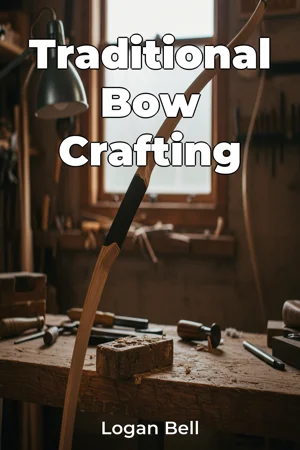
Imagine holding a bow crafted with the knowledge passed down through generations, feeling the wood's unique grain and understanding the precise physics behind its power. "Traditional Bow Crafting" unveils the intricate relationship between indigenous bowmakers, their environment, and the sophisticated technology they developed for survival. This book explores the profound knowledge embedded in the creation and use of traditional bows and arrows, highlighting its vital role in both hunting and defense across diverse cultures. The book delves into three key areas: the selection and preparation of wood for bow making, the meticulous crafting of arrows tailored for specific purposes, and the nuanced archery techniques perfected over centuries. Understanding these elements is crucial to appreciating the depth of indigenous ingenuity and the sustainable practices inherent in their craft. The knowledge surrounding traditional bow making provides valuable insights into resource management, applied physics, and the cultural significance of hunting practices. Historically, bows and arrows were not merely tools but integral components of survival, social structure, and spiritual life for many indigenous communities. Their construction and use were often governed by strict protocols and imbued with cultural meaning. This book provides a context for understanding the ecological and social factors shaping different bow-making traditions. No prior knowledge is explicitly required, although an interest in history, anthropology, or crafts will enhance the reading experience. The central argument of "Traditional Bow Crafting" is that the apparently simple technology of the bow and arrow represents a complex and sophisticated system of knowledge, honed through generations of observation, experimentation, and cultural transmission. This argument is important because it challenges the often-simplistic view of 'primitive' technology and reveals the depth of understanding present in indigenous practices. It elevates the bow and arrow from mere tools to a testament to human adaptability and intelligence. The book is structured to progressively build upon core concepts. Beginning with an introduction to the fundamental principles of bow and arrow construction and their worldwide distribution, it moves into detailed examinations of wood selection, arrow crafting, and archery techniques. Major sections include: * The Properties of Wood: Exploring different wood types, their mechanical properties, and the traditional methods used to assess their suitability for bow making. * Arrow Construction: Detailing the process of creating arrows, from shaft selection and straightening to fletching and arrowhead attachment, with emphasis on the physics of flight. * Archery Techniques: Analyzing the stances, draws, releases, and aiming methods employed by various indigenous cultures, supported by biomechanical principles. The book will culminate in a discussion of the cultural significance of bow making and archery, and an exploration of the modern revival of these traditional skills. Evidence will be drawn from a variety of sources, including ethnographical studies, archaeological findings, and interviews with contemporary bowyers and archers practicing traditional methods. Replicated field tests of bow and arrow performance data using historically accurate equipment and techniques will be presented. Original photographs and detailed illustrations will accompany the text, providing visual clarity and enhancing the reader's understanding. "Traditional Bow Crafting" connects to several interdisciplinary fields. Firstly, it intersects with anthropology by examining the cultural and social contexts of bow making. Secondly, it relates to materials science through the analysis of wood properties and the mechanics of composite materials. Finally, it connects to sports science through the study of archery techniques and biomechanics. These connections broaden the book's appeal and provide a more comprehensive understanding of the subject matter. The book offers a unique perspective by combining scientific analysis with traditional knowledge. It moves beyond a purely descriptive approach, and instead seeks to understand the underlying principles that guided indigenous bow makers. This approach provides a deeper appreciation for the ingenuity and effectiveness of traditional techniques. The tone is informative and accessible, aiming to engage both academic and general audiences. It avoids technical jargon where possible, and concepts are explained clearly and concisely. The writing style is precise and factual, maintaining a respectful and appreciative tone towards the indigenous cultures whose knowledge is being explored. The target audience includes historians, anthropologists, archery enthusiasts, craftspeople, and anyone interested in learning about traditional technologies and indigenous cultures. It offers valuable insights for those seeking to understand the history of technology, the science of archery, or the cultural significance of traditional crafts. As a work of historical craftsmanship, the book emphasizes accuracy, detail, and respect for cultural context. It adheres to the standards of non-fiction writing, providing clear citations and reliable sources. The book's scope is limited to the traditional methods of bow and arrow construction and use among indigenous cultures worldwide. It does not cover modern archery equipment or techniques in detail, focusing instead on the historical and cultural aspects of the craft. The information presented can be applied practically by contemporary bowyers and archers seeking to recreate traditional bows and arrows. It also offers insights for educators and museum curators interested in presenting this aspect of human history and technology. While the effectiveness of different bow designs and archery techniques is generally acknowledged, debates may exist regarding the precise interpretation of historical accounts or the relative importance of different factors influencing bow performance. The book will acknowledge these debates and present a balanced perspective based on available evidence.
Imagine holding a bow crafted with the knowledge passed down through generations, feeling the wood's unique grain and understanding the precise physics behind its power. "Traditional Bow Crafting" unveils the intricate relationship between indigenous bowmakers, their environment, and the sophisticated technology they developed for survival. This book explores the profound knowledge embedded in the creation and use of traditional bows and arrows, highlighting its vital role in both hunting and defense across diverse cultures. The book delves into three key areas: the selection and preparation of wood for bow making, the meticulous crafting of arrows tailored for specific purposes, and the nuanced archery techniques perfected over centuries. Understanding these elements is crucial to appreciating the depth of indigenous ingenuity and the sustainable practices inherent in their craft. The knowledge surrounding traditional bow making provides valuable insights into resource management, applied physics, and the cultural significance of hunting practices. Historically, bows and arrows were not merely tools but integral components of survival, social structure, and spiritual life for many indigenous communities. Their construction and use were often governed by strict protocols and imbued with cultural meaning. This book provides a context for understanding the ecological and social factors shaping different bow-making traditions. No prior knowledge is explicitly required, although an interest in history, anthropology, or crafts will enhance the reading experience. The central argument of "Traditional Bow Crafting" is that the apparently simple technology of the bow and arrow represents a complex and sophisticated system of knowledge, honed through generations of observation, experimentation, and cultural transmission. This argument is important because it challenges the often-simplistic view of 'primitive' technology and reveals the depth of understanding present in indigenous practices. It elevates the bow and arrow from mere tools to a testament to human adaptability and intelligence. The book is structured to progressively build upon core concepts. Beginning with an introduction to the fundamental principles of bow and arrow construction and their worldwide distribution, it moves into detailed examinations of wood selection, arrow crafting, and archery techniques. Major sections include: * The Properties of Wood: Exploring different wood types, their mechanical properties, and the traditional methods used to assess their suitability for bow making. * Arrow Construction: Detailing the process of creating arrows, from shaft selection and straightening to fletching and arrowhead attachment, with emphasis on the physics of flight. * Archery Techniques: Analyzing the stances, draws, releases, and aiming methods employed by various indigenous cultures, supported by biomechanical principles. The book will culminate in a discussion of the cultural significance of bow making and archery, and an exploration of the modern revival of these traditional skills. Evidence will be drawn from a variety of sources, including ethnographical studies, archaeological findings, and interviews with contemporary bowyers and archers practicing traditional methods. Replicated field tests of bow and arrow performance data using historically accurate equipment and techniques will be presented. Original photographs and detailed illustrations will accompany the text, providing visual clarity and enhancing the reader's understanding. "Traditional Bow Crafting" connects to several interdisciplinary fields. Firstly, it intersects with anthropology by examining the cultural and social contexts of bow making. Secondly, it relates to materials science through the analysis of wood properties and the mechanics of composite materials. Finally, it connects to sports science through the study of archery techniques and biomechanics. These connections broaden the book's appeal and provide a more comprehensive understanding of the subject matter. The book offers a unique perspective by combining scientific analysis with traditional knowledge. It moves beyond a purely descriptive approach, and instead seeks to understand the underlying principles that guided indigenous bow makers. This approach provides a deeper appreciation for the ingenuity and effectiveness of traditional techniques. The tone is informative and accessible, aiming to engage both academic and general audiences. It avoids technical jargon where possible, and concepts are explained clearly and concisely. The writing style is precise and factual, maintaining a respectful and appreciative tone towards the indigenous cultures whose knowledge is being explored. The target audience includes historians, anthropologists, archery enthusiasts, craftspeople, and anyone interested in learning about traditional technologies and indigenous cultures. It offers valuable insights for those seeking to understand the history of technology, the science of archery, or the cultural significance of traditional crafts. As a work of historical craftsmanship, the book emphasizes accuracy, detail, and respect for cultural context. It adheres to the standards of non-fiction writing, providing clear citations and reliable sources. The book's scope is limited to the traditional methods of bow and arrow construction and use among indigenous cultures worldwide. It does not cover modern archery equipment or techniques in detail, focusing instead on the historical and cultural aspects of the craft. The information presented can be applied practically by contemporary bowyers and archers seeking to recreate traditional bows and arrows. It also offers insights for educators and museum curators interested in presenting this aspect of human history and technology. While the effectiveness of different bow designs and archery techniques is generally acknowledged, debates may exist regarding the precise interpretation of historical accounts or the relative importance of different factors influencing bow performance. The book will acknowledge these debates and present a balanced perspective based on available evidence.
"Traditional Bow Crafting" explores the sophisticated knowledge behind indigenous bow making, revealing how cultures worldwide developed specialized archery techniques for hunting and defense. The book highlights the deep understanding of wood selection and arrow crafting, emphasizing how bows and arrows were not just tools, but integral parts of survival, social structure, and even spiritual life. For instance, the choice of wood was crucial, requiring knowledge of its mechanical properties to ensure the bow's effectiveness, demonstrating a complex understanding of applied physics. The book progresses logically from the principles of bow construction to detailed examinations of wood types, arrow creation, and archery techniques. It uncovers how indigenous cultures honed these crafts through generations of observation and experimentation. By combining scientific analysis with traditional knowledge, "Traditional Bow Crafting" provides a unique perspective, challenging simple views of 'primitive' technology. Readers gain insights into the sustainable practices and ingenious methods employed, making this book valuable for historians, anthropologists, craftspeople, and anyone fascinated by traditional technologies.
Book Details
ISBN
9788235256331
Publisher
Publifye AS
Your Licenses
You don't own any licenses for this book
Purchase a license below to unlock this book and download the EPUB.
Purchase License
Select a tier to unlock this book
Need bulk licensing?
Contact us for enterprise agreements.