
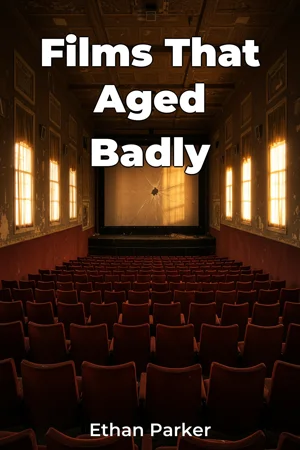
About This Book
Have you ever re-watched a movie you once adored, only to find it now riddled with outdated stereotypes, insensitive portrayals, or simply cringe-worthy dialogue? "Films That Aged Badly" delves into the fascinating and often uncomfortable phenomenon of how cinematic perceptions shift over time, transforming beloved classics into relics of a bygone era, viewed through a modern lens of evolving social norms and cultural sensitivities. This book examines the complex interplay between a film's historical context, its artistic merit, and its enduring impact on audiences across generations. We’ll explore how movies initially celebrated for their progressive themes can, decades later, be criticized for perpetuating harmful stereotypes or reflecting outdated societal values. Understanding these shifts is crucial for appreciating the dynamic relationship between art and society, and for fostering critical media literacy. The analysis focuses on two primary areas: the evolution of social consciousness and the changing landscape of cinematic representation. We will look at historical shifts in attitudes towards race, gender, sexuality, and other social issues, comparing past cinematic depictions with contemporary standards. Furthermore, the book will explore how advancements in filmmaking techniques, storytelling approaches, and special effects contribute to the perception of a film’s age. "Films That Aged Badly" argues that a film's "shelf life" is not solely determined by its technical quality or artistic vision, but also by its ability to resonate with subsequent audiences who bring their own unique perspectives and values to the viewing experience. This argument is essential for film scholars, critics, and casual viewers alike, as it encourages a more nuanced understanding of cinematic history and its reflection of societal progress (or lack thereof). The book is structured in three parts. The first part introduces the core concepts of cultural relativism in film and establishes a framework for analyzing how societal changes affect a film’s reception. The second part presents case studies of specific films across various genres, examining how they have aged in relation to shifting social attitudes. These case studies are categorized by thematic elements such as gender roles, racial representation, and LGBTQ+ portrayals. Finally, the third part explores the broader implications of this phenomenon, considering the role of film in shaping cultural narratives and the ethical responsibilities of filmmakers in an evolving social landscape. The analysis draws upon a wide range of sources, including film reviews, scholarly articles, audience surveys, and historical documents. We will analyze primary sources, such as the films themselves, and secondary scholarship from film and cultural studies scholars. The study of films that age badly connects to other disciplines such as sociology, history, and media studies. A sociological lens can illuminate the societal changes that render certain portrayals offensive or outdated. Historical context helps to understand the attitudes and values prevalent during a film's production. Analyzing evolving media representations and their impacts on audience perception is also paramount. This book offers a fresh perspective by moving beyond simple condemnation of "problematic" films. Instead, it provides a framework for understanding why and how these films have aged badly, promoting constructive dialogue about the evolution of social norms and the ongoing responsibility of filmmakers and viewers alike. Written in an accessible style, "Films That Aged Badly" is aimed at film enthusiasts, students, scholars, and anyone interested in the intersection of cinema and culture. It will appeal to readers who enjoy exploring the social and historical context of films and who are interested in developing a more critical understanding of media representation. This book adheres to the conventions of academic non-fiction, providing well-researched arguments, clearly cited evidence, and a balanced analysis of various perspectives. The scope of the book is limited to films released before 2010, allowing for a sufficient period for shifts in cultural perception to become evident. While it cannot cover every film that has aged badly, it offers a representative sample across various genres and historical periods. Understanding how and why films age badly has numerous real-world applications. It can inform contemporary filmmaking practices, encouraging greater sensitivity and awareness of evolving social norms. It can also promote critical media literacy, empowering viewers to engage with films in a more thoughtful and nuanced way. The book also engages with ongoing debates about censorship, historical context, and the role of art in reflecting and shaping society. It considers the challenge of balancing historical accuracy with contemporary values, and the ethical implications of re-evaluating past creative works.
Have you ever re-watched a movie you once adored, only to find it now riddled with outdated stereotypes, insensitive portrayals, or simply cringe-worthy dialogue? "Films That Aged Badly" delves into the fascinating and often uncomfortable phenomenon of how cinematic perceptions shift over time, transforming beloved classics into relics of a bygone era, viewed through a modern lens of evolving social norms and cultural sensitivities. This book examines the complex interplay between a film's historical context, its artistic merit, and its enduring impact on audiences across generations. We’ll explore how movies initially celebrated for their progressive themes can, decades later, be criticized for perpetuating harmful stereotypes or reflecting outdated societal values. Understanding these shifts is crucial for appreciating the dynamic relationship between art and society, and for fostering critical media literacy. The analysis focuses on two primary areas: the evolution of social consciousness and the changing landscape of cinematic representation. We will look at historical shifts in attitudes towards race, gender, sexuality, and other social issues, comparing past cinematic depictions with contemporary standards. Furthermore, the book will explore how advancements in filmmaking techniques, storytelling approaches, and special effects contribute to the perception of a film’s age. "Films That Aged Badly" argues that a film's "shelf life" is not solely determined by its technical quality or artistic vision, but also by its ability to resonate with subsequent audiences who bring their own unique perspectives and values to the viewing experience. This argument is essential for film scholars, critics, and casual viewers alike, as it encourages a more nuanced understanding of cinematic history and its reflection of societal progress (or lack thereof). The book is structured in three parts. The first part introduces the core concepts of cultural relativism in film and establishes a framework for analyzing how societal changes affect a film’s reception. The second part presents case studies of specific films across various genres, examining how they have aged in relation to shifting social attitudes. These case studies are categorized by thematic elements such as gender roles, racial representation, and LGBTQ+ portrayals. Finally, the third part explores the broader implications of this phenomenon, considering the role of film in shaping cultural narratives and the ethical responsibilities of filmmakers in an evolving social landscape. The analysis draws upon a wide range of sources, including film reviews, scholarly articles, audience surveys, and historical documents. We will analyze primary sources, such as the films themselves, and secondary scholarship from film and cultural studies scholars. The study of films that age badly connects to other disciplines such as sociology, history, and media studies. A sociological lens can illuminate the societal changes that render certain portrayals offensive or outdated. Historical context helps to understand the attitudes and values prevalent during a film's production. Analyzing evolving media representations and their impacts on audience perception is also paramount. This book offers a fresh perspective by moving beyond simple condemnation of "problematic" films. Instead, it provides a framework for understanding why and how these films have aged badly, promoting constructive dialogue about the evolution of social norms and the ongoing responsibility of filmmakers and viewers alike. Written in an accessible style, "Films That Aged Badly" is aimed at film enthusiasts, students, scholars, and anyone interested in the intersection of cinema and culture. It will appeal to readers who enjoy exploring the social and historical context of films and who are interested in developing a more critical understanding of media representation. This book adheres to the conventions of academic non-fiction, providing well-researched arguments, clearly cited evidence, and a balanced analysis of various perspectives. The scope of the book is limited to films released before 2010, allowing for a sufficient period for shifts in cultural perception to become evident. While it cannot cover every film that has aged badly, it offers a representative sample across various genres and historical periods. Understanding how and why films age badly has numerous real-world applications. It can inform contemporary filmmaking practices, encouraging greater sensitivity and awareness of evolving social norms. It can also promote critical media literacy, empowering viewers to engage with films in a more thoughtful and nuanced way. The book also engages with ongoing debates about censorship, historical context, and the role of art in reflecting and shaping society. It considers the challenge of balancing historical accuracy with contemporary values, and the ethical implications of re-evaluating past creative works.
"Films That Aged Badly" explores the fascinating phenomenon of how movies once celebrated can become problematic relics due to evolving social norms. The book dives into the complex relationship between a film's historical context, artistic merit, and enduring impact, highlighting how cinematic representations of race, gender, and other social issues shift over time. Many initially progressive films now draw criticism for perpetuating harmful stereotypes, illustrating the dynamic interplay between art and society. Understanding these shifts is vital for fostering critical media literacy and appreciating cinematic history. The book examines cultural relativism in film and cinematic representation in two primary areas: the evolution of social consciousness and the changing cinematic landscape, comparing past depictions with contemporary standards. It argues that a film's "shelf life" depends not only on technical quality but its ability to resonate with evolving audience perspectives. For example, portrayals of gender roles once accepted may now be seen as outdated or offensive. Structured in three parts, the book first introduces core concepts, then presents case studies of specific films categorized by thematic elements like gender roles and racial representation, and finally explores broader implications and ethical responsibilities. By analyzing film reviews, scholarly articles, and historical documents, "Films That Aged Badly" offers a framework for understanding why films age badly, promoting constructive dialogue about evolving social norms and the ongoing responsibility of filmmakers and viewers.
Book Details
ISBN
9788235256010
Publisher
Publifye AS
Your Licenses
You don't own any licenses for this book
Purchase a license below to unlock this book and download the EPUB.
Purchase License
Select a tier to unlock this book
Need bulk licensing?
Contact us for enterprise agreements.