
About This Book
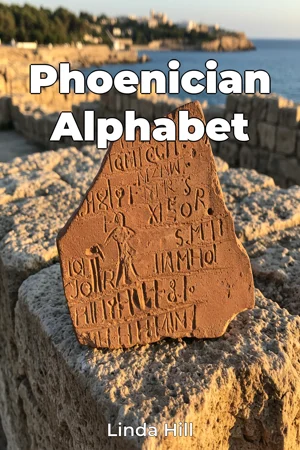
Have you ever considered that the letters you are reading now owe their existence to a civilization that thrived over three thousand years ago? "Phoenician Alphabet" delves into the fascinating history of the Phoenician writing system, tracing its origins, evolution, and profound impact on the development of alphabets across the globe. This book explores two key topics: the structure and functionality of the Phoenician alphabet itself, and its subsequent adaptation and transformation by various cultures, most notably the Greeks, Romans, and Arabs. Understanding these topics is crucial because the Phoenician alphabet represents a pivotal moment in human history, marking a transition from complex logographic systems to simpler, more accessible alphabetic writing. The book provides the context of the Phoenician civilization, a maritime trading culture that flourished in the Levant. We will explore their society, trade networks, and cultural interactions, as these elements were essential in disseminating their writing system. The central argument of "Phoenician Alphabet" is that the Phoenician writing system, despite its simplicity, served as the foundational blueprint for many of the world's most widely used alphabets. Furthermore, it demonstrates how cultural exchange and adaptation play a crucial role in the evolution of communication systems. The book unfolds in a structured manner. First, we introduce the history of writing, leading up to the emergence of the Phoenician alphabet from earlier Semitic scripts. This initial section provides a detailed analysis of the alphabet's structure, including the shapes of the letters, their phonetic values, and the direction of writing. Subsequently, we explore the adoption of the Phoenician alphabet by the Greeks. This section details the modifications the Greeks made to the Phoenician system to better suit their language, including the addition of vowels, and the consequences of these changes. We move forward tracing the lineage from the Greek alphabet to the Latin and Arabic scripts. The Latin alphabet, used by a vast number of languages today, owes its fundamental structure to this ancestral line. Similarly, the Arabic script, while visually distinct, shares a common origin in the early Semitic alphabets influenced by the Phoenician model. Finally, the book concludes by examining the lasting legacy of the Phoenician alphabet in contemporary writing systems and its implications for understanding the interconnectedness of cultures through communication. The book relies on a range of evidence, including archaeological findings of inscriptions and texts, comparative analysis of alphabetic forms, and historical linguistic research. We will examine primary sources, such as inscriptions on sarcophagi, pottery, and other artifacts, as well as secondary scholarship in the fields of epigraphy, linguistics, and ancient history. "Phoenician Alphabet" connects to various disciplines, including archaeology, linguistics, and cultural studies. It offers insights into how writing systems reflect and shape cultural identities, and how the study of ancient scripts can illuminate broader patterns of human interaction and innovation. This book distinguishes itself by providing a comprehensive and accessible account of the Phoenician alphabet's journey through history, highlighting not only its structural features but also its profound cultural significance. Written in a clear and engaging style, this book is tailored for students, history enthusiasts, and anyone interested in the origins of writing. It offers valuable insights into the history of communication and the interconnectedness of cultures. The scope of the book focuses primarily on the Phoenician alphabet and its direct influence on the Greek, Latin, and Arabic scripts. While acknowledging other writing systems, the book emphasizes the pathways of alphabetic development stemming from the Phoenician model. The book refrains from exploring other writing systems that did not directly evolve from it. The knowledge presented can be applied to fields such as typography, language education, and historical research. Understanding the evolution of alphabets can enhance appreciation for the diversity of writing systems and provide insights into the processes of linguistic change. One ongoing debate addressed is a discussion of the exact relationship between the Phoenician alphabet and other early Semitic scripts, which is presented with a balanced view of differing scholarly opinions.
Have you ever considered that the letters you are reading now owe their existence to a civilization that thrived over three thousand years ago? "Phoenician Alphabet" delves into the fascinating history of the Phoenician writing system, tracing its origins, evolution, and profound impact on the development of alphabets across the globe. This book explores two key topics: the structure and functionality of the Phoenician alphabet itself, and its subsequent adaptation and transformation by various cultures, most notably the Greeks, Romans, and Arabs. Understanding these topics is crucial because the Phoenician alphabet represents a pivotal moment in human history, marking a transition from complex logographic systems to simpler, more accessible alphabetic writing. The book provides the context of the Phoenician civilization, a maritime trading culture that flourished in the Levant. We will explore their society, trade networks, and cultural interactions, as these elements were essential in disseminating their writing system. The central argument of "Phoenician Alphabet" is that the Phoenician writing system, despite its simplicity, served as the foundational blueprint for many of the world's most widely used alphabets. Furthermore, it demonstrates how cultural exchange and adaptation play a crucial role in the evolution of communication systems. The book unfolds in a structured manner. First, we introduce the history of writing, leading up to the emergence of the Phoenician alphabet from earlier Semitic scripts. This initial section provides a detailed analysis of the alphabet's structure, including the shapes of the letters, their phonetic values, and the direction of writing. Subsequently, we explore the adoption of the Phoenician alphabet by the Greeks. This section details the modifications the Greeks made to the Phoenician system to better suit their language, including the addition of vowels, and the consequences of these changes. We move forward tracing the lineage from the Greek alphabet to the Latin and Arabic scripts. The Latin alphabet, used by a vast number of languages today, owes its fundamental structure to this ancestral line. Similarly, the Arabic script, while visually distinct, shares a common origin in the early Semitic alphabets influenced by the Phoenician model. Finally, the book concludes by examining the lasting legacy of the Phoenician alphabet in contemporary writing systems and its implications for understanding the interconnectedness of cultures through communication. The book relies on a range of evidence, including archaeological findings of inscriptions and texts, comparative analysis of alphabetic forms, and historical linguistic research. We will examine primary sources, such as inscriptions on sarcophagi, pottery, and other artifacts, as well as secondary scholarship in the fields of epigraphy, linguistics, and ancient history. "Phoenician Alphabet" connects to various disciplines, including archaeology, linguistics, and cultural studies. It offers insights into how writing systems reflect and shape cultural identities, and how the study of ancient scripts can illuminate broader patterns of human interaction and innovation. This book distinguishes itself by providing a comprehensive and accessible account of the Phoenician alphabet's journey through history, highlighting not only its structural features but also its profound cultural significance. Written in a clear and engaging style, this book is tailored for students, history enthusiasts, and anyone interested in the origins of writing. It offers valuable insights into the history of communication and the interconnectedness of cultures. The scope of the book focuses primarily on the Phoenician alphabet and its direct influence on the Greek, Latin, and Arabic scripts. While acknowledging other writing systems, the book emphasizes the pathways of alphabetic development stemming from the Phoenician model. The book refrains from exploring other writing systems that did not directly evolve from it. The knowledge presented can be applied to fields such as typography, language education, and historical research. Understanding the evolution of alphabets can enhance appreciation for the diversity of writing systems and provide insights into the processes of linguistic change. One ongoing debate addressed is a discussion of the exact relationship between the Phoenician alphabet and other early Semitic scripts, which is presented with a balanced view of differing scholarly opinions.
"Phoenician Alphabet" explores the origins of our modern writing systems, revealing how a civilization from over three thousand years ago shaped global communication. The book details the Phoenician writing system's structure and its adaptation by cultures like the Greeks, Romans, and Arabs. This transition from complex logographic systems to a simpler alphabet marked a pivotal moment in history. The book traces the evolution of the Phoenician alphabet, highlighting its emergence from earlier Semitic scripts. It examines how the Greeks modified it by adding vowels, a crucial innovation. The book also demonstrates how the Latin alphabet, used by many languages today, and the Arabic script share roots in this ancient system. Drawing on archaeological findings and linguistic research, "Phoenician Alphabet" shows how studying ancient scripts illuminates patterns of cultural exchange. The book unfolds by first introducing the history of writing and the structure of the Phoenician alphabet. It then explores the adoption of this alphabet by the Greeks and subsequently traces its lineage to the Latin and Arabic scripts. The book concludes by examining the lasting legacy of the Phoenician alphabet in contemporary writing systems.
Book Details
ISBN
9788235255860
Publisher
Publifye AS
Your Licenses
You don't own any licenses for this book
Purchase a license below to unlock this book and download the EPUB.
Purchase License
Select a tier to unlock this book
Need bulk licensing?
Contact us for enterprise agreements.