
About This Book
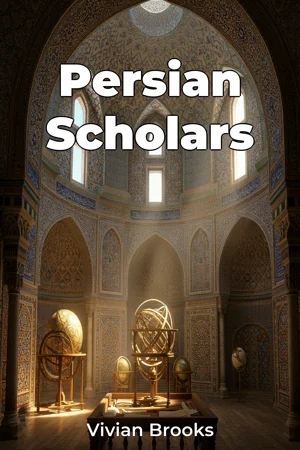
How did a civilization, bridging ancient traditions and groundbreaking innovations, shape the course of global knowledge? "Persian Scholars" unveils the profound and often overlooked contributions of Persian intellectuals to medicine, literature, and philosophy, demonstrating their pivotal role in advancing human understanding across diverse fields. This book offers a comprehensive exploration of Persian scholarship from antiquity through the medieval period, highlighting the intellectual vibrancy and lasting impact of Persian thinkers on the development of global knowledge. This book emphasizes the significance of Persian scholars in preserving and expanding upon classical knowledge during a period of relative intellectual stagnation in Europe. It showcases their critical contributions to medical science, specifically in areas such as pharmacology, clinical observation, and the establishment of medical ethics. The narrative further explores the rich literary heritage and philosophical insights of Persian scholars, revealing their unique syntheses of Greek, Indian, and Islamic thought. These topics are crucial for understanding the interconnectedness of global intellectual history and challenging Eurocentric perspectives that often dominate historical accounts. The historical and social context of the book spans from the Sasanian Empire to the Timurid Dynasty, examining periods of both relative stability and intense upheaval. Understanding the political landscape, religious influences, and cultural exchanges of these eras is essential to appreciating the conditions that fostered Persian intellectual growth. The central argument posits that Persian scholars acted as crucial intermediaries in transmitting, translating, and transforming knowledge, facilitating its spread across continents and influencing subsequent generations of thinkers. The book is structured to provide a clear and coherent narrative. It begins by introducing the geographical and historical context of Persia, highlighting its strategic location as a crossroads of civilizations. Subsequent chapters delve into specific areas of Persian scholarship, such as the work of Avicenna (Ibn Sina) in medicine, Rumi in literature and Sufi philosophy, and Al-Khwarizmi in mathematics and astronomy. The book culminates by examining the legacy of Persian scholarship in the Renaissance and the modern world, demonstrating its enduring relevance to contemporary thought. "Persian Scholars" draws upon a wide array of primary and secondary sources, including translated texts of original works, historical chronicles, and contemporary scholarly analyses. It utilizes interdisciplinary methodologies, combining historical analysis with literary criticism and philosophical inquiry, to provide a holistic understanding of Persian intellectual contributions. The book connects to several disciplines, including the history of science, comparative literature, and the history of philosophy. By exploring the intersection of these fields, it offers a more nuanced and complete picture of Persian intellectual achievements and how they fit into the broader context of world history. This book distinguishes itself by providing a comprehensive and accessible overview of Persian contributions across multiple fields, challenging prevailing Eurocentric narratives and highlighting the interconnectedness of global intellectual traditions. The tone is academic yet accessible, aiming to engage both scholars and general readers interested in world history and intellectual thought. The target audience includes students and scholars of history, philosophy, literature, and medicine, as well as anyone interested in learning about the often-overlooked contributions of Persian civilization to global knowledge. This book provides valuable insights for those seeking a more inclusive and accurate understanding of intellectual history. Conforming to the conventions of history and world history genres, "Persian Scholars" will employ rigorous research and evidence-based arguments to support its claims. The scope of the book is limited to the intellectual contributions of Persian scholars, focusing primarily on the period from antiquity to the early modern era. While acknowledging the influence of other cultures on Persian thought, the book primarily focuses on the unique contributions and perspectives of Persian intellectuals. The information presented in this book can be applied in practical ways by promoting a more inclusive and global perspective in education, fostering cross-cultural understanding, and challenging Eurocentric biases in historical narratives. "Persian Scholars" contributes to ongoing debates concerning the transmission of knowledge and the role of non-Western civilizations in shaping global intellectual history.
How did a civilization, bridging ancient traditions and groundbreaking innovations, shape the course of global knowledge? "Persian Scholars" unveils the profound and often overlooked contributions of Persian intellectuals to medicine, literature, and philosophy, demonstrating their pivotal role in advancing human understanding across diverse fields. This book offers a comprehensive exploration of Persian scholarship from antiquity through the medieval period, highlighting the intellectual vibrancy and lasting impact of Persian thinkers on the development of global knowledge. This book emphasizes the significance of Persian scholars in preserving and expanding upon classical knowledge during a period of relative intellectual stagnation in Europe. It showcases their critical contributions to medical science, specifically in areas such as pharmacology, clinical observation, and the establishment of medical ethics. The narrative further explores the rich literary heritage and philosophical insights of Persian scholars, revealing their unique syntheses of Greek, Indian, and Islamic thought. These topics are crucial for understanding the interconnectedness of global intellectual history and challenging Eurocentric perspectives that often dominate historical accounts. The historical and social context of the book spans from the Sasanian Empire to the Timurid Dynasty, examining periods of both relative stability and intense upheaval. Understanding the political landscape, religious influences, and cultural exchanges of these eras is essential to appreciating the conditions that fostered Persian intellectual growth. The central argument posits that Persian scholars acted as crucial intermediaries in transmitting, translating, and transforming knowledge, facilitating its spread across continents and influencing subsequent generations of thinkers. The book is structured to provide a clear and coherent narrative. It begins by introducing the geographical and historical context of Persia, highlighting its strategic location as a crossroads of civilizations. Subsequent chapters delve into specific areas of Persian scholarship, such as the work of Avicenna (Ibn Sina) in medicine, Rumi in literature and Sufi philosophy, and Al-Khwarizmi in mathematics and astronomy. The book culminates by examining the legacy of Persian scholarship in the Renaissance and the modern world, demonstrating its enduring relevance to contemporary thought. "Persian Scholars" draws upon a wide array of primary and secondary sources, including translated texts of original works, historical chronicles, and contemporary scholarly analyses. It utilizes interdisciplinary methodologies, combining historical analysis with literary criticism and philosophical inquiry, to provide a holistic understanding of Persian intellectual contributions. The book connects to several disciplines, including the history of science, comparative literature, and the history of philosophy. By exploring the intersection of these fields, it offers a more nuanced and complete picture of Persian intellectual achievements and how they fit into the broader context of world history. This book distinguishes itself by providing a comprehensive and accessible overview of Persian contributions across multiple fields, challenging prevailing Eurocentric narratives and highlighting the interconnectedness of global intellectual traditions. The tone is academic yet accessible, aiming to engage both scholars and general readers interested in world history and intellectual thought. The target audience includes students and scholars of history, philosophy, literature, and medicine, as well as anyone interested in learning about the often-overlooked contributions of Persian civilization to global knowledge. This book provides valuable insights for those seeking a more inclusive and accurate understanding of intellectual history. Conforming to the conventions of history and world history genres, "Persian Scholars" will employ rigorous research and evidence-based arguments to support its claims. The scope of the book is limited to the intellectual contributions of Persian scholars, focusing primarily on the period from antiquity to the early modern era. While acknowledging the influence of other cultures on Persian thought, the book primarily focuses on the unique contributions and perspectives of Persian intellectuals. The information presented in this book can be applied in practical ways by promoting a more inclusive and global perspective in education, fostering cross-cultural understanding, and challenging Eurocentric biases in historical narratives. "Persian Scholars" contributes to ongoing debates concerning the transmission of knowledge and the role of non-Western civilizations in shaping global intellectual history.
"Persian Scholars" explores the significant, yet often unacknowledged, contributions of Persian intellectuals to global knowledge across medicine, literature, and philosophy. It highlights how these scholars preserved and expanded upon classical knowledge, acting as vital intermediaries in transmitting, translating, and transforming ideas. For instance, Persian scholars made critical advancements in medical science, including pharmacology and clinical observation, shaping the ethical standards of medical practice. The book emphasizes the interconnectedness of global intellectual history, challenging Eurocentric perspectives. It progresses chronologically, starting with the geographical and historical context of Persia and delving into the specific contributions of figures like Avicenna in medicine, Rumi in literature and Sufi philosophy, and Al-Khwarizmi in mathematics. By examining the historical and social context from the Sasanian Empire to the Timurid Dynasty, the book reveals the unique syntheses of Greek, Indian, and Islamic thought achieved by Persian scholars. It culminates by examining the legacy of Persian scholarship in the Renaissance and the modern world, demonstrating its enduring relevance to contemporary thought.
Book Details
ISBN
9788235255617
Publisher
Publifye AS
Your Licenses
You don't own any licenses for this book
Purchase a license below to unlock this book and download the EPUB.
Purchase License
Select a tier to unlock this book
Need bulk licensing?
Contact us for enterprise agreements.